Wedding Dress Train Types: Sweep, Chapel and Cathedral
The train is the detail that turns your entrance into a movie moment. But it’s also something you’ll carry with you all night: at the ceremony, in photos, while hugging your guests and on the dance floor. Choosing the right length, and knowing how it gets bustled, lets you enjoy the effect without worrying about it.
Here we explain the types of trains, how they suit each venue, and what to do with yours when the party starts.
What are the types of wedding dress trains?
These are the lengths you’ll hear about most. Measurements are approximate and vary with the design and your height.
Sweep train
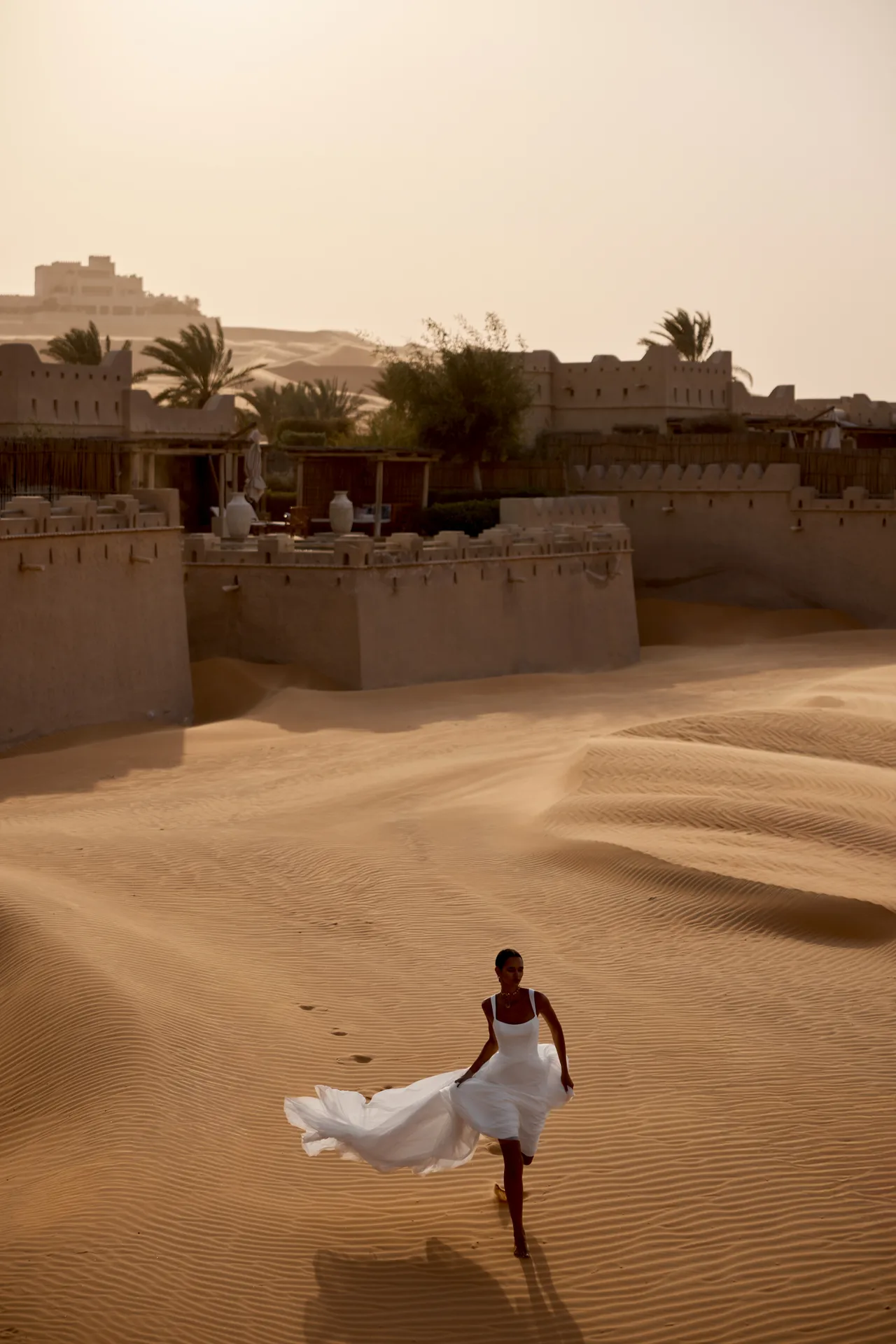
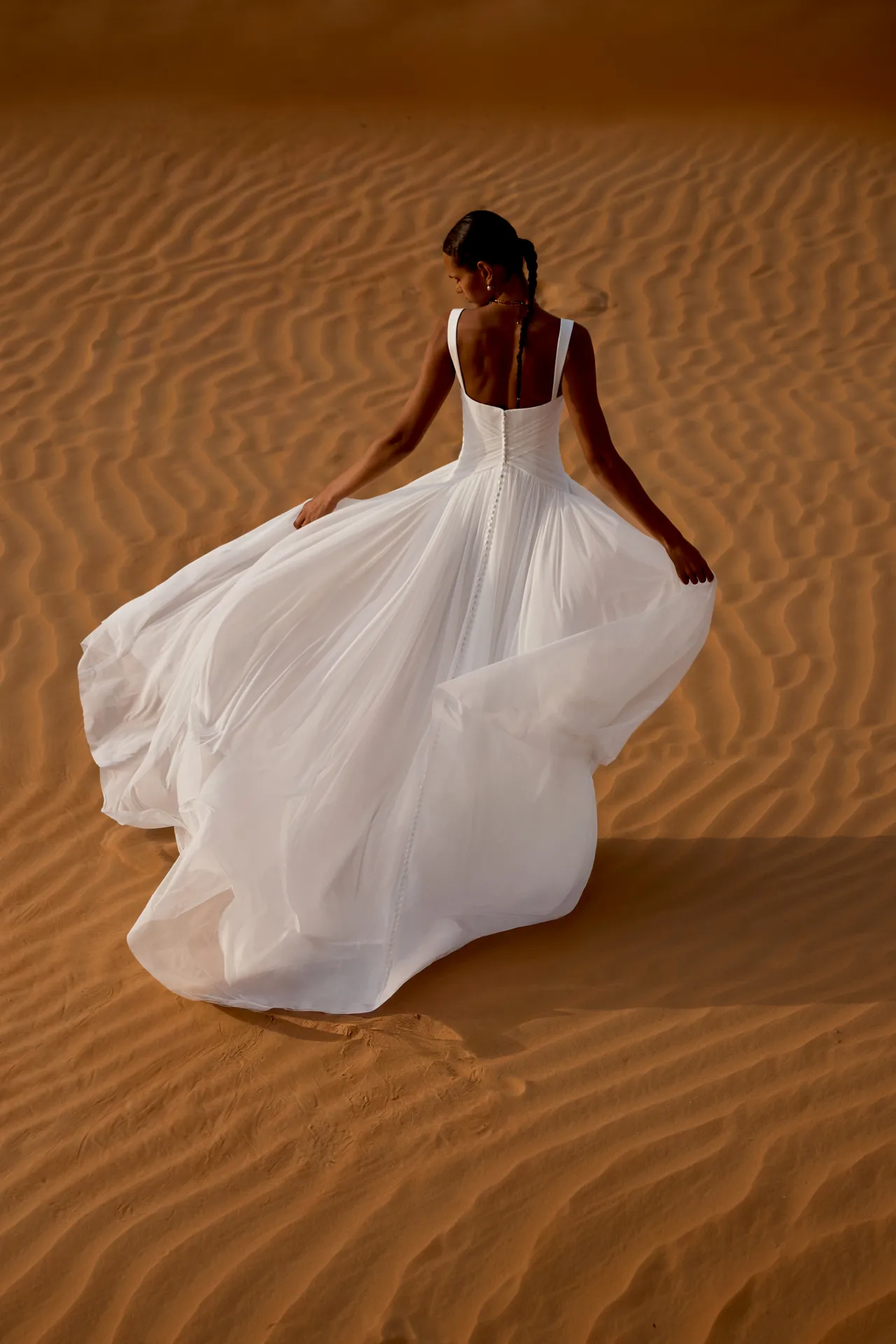
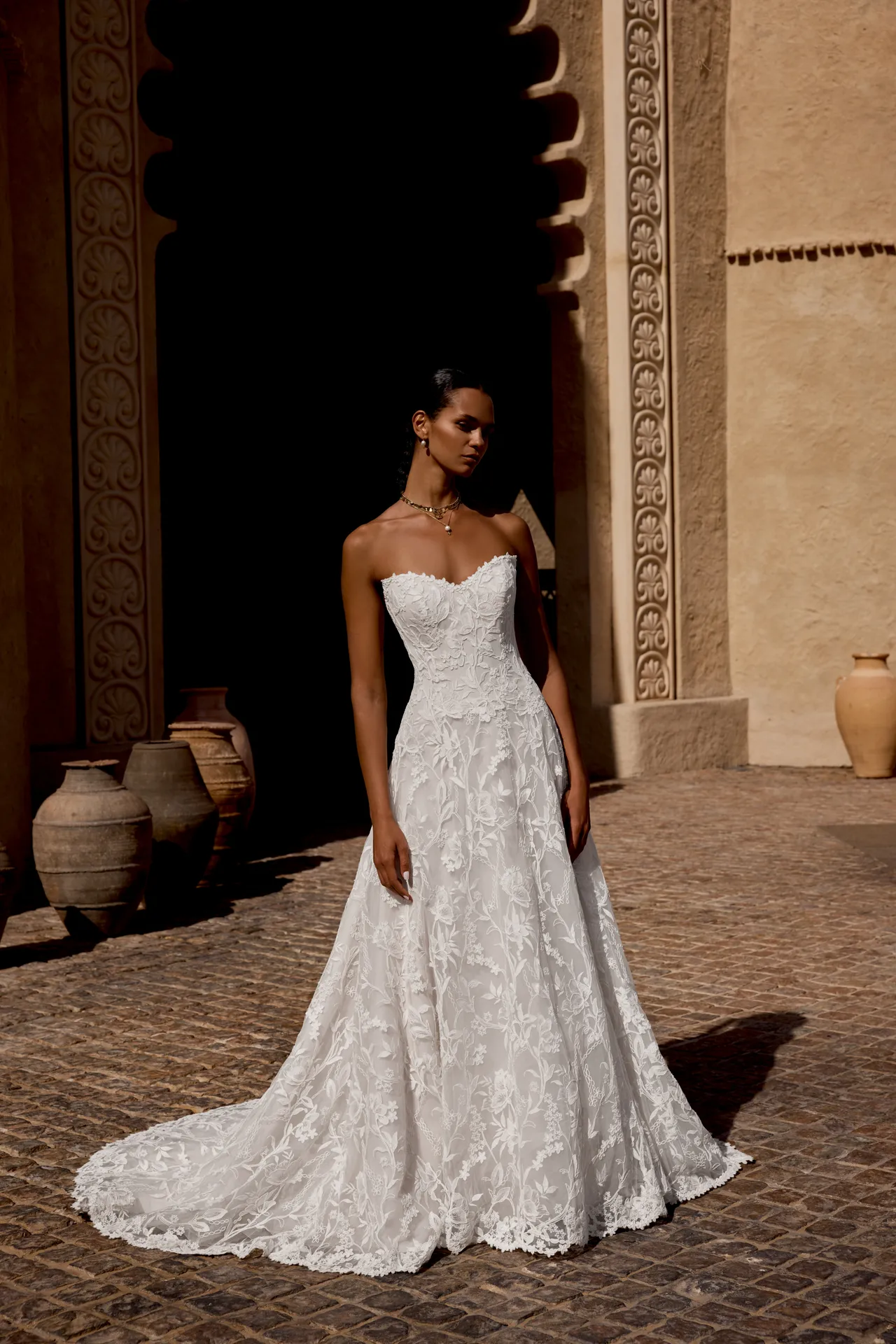
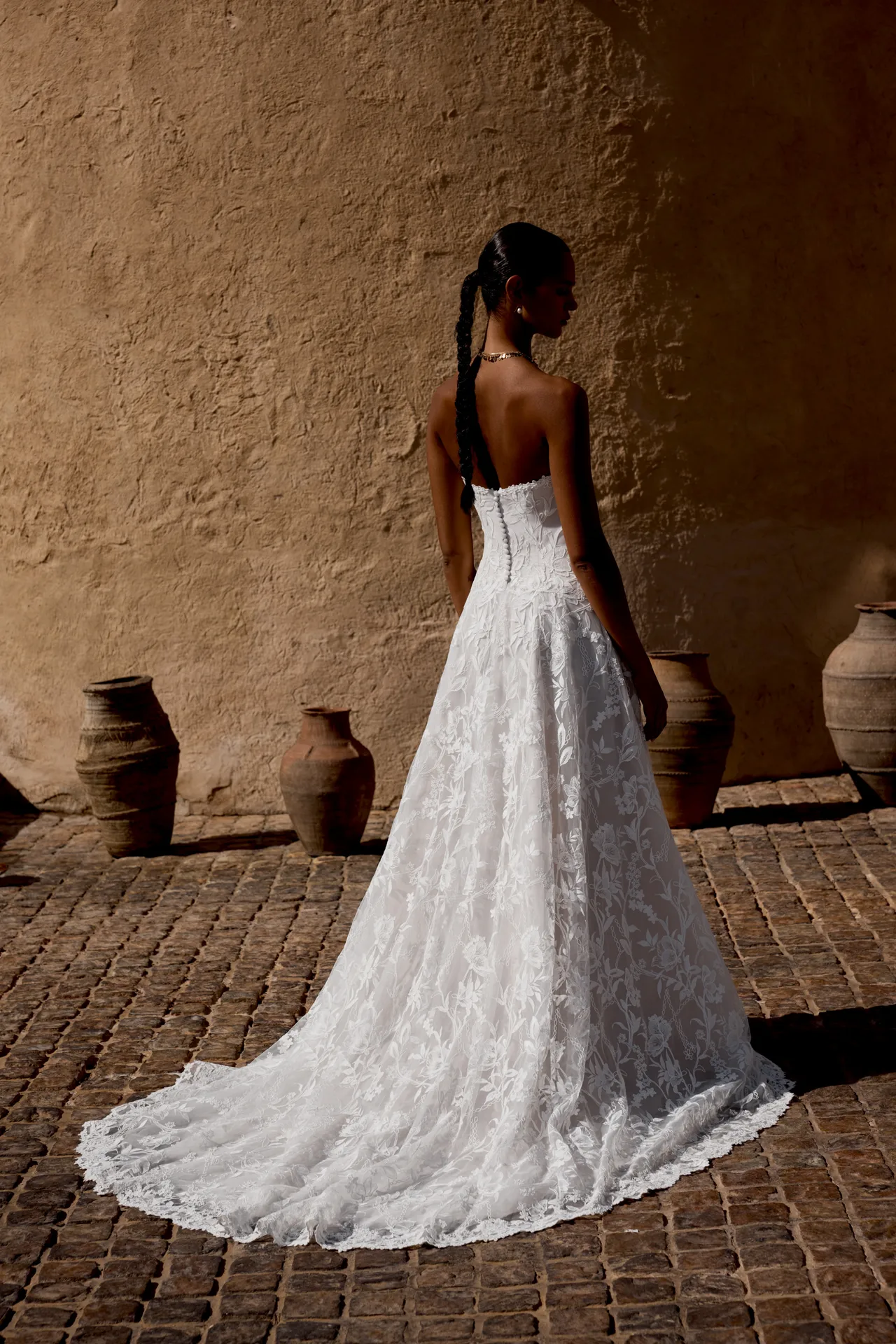
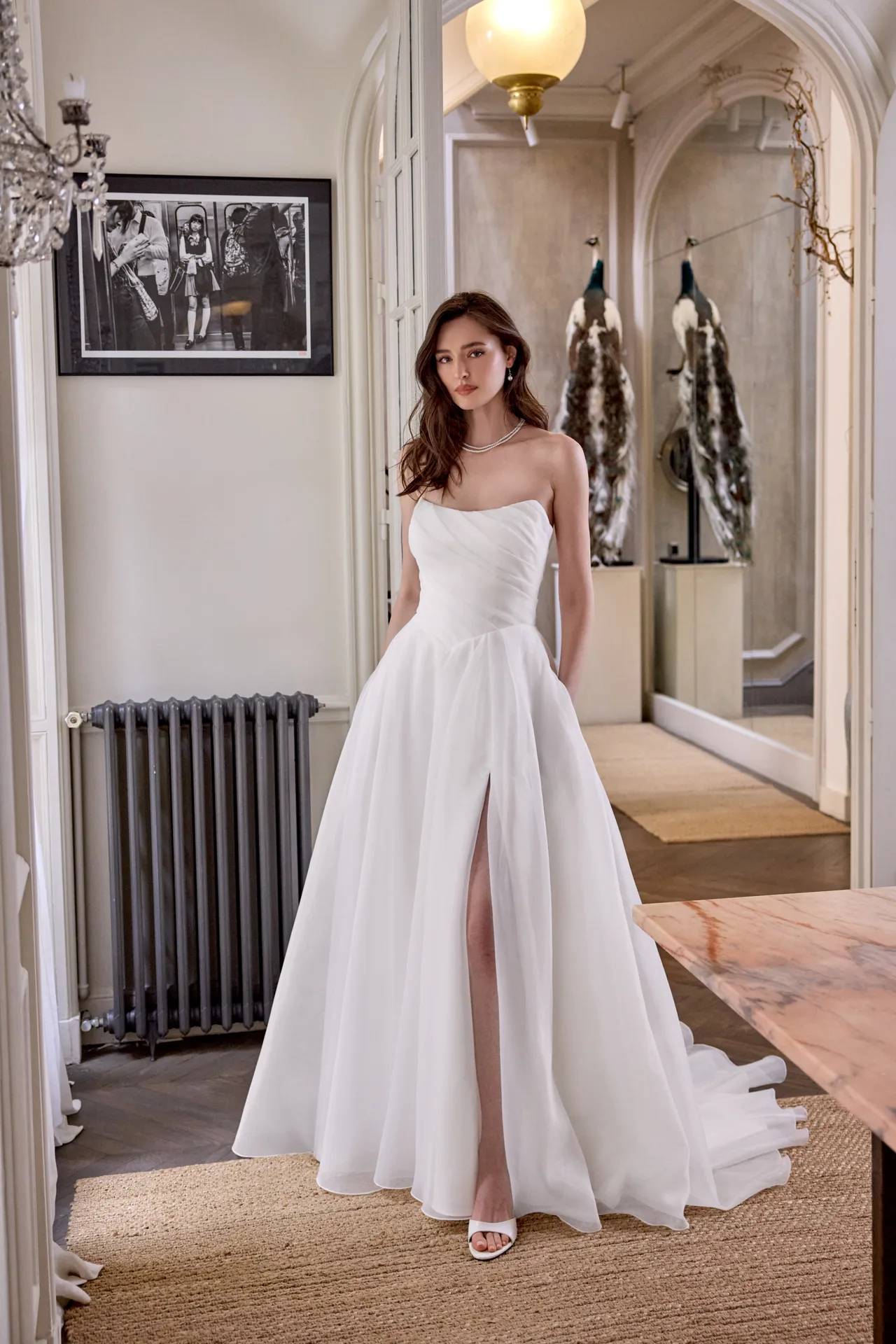
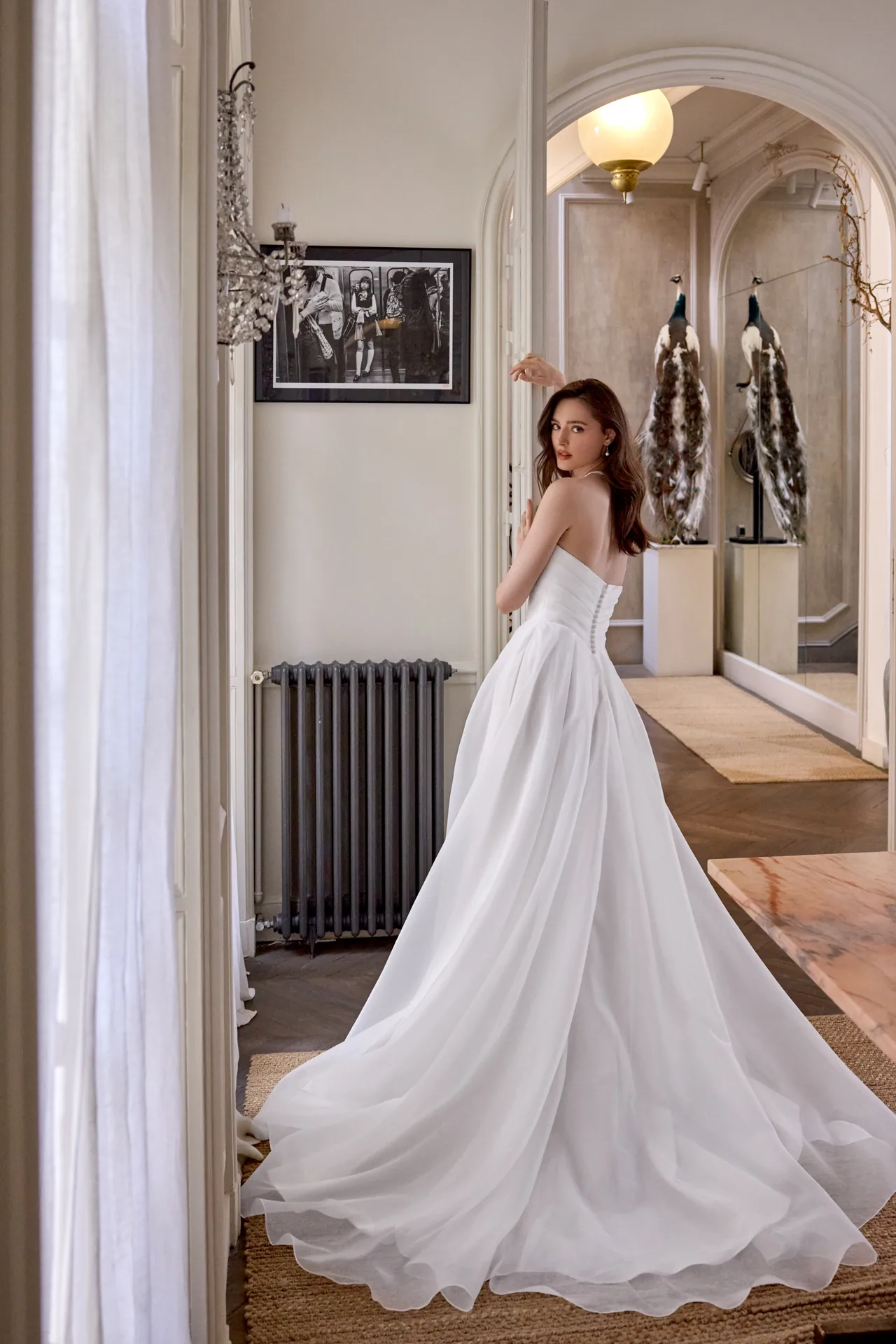
It barely brushes the floor and extends a few centimeters behind you, as if it “swept” the ground as you walk. It’s practical, elegant and easy to wear all day. Ideal for civil weddings, country estates (fincas), the beach, or brides who want to move with complete freedom.
Chapel train
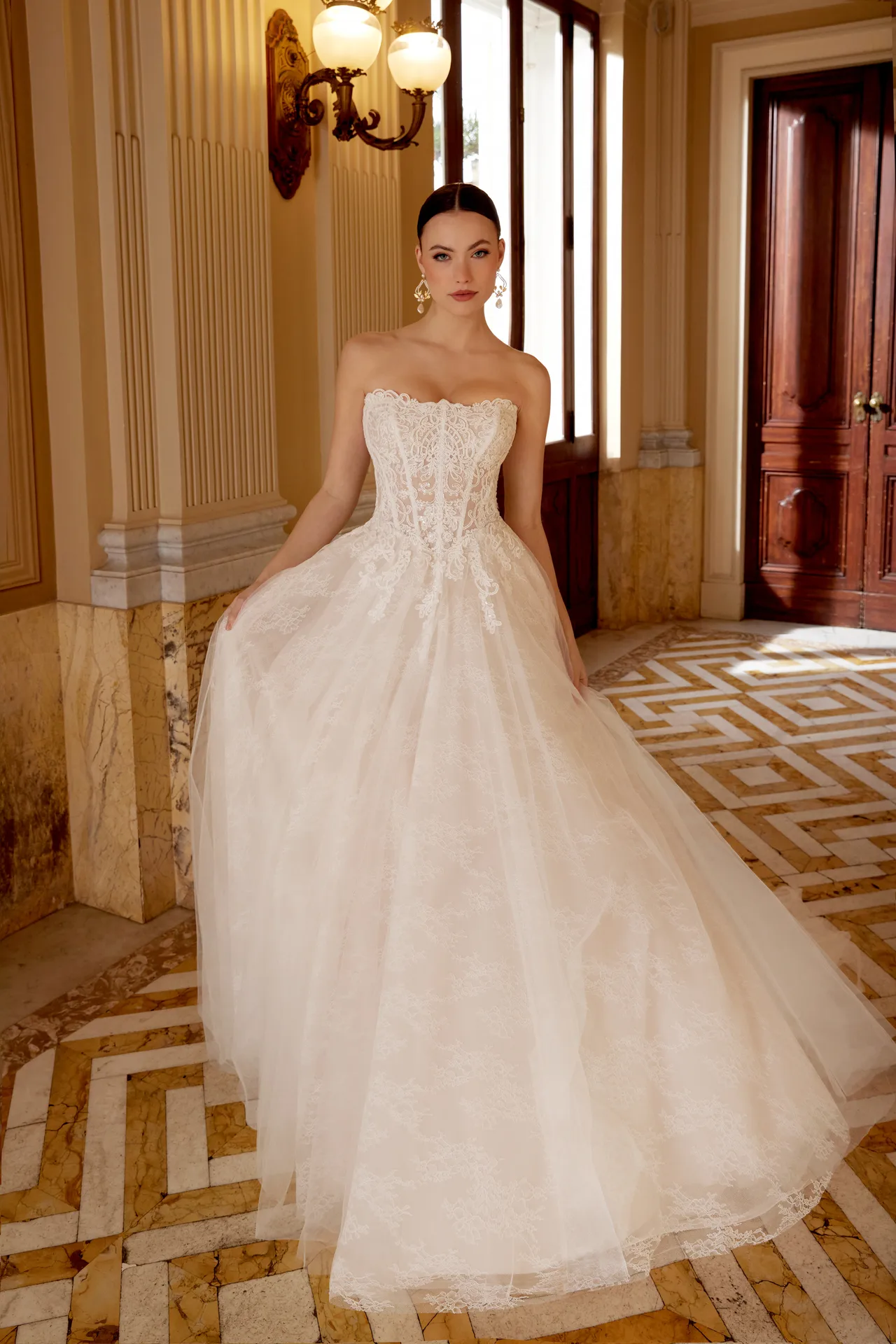
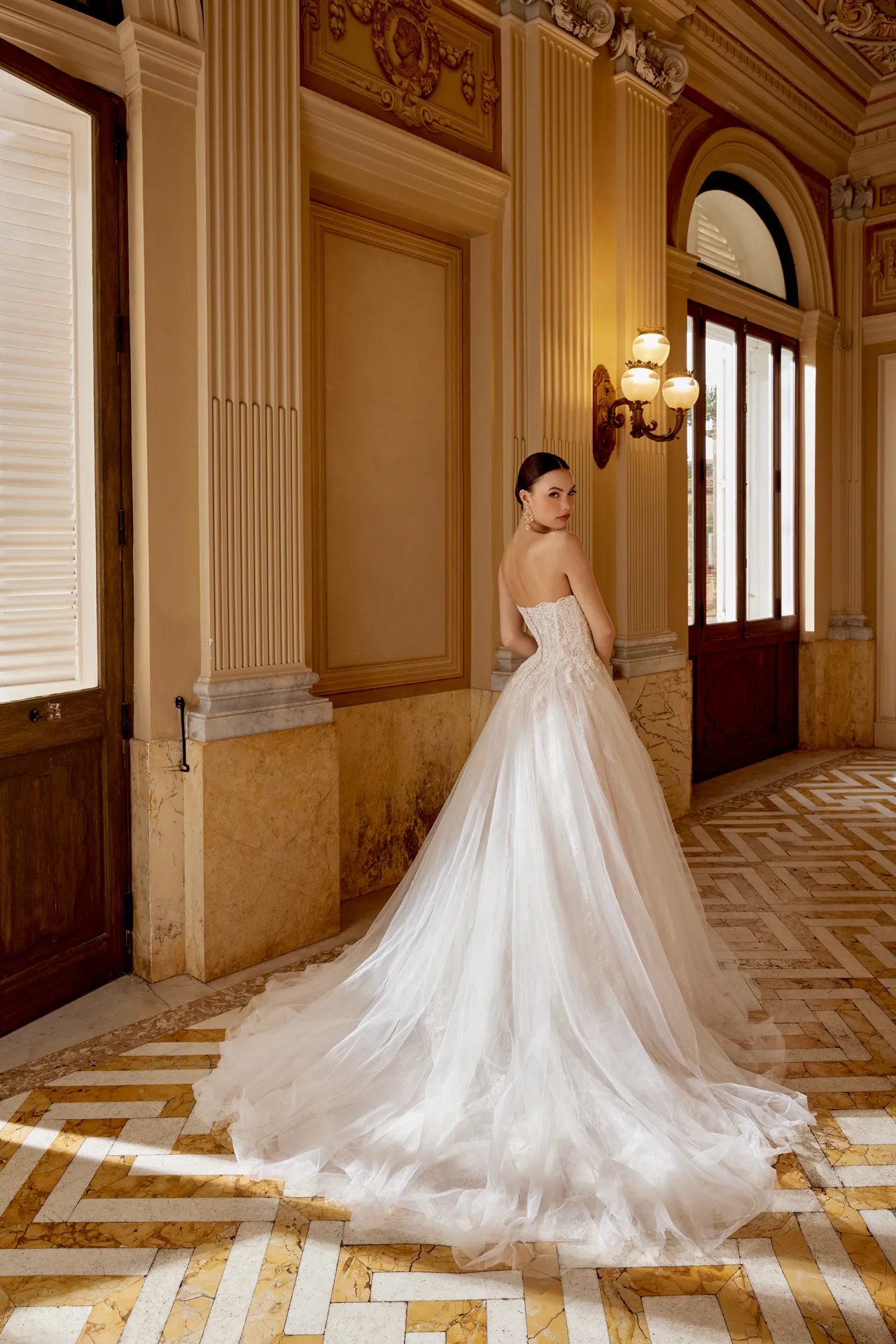
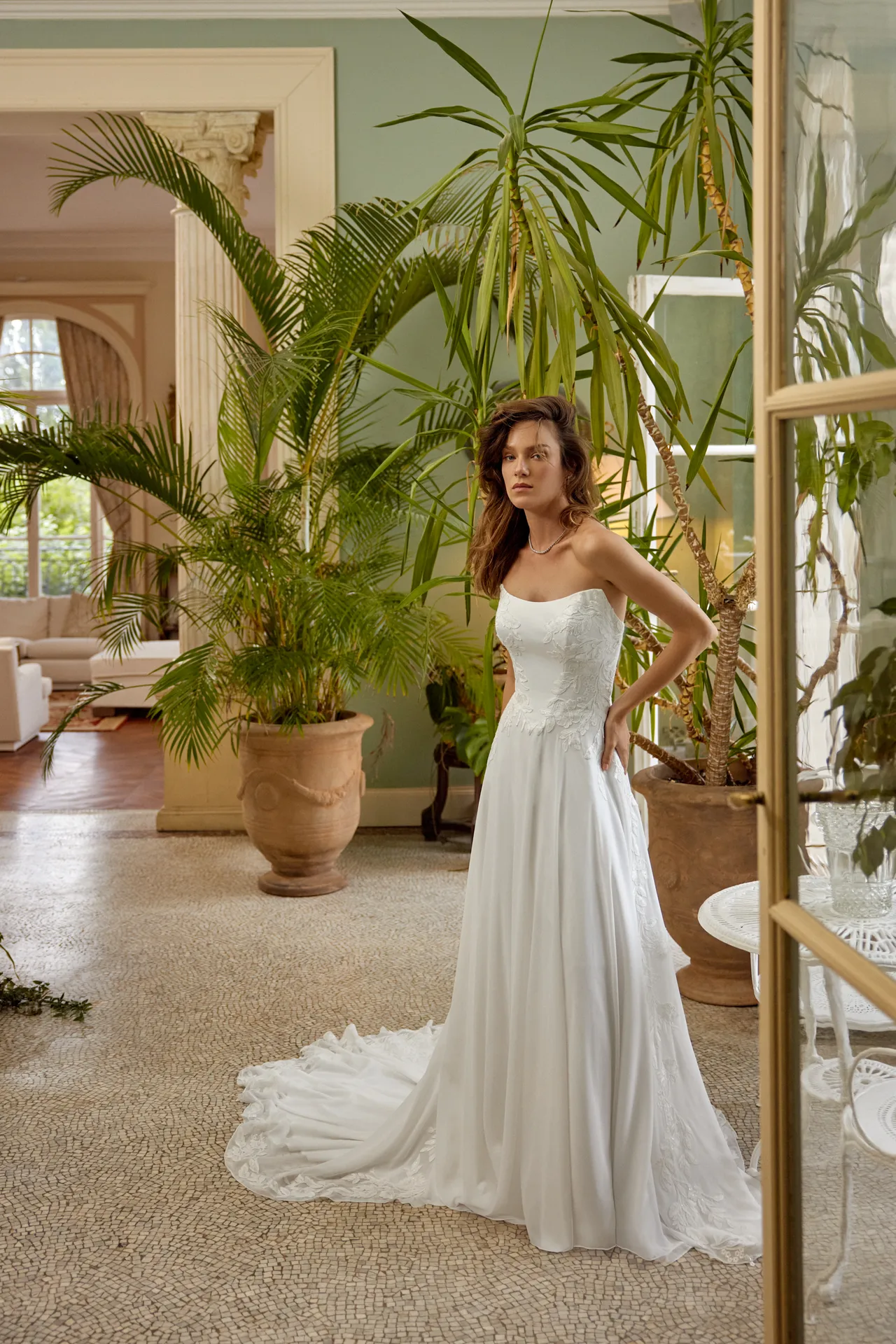
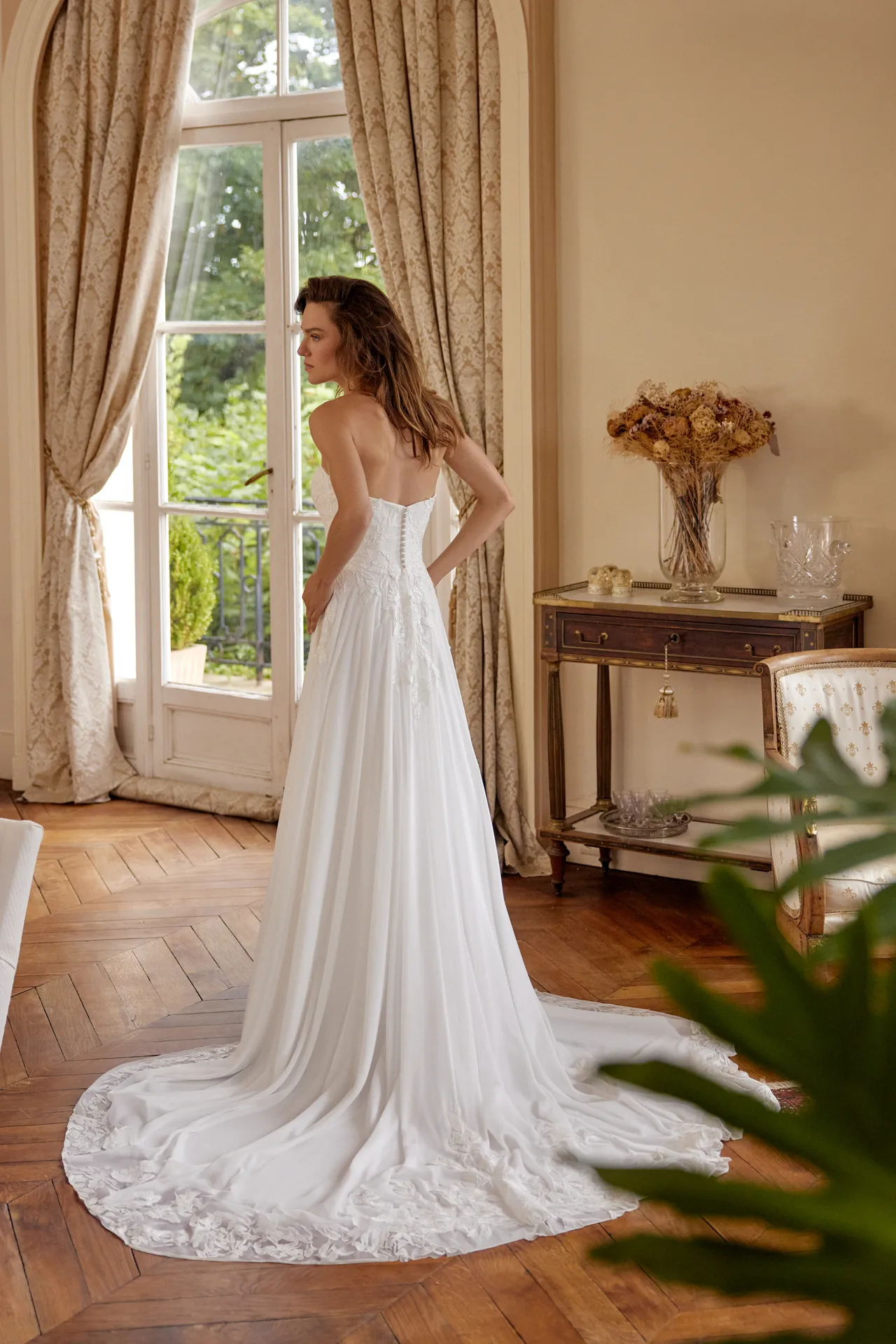
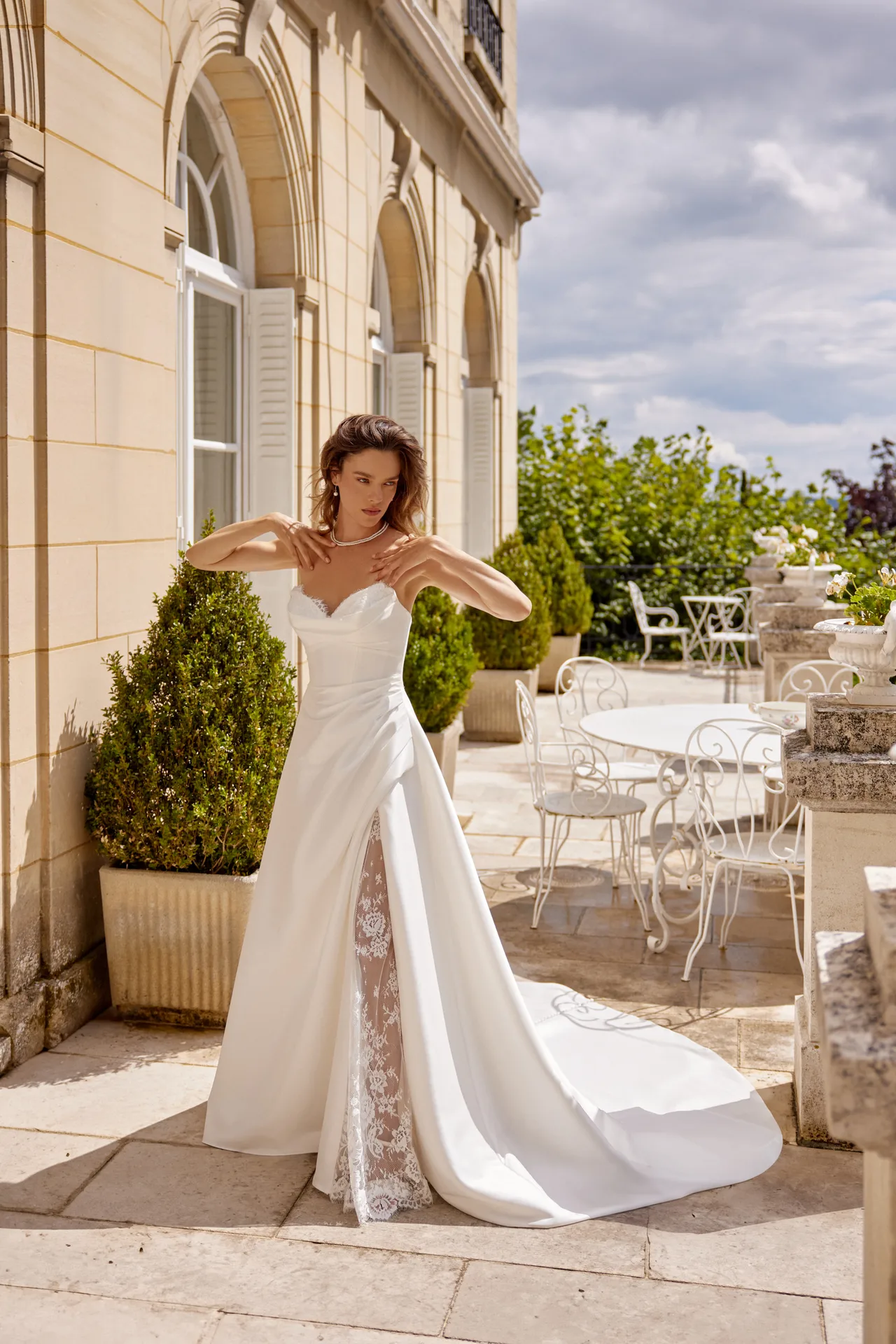
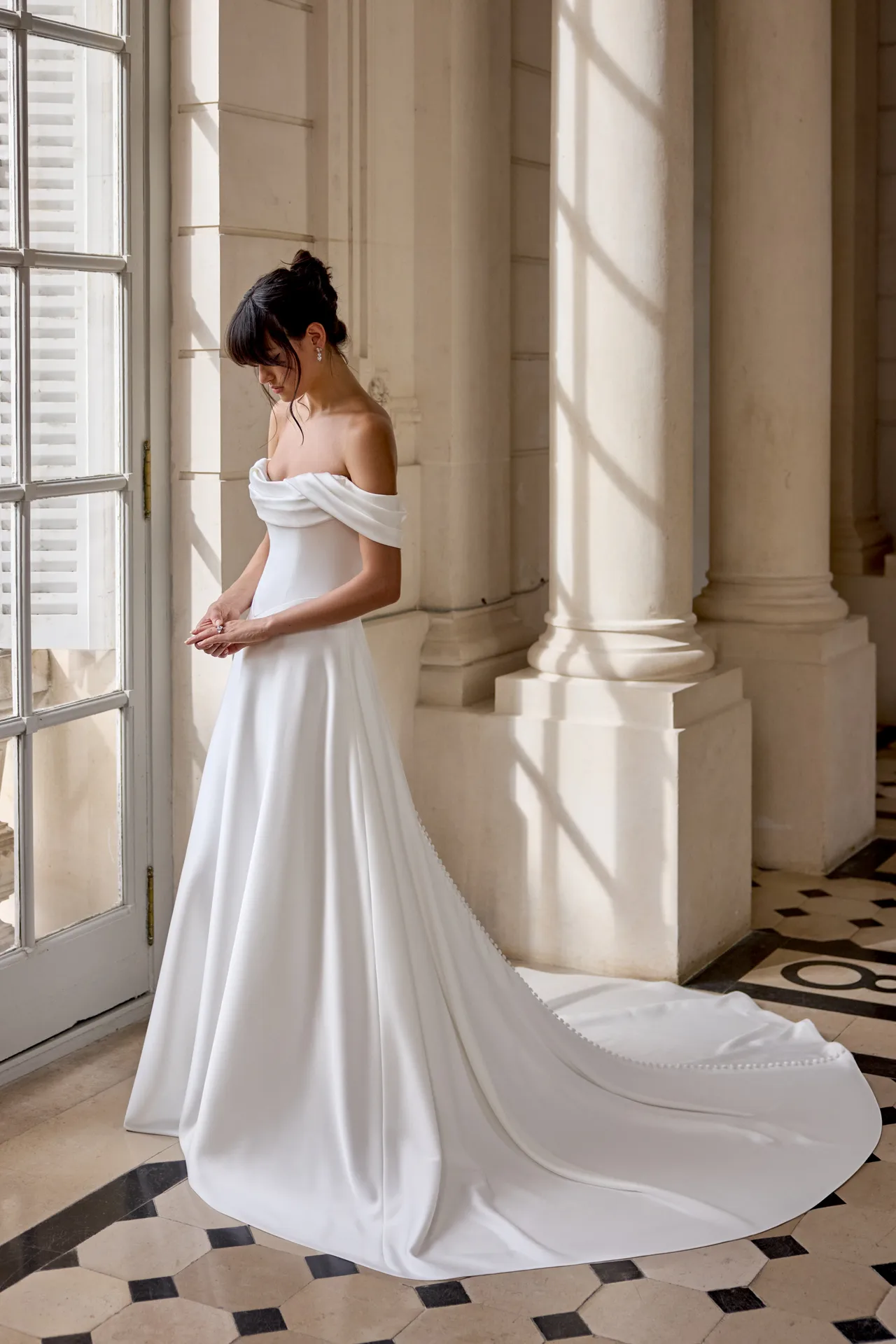
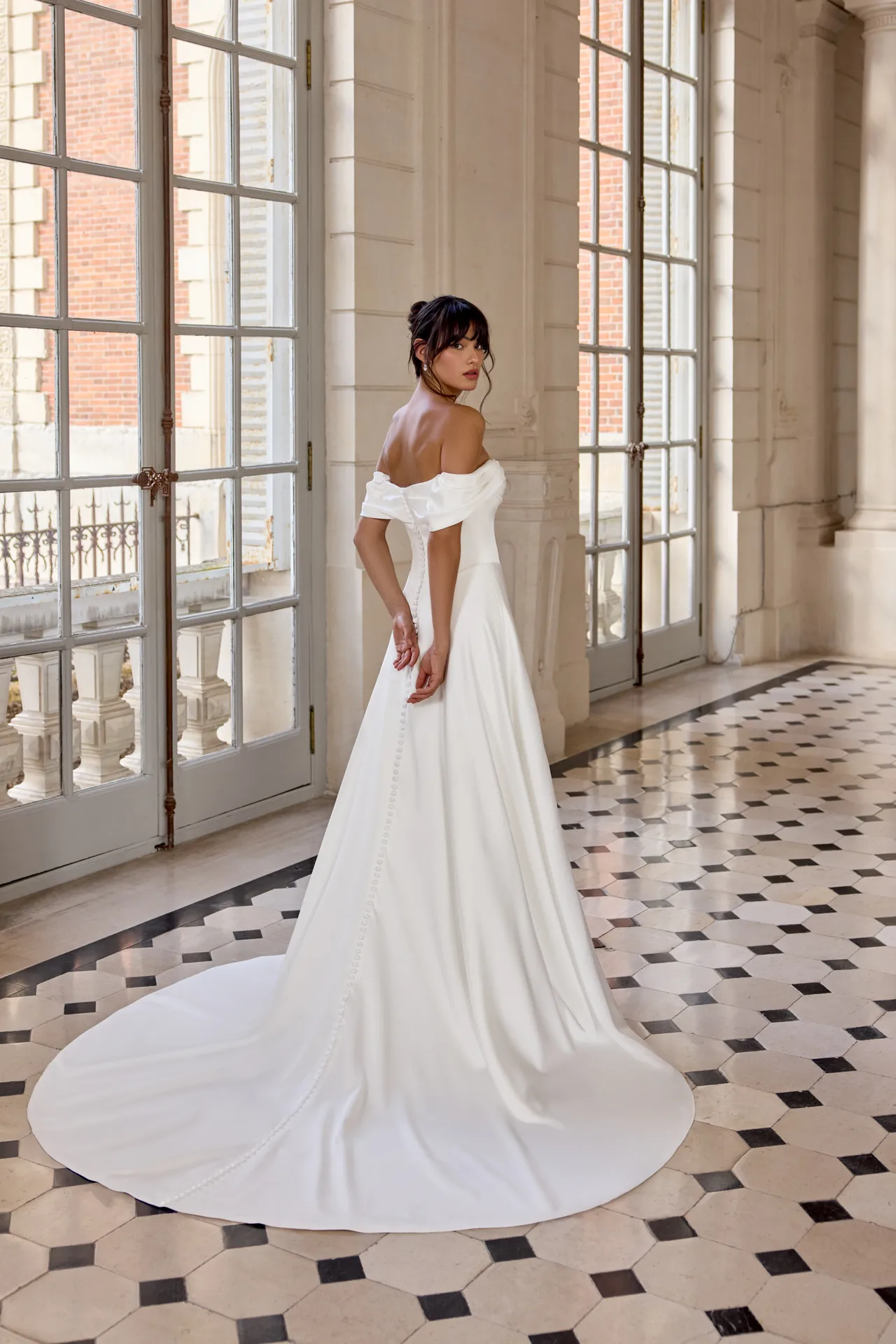
It extends roughly one meter behind you. It’s a favorite among many brides because it creates that romantic effect at your entrance and in photos without becoming heavy. It works well in a church, a ballroom and at a finca too.
Cathedral train
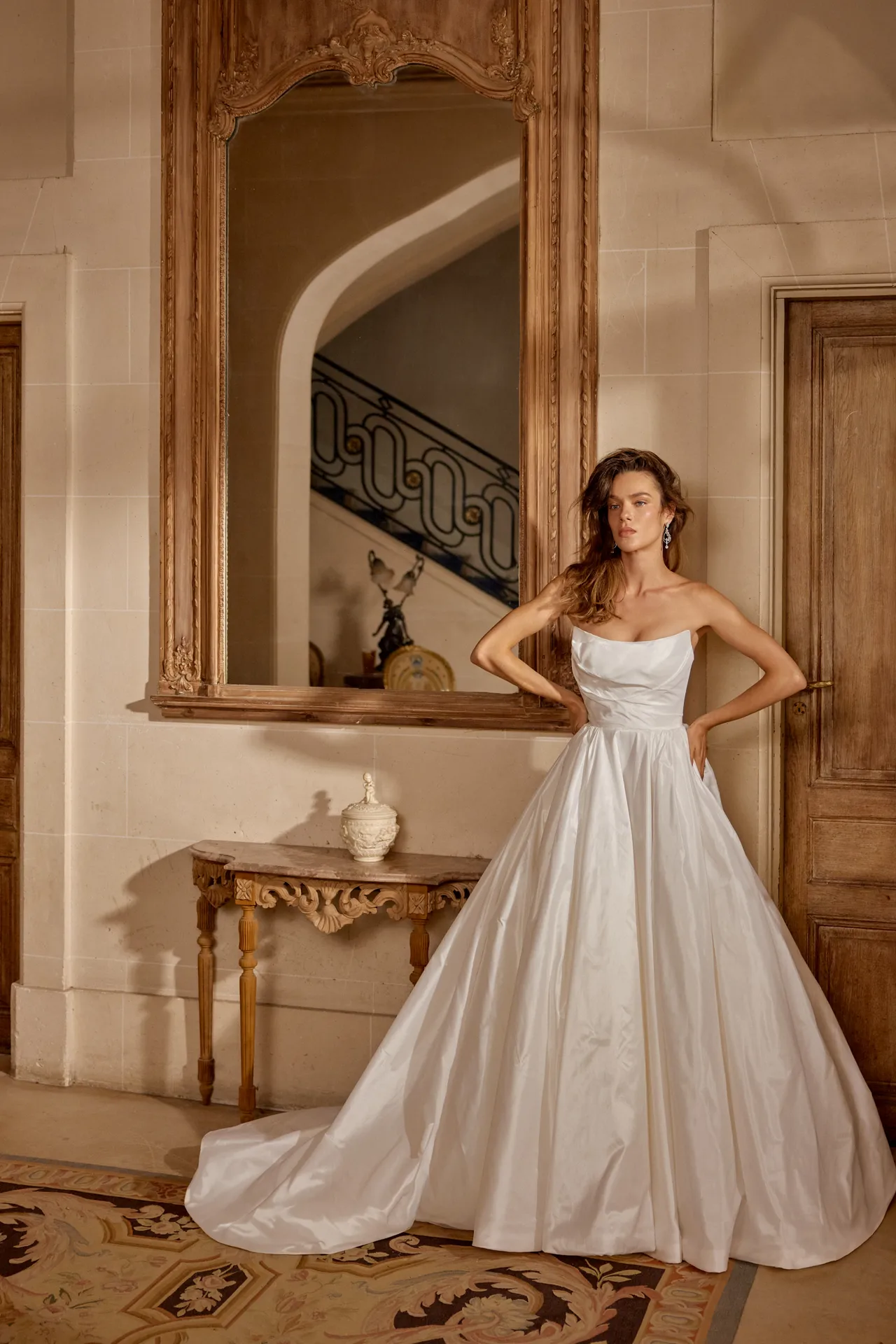
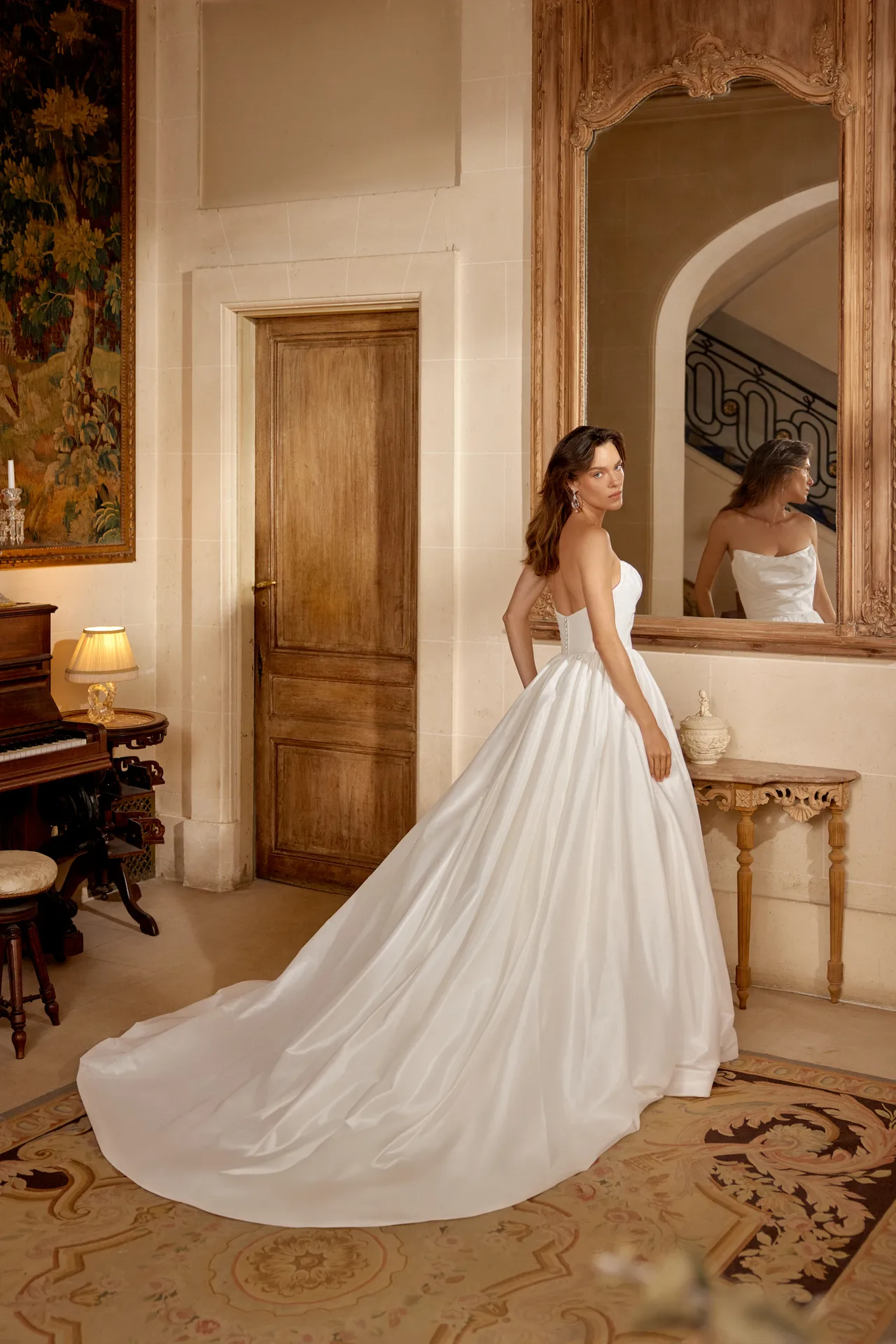
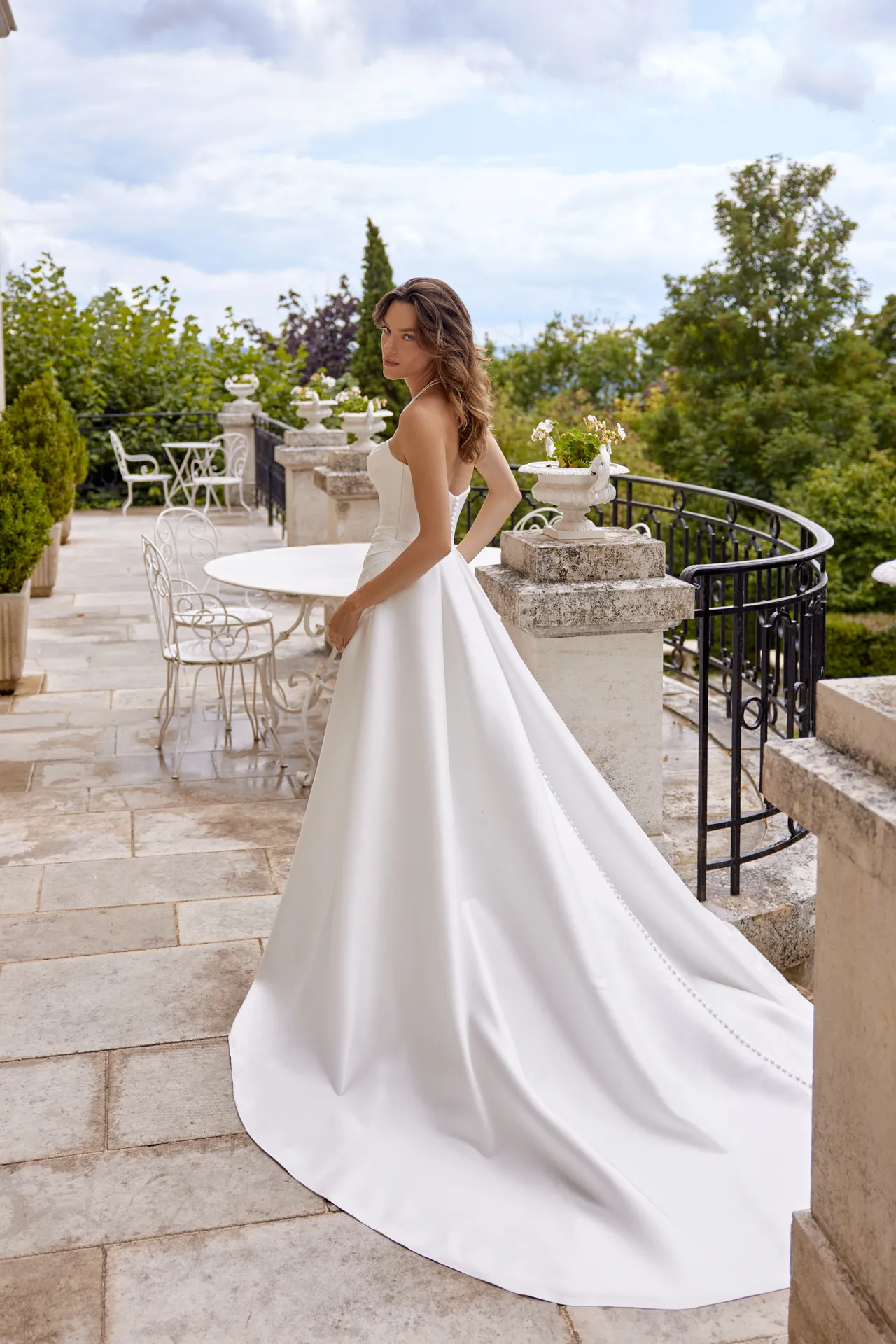
Much longer, designed for wide aisles and formal ceremonies. It’s majestic in a large church and in photos from behind, but it needs a secure bustle for the reception.
Between the sweep and the chapel train you’ll also hear about the “court” train, and beyond the cathedral there’s the “royal” or “monarch” train, which is very uncommon.
Which train suits my wedding venue?
| Venue | Trains that usually work | Keep in mind |
|---|---|---|
| Church or cathedral | Chapel, cathedral | A long aisle really shows off the train |
| Ballroom or club | Sweep, chapel | Smooth floors, comfortable to move around |
| Finca or garden | Sweep, chapel | Grass, dirt and stairs can soil the train |
| Beach | Sweep | Sand sticks to heavy fabrics |
| Civil wedding or notary office | Sweep | Small, less formal spaces |
If your ceremony is in one place and the reception in another, think about both. Many brides choose a chapel train for the church and then bustle it for the reception. If you’re planning both a civil and a religious ceremony, our guide to dresses for civil and religious weddings can help.
How is a wedding dress train bustled for the reception?
The bustle (recogido in Spanish) is a system of buttons, hooks or ribbons that lifts the train and fastens it to the skirt so it doesn’t drag. It’s usually added during alterations, once the dress has been fitted to you. These are the most common types:
Over bustle (American bustle)
The train is lifted and hooked at one or several points on the back of the skirt, usually at waist or hip level. It creates a full, voluminous drape and looks lovely on tulle, organza or satin dresses.
Under bustle (French bustle)
The train is folded underneath and secured with ribbons beneath the skirt. From the outside it looks like a soft, gathered drape, almost as if the dress had no train. It works beautifully with crepe, satin and smooth skirts.
Wrist loop
A small ring or ribbon sewn to the edge of the train that you slip over your wrist. It’s simple and works on lightweight sweep or chapel trains, though it keeps one hand busy.
Detachable train or overskirt
Some designs let you remove the train or a layer of the skirt for the reception. If you love the idea of “two looks in one,” ask at your appointment which styles allow it.
A practical tip: ask someone you trust (your mom, a sister or your maid of honor) to come with you to your final fitting to learn how to bustle the dress. You can read more about that process in our guide to wedding dress alterations.
How do I choose a train length if I’m petite or very tall?
The train doesn’t depend on your height but on the proportion you’re after. On petite brides, a chapel train visually lengthens the figure; on tall brides, a cathedral train looks striking. What does matter is the fabric: trains in lightweight fabrics like tulle or chiffon feel lighter than those in mikado or heavy satin.
Every body is different, and every body deserves to feel comfortable. If you’d like ideas for your figure, take a look at our guide to wedding dresses by body type.
Does a train go with any silhouette?
Yes, although each silhouette shows it off differently. On a mermaid dress, the train starts at the knee and flares out dramatically. On an A-line, it flows continuously from the waist. On a ball gown, it adds to the volume of the skirt and becomes the star.
Try on the train before you decide
Seeing how a train moves when you walk, turn and sit down is the best way to decide. At our store in Bucaramanga, a bridal consultant will help you try different lengths and tell you which bustle options each dress has. Book your appointment and walk in the train you’ve dreamed of.
Frequently asked questions
What train length is best for a wedding at a country estate (finca)?
At fincas with grass, dirt or stairs, many brides prefer a sweep or chapel train, which looks beautiful without dragging too much. If you dream of a longer train, a good bustle lets you move freely after the ceremony.
How do you bustle a wedding dress train for dancing?
The usual approach is to add a bustle during alterations: buttons, hooks or inner ribbons that lift the train and fasten it to the skirt. Wrist loops are also an option for simpler trains.
Can you remove the train from a wedding dress?
Some designs have a detachable train or an overskirt that comes off for the reception. Not every dress allows it, so ask at your appointment what options the style you love offers.
Should the train be longer than the veil?
There's no fixed rule. A veil longer than the train creates a very dramatic effect, and a shorter one lets the details of the dress show. What matters is that the two look harmonious together.