Wedding Dress Fabrics: A Guide to Lace, Tulle, Crepe and More
When you try on wedding dresses, what makes you fall in love often isn’t just the design: it’s how the fabric feels against your skin and how it moves when you walk. The same silhouette can look completely different in crepe than in tulle. That’s why understanding fabrics helps you describe what you’re looking for, try on what truly suits you, and choose something comfortable for your wedding day.
Here we walk you through what each fabric is like, what structure it gives the dress, what kind of wedding it shines in, and how it looks in photos.
What types of fabric are used in wedding dresses?
There are many, but almost every dress combines some of these:
- Lace: texture, romance and detail.
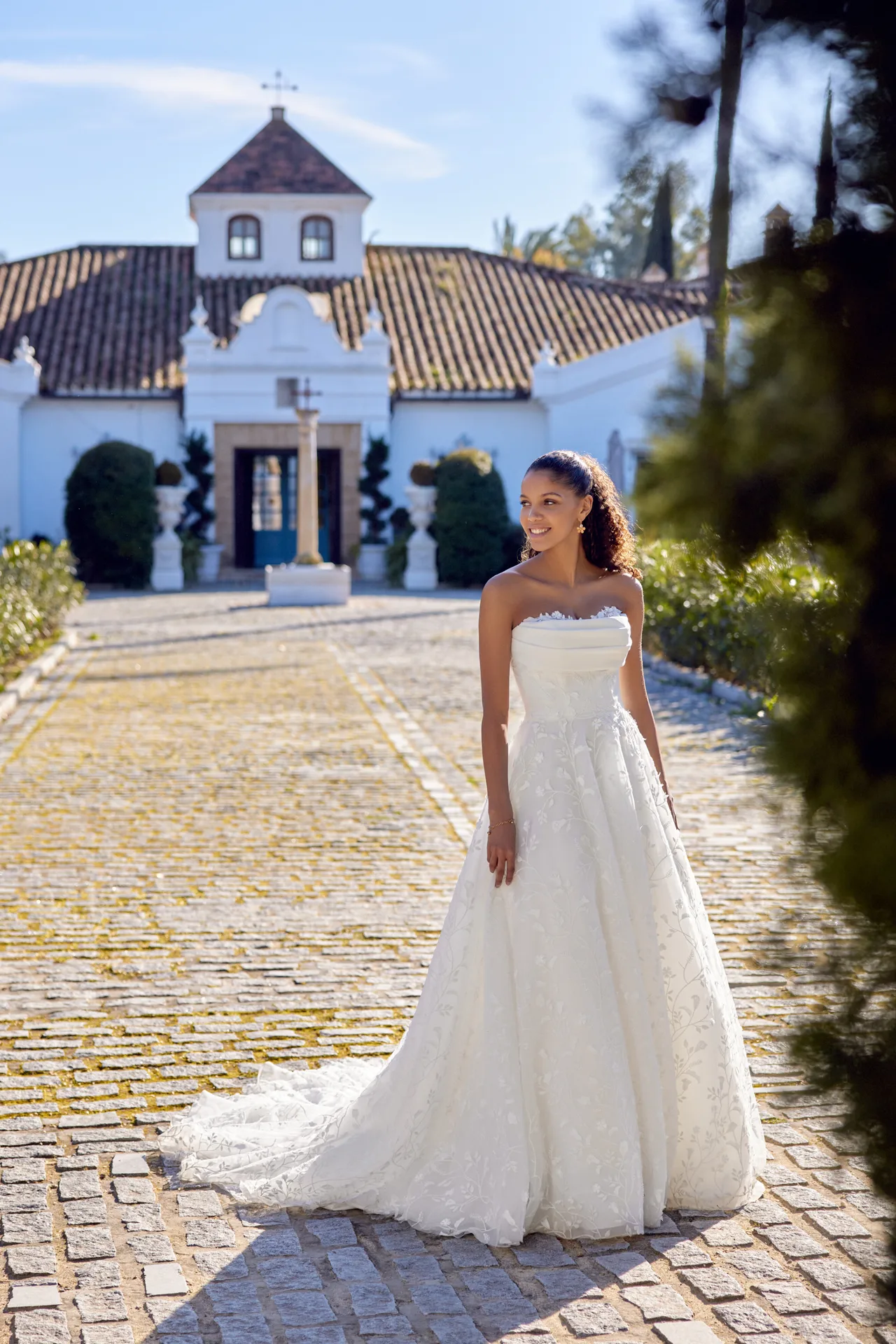
- Tulle: lightness and ethereal volume.
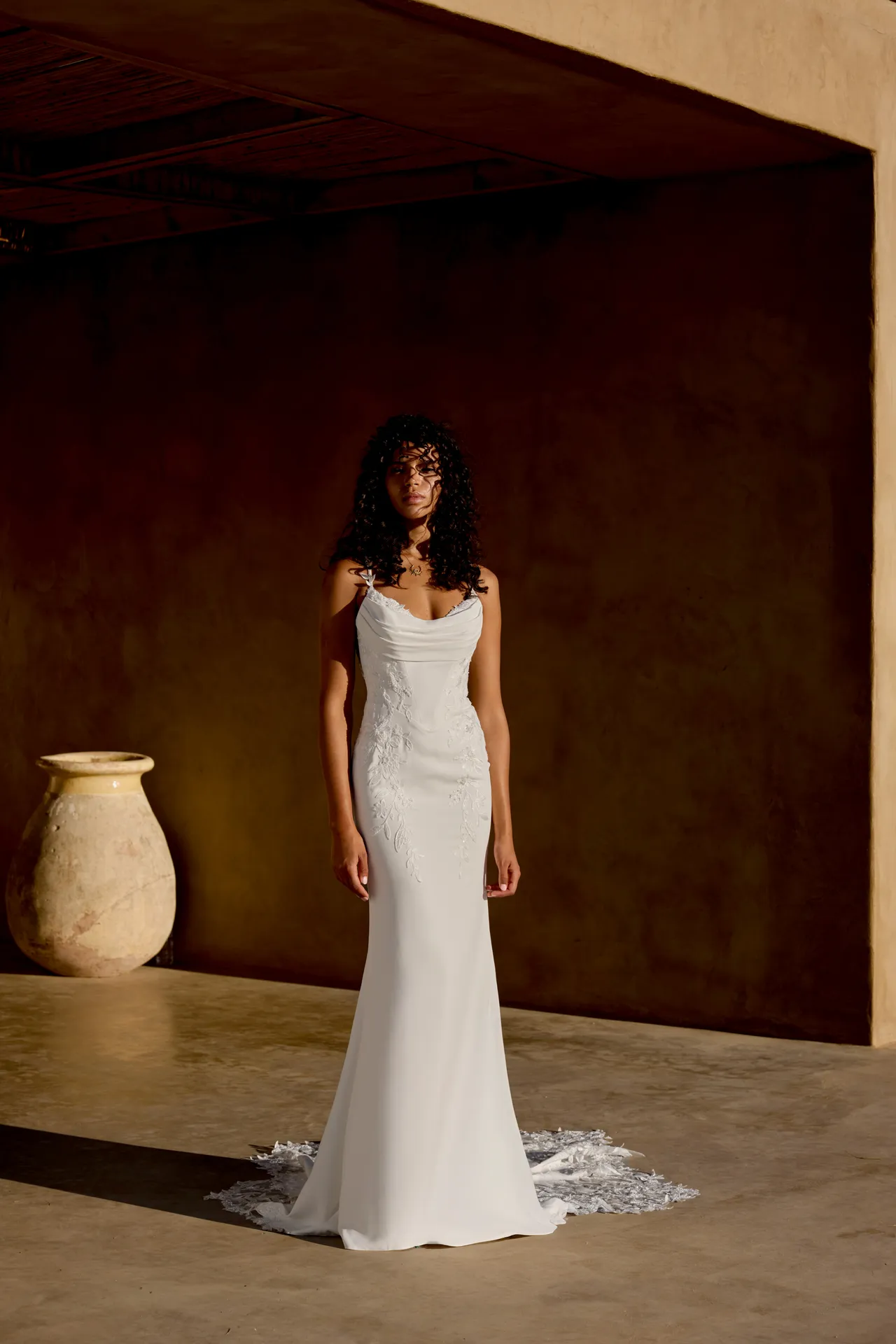
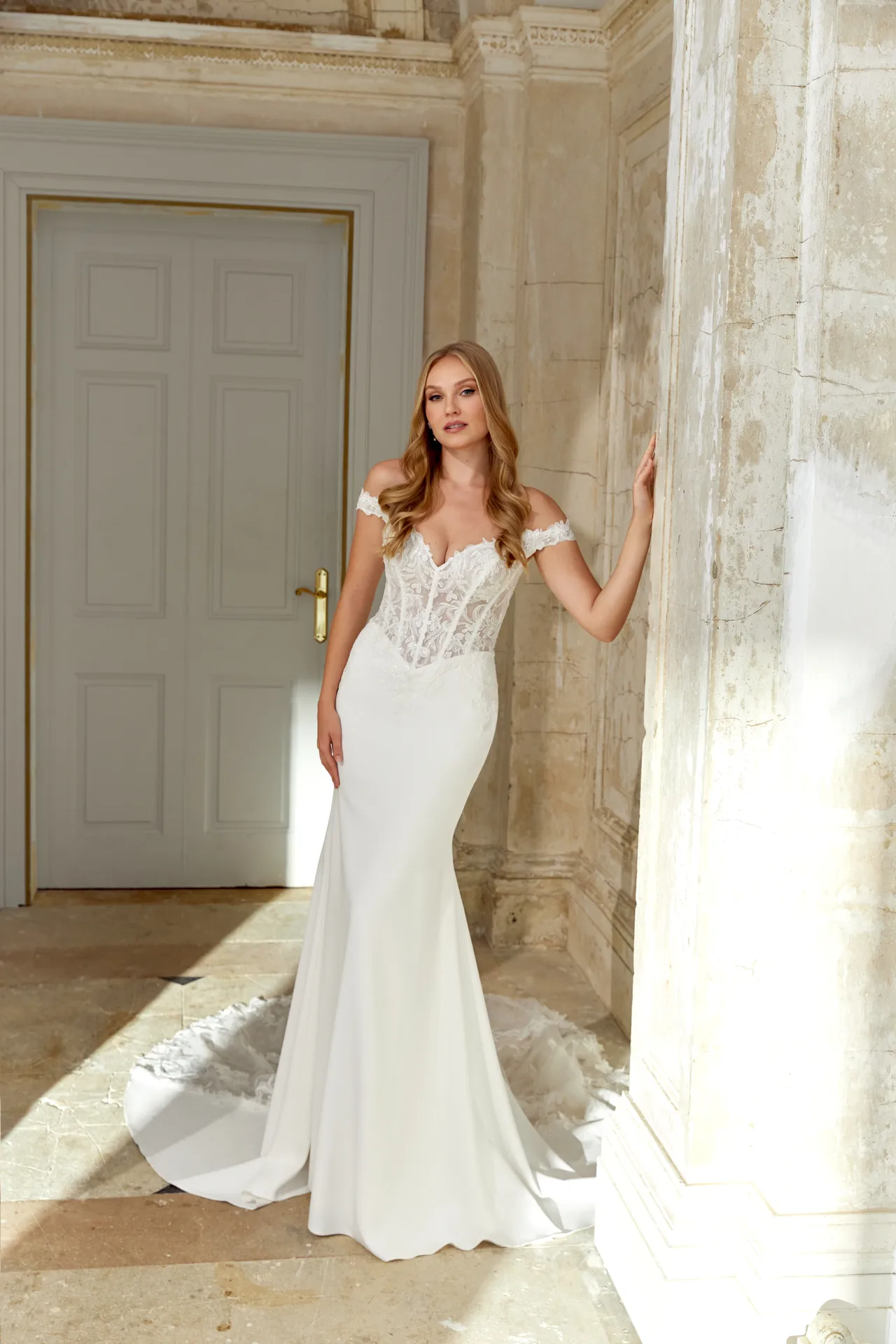
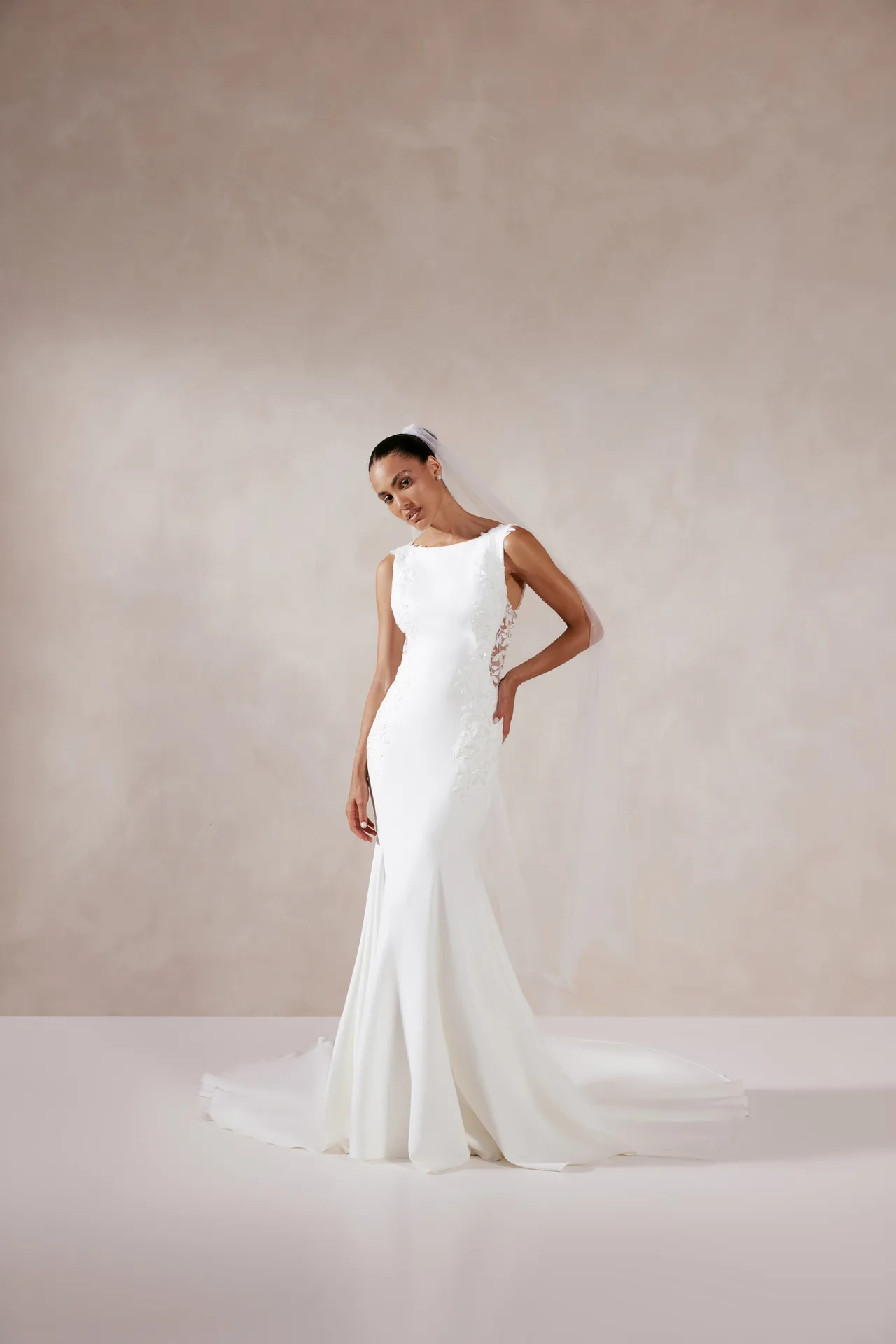
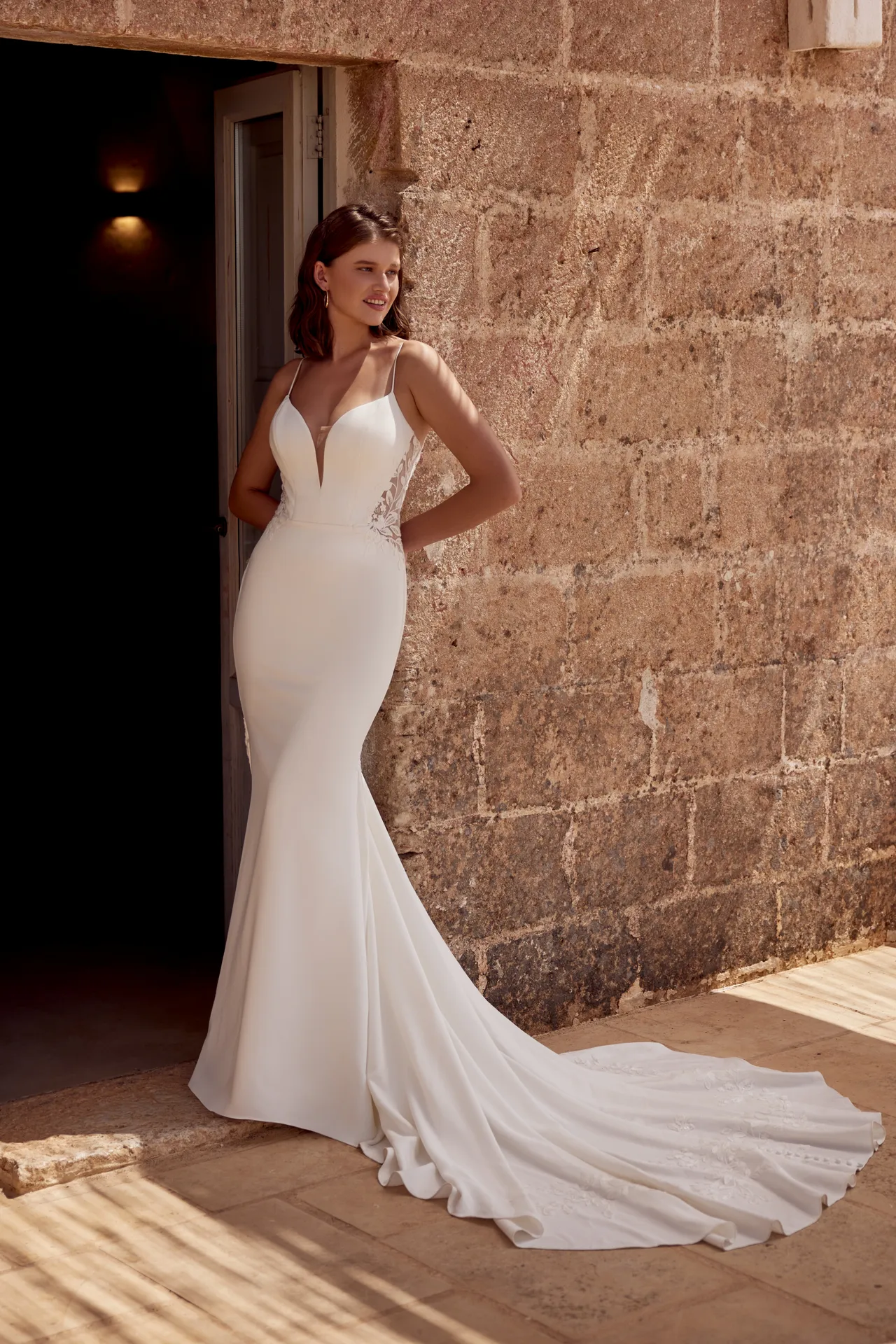
- Crepe: clean lines and a fluid drape.
- Mikado: structure and architectural elegance.
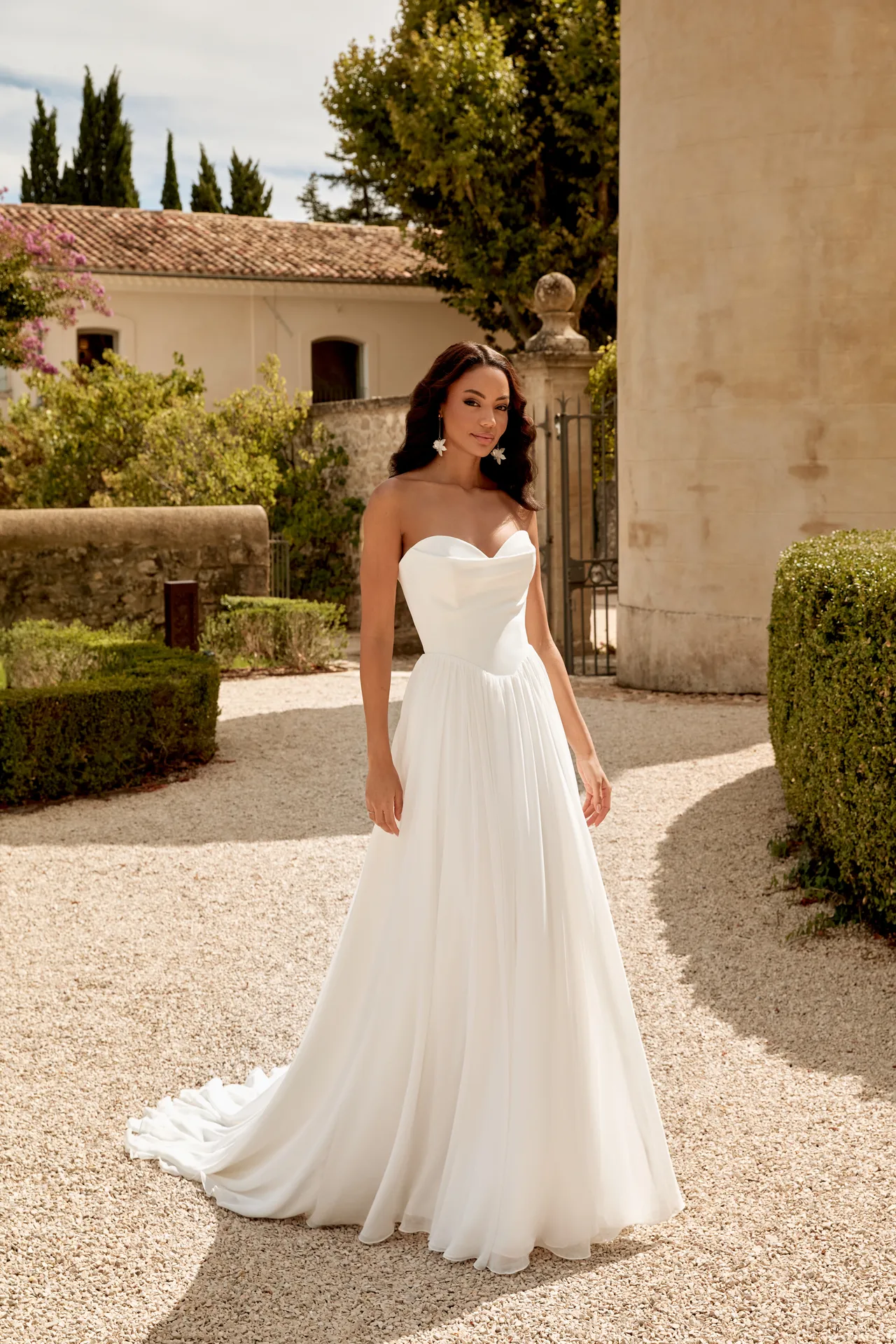
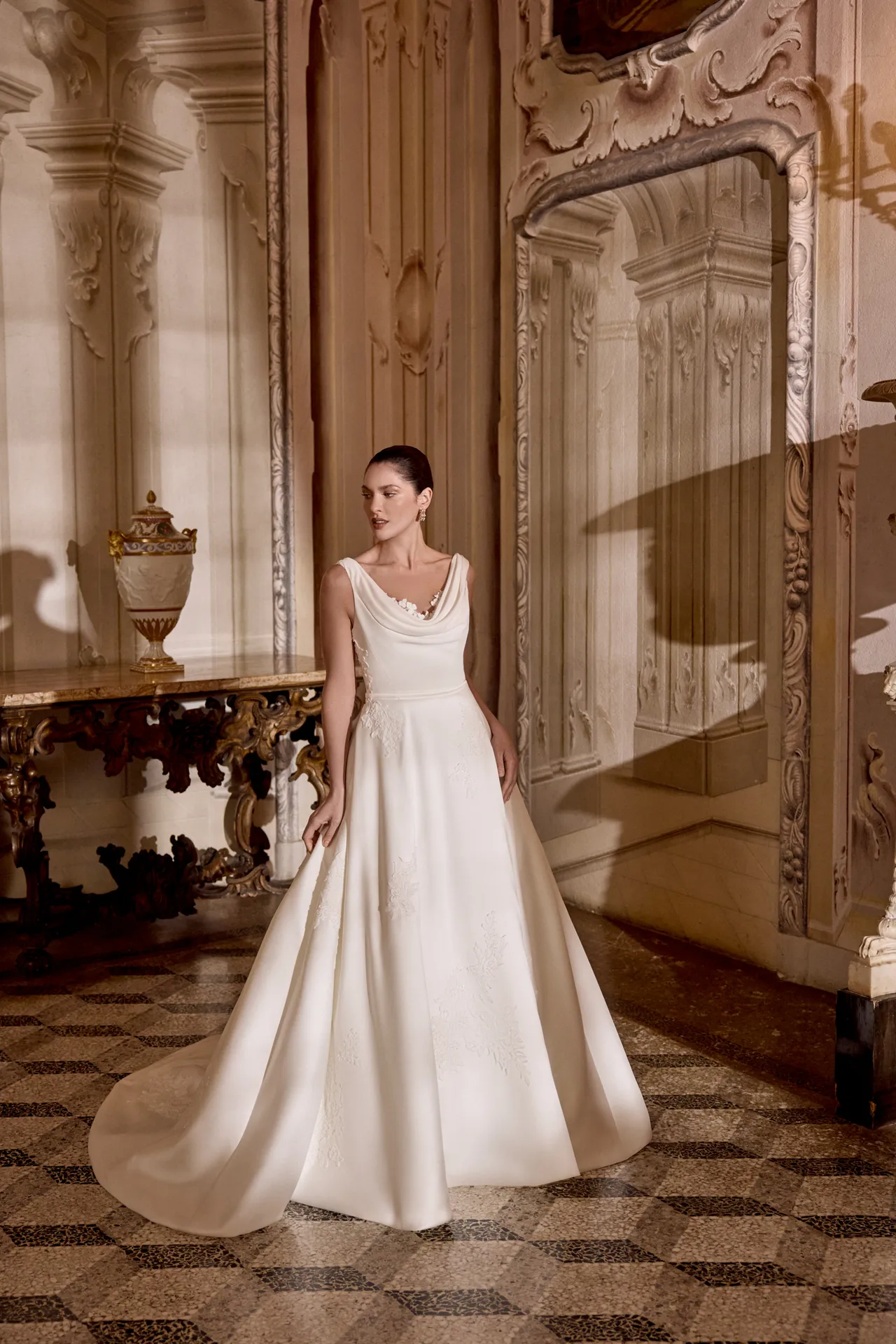
- Satin: soft sheen and a weighted drape.
- Organza: sheerness with body.
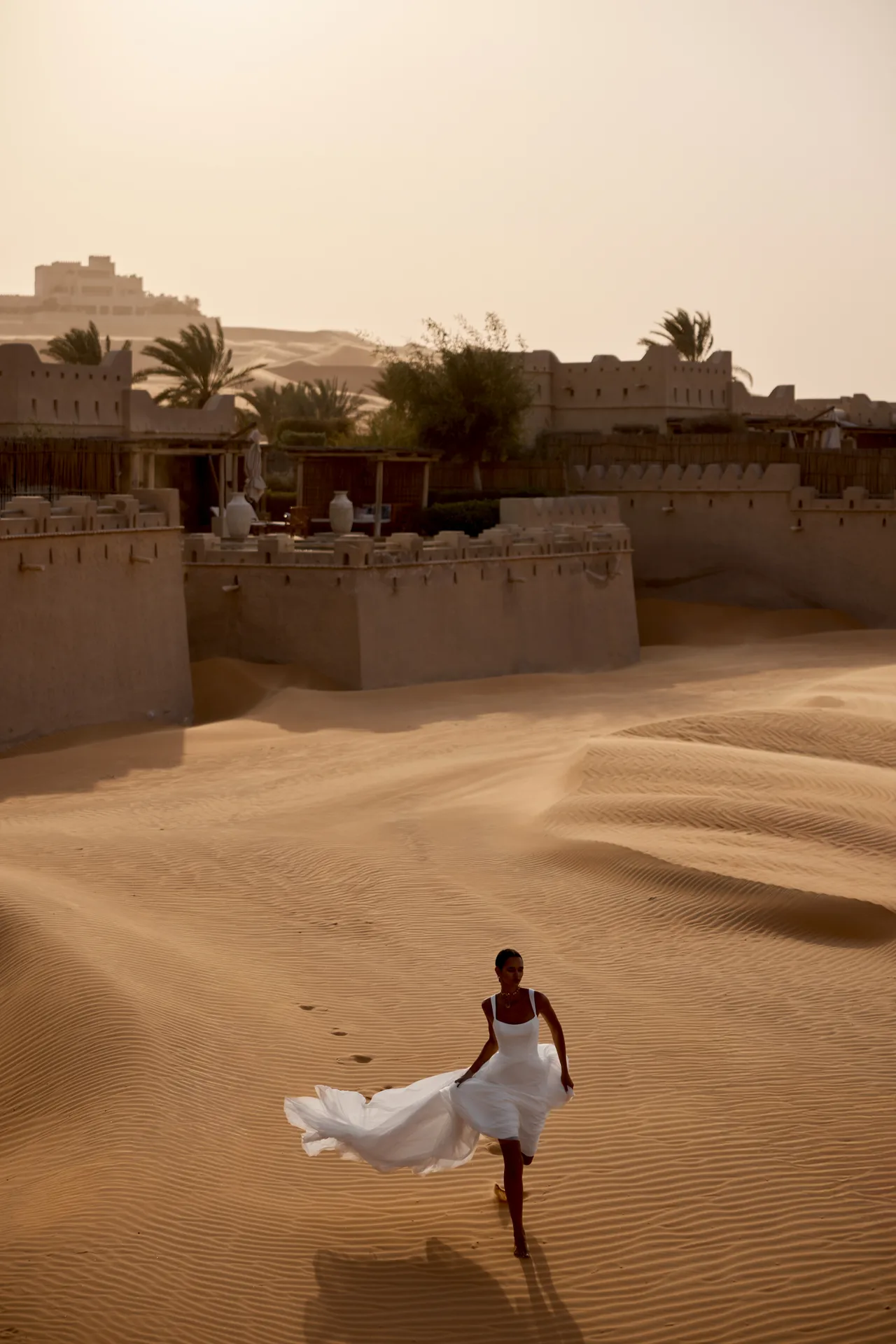
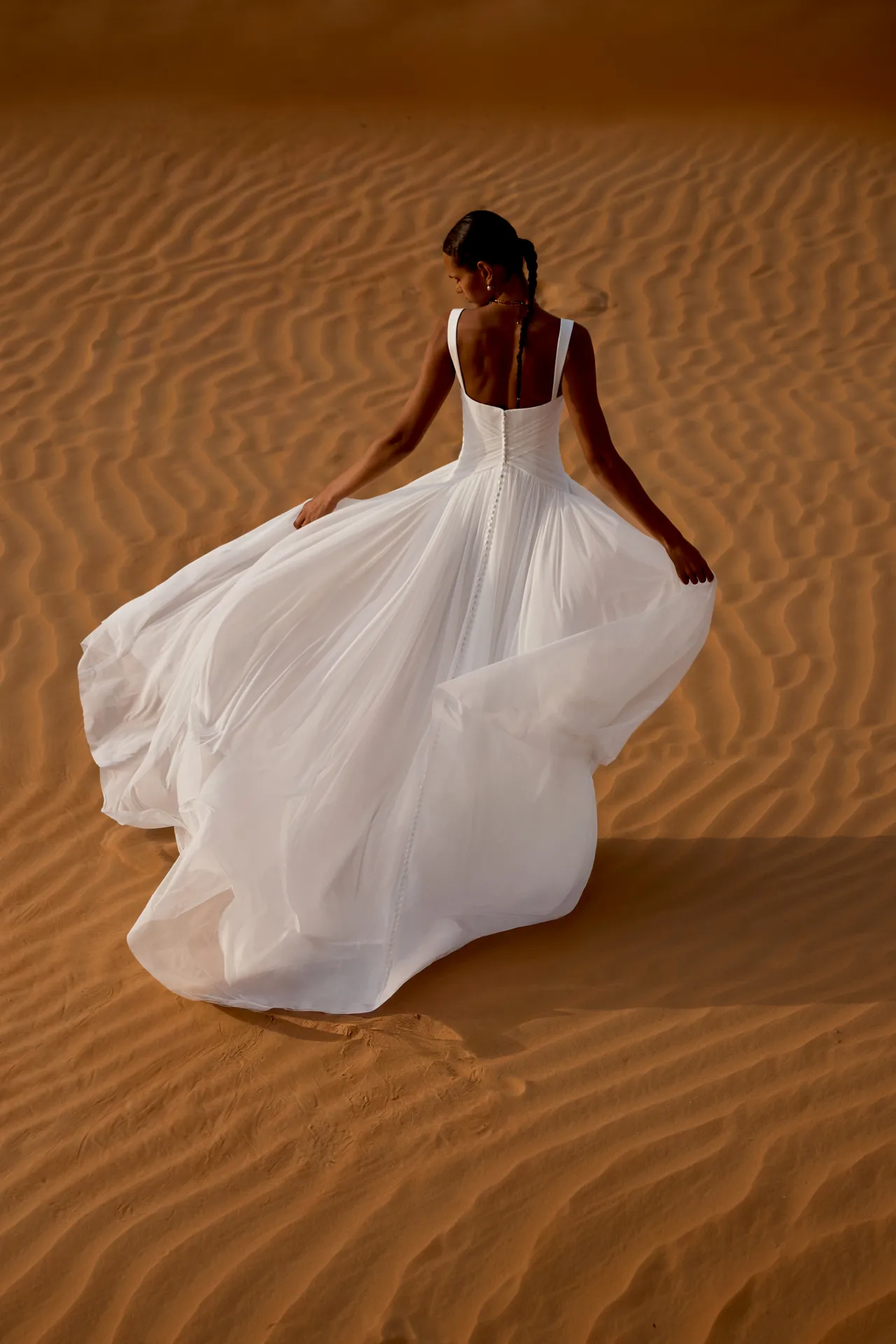
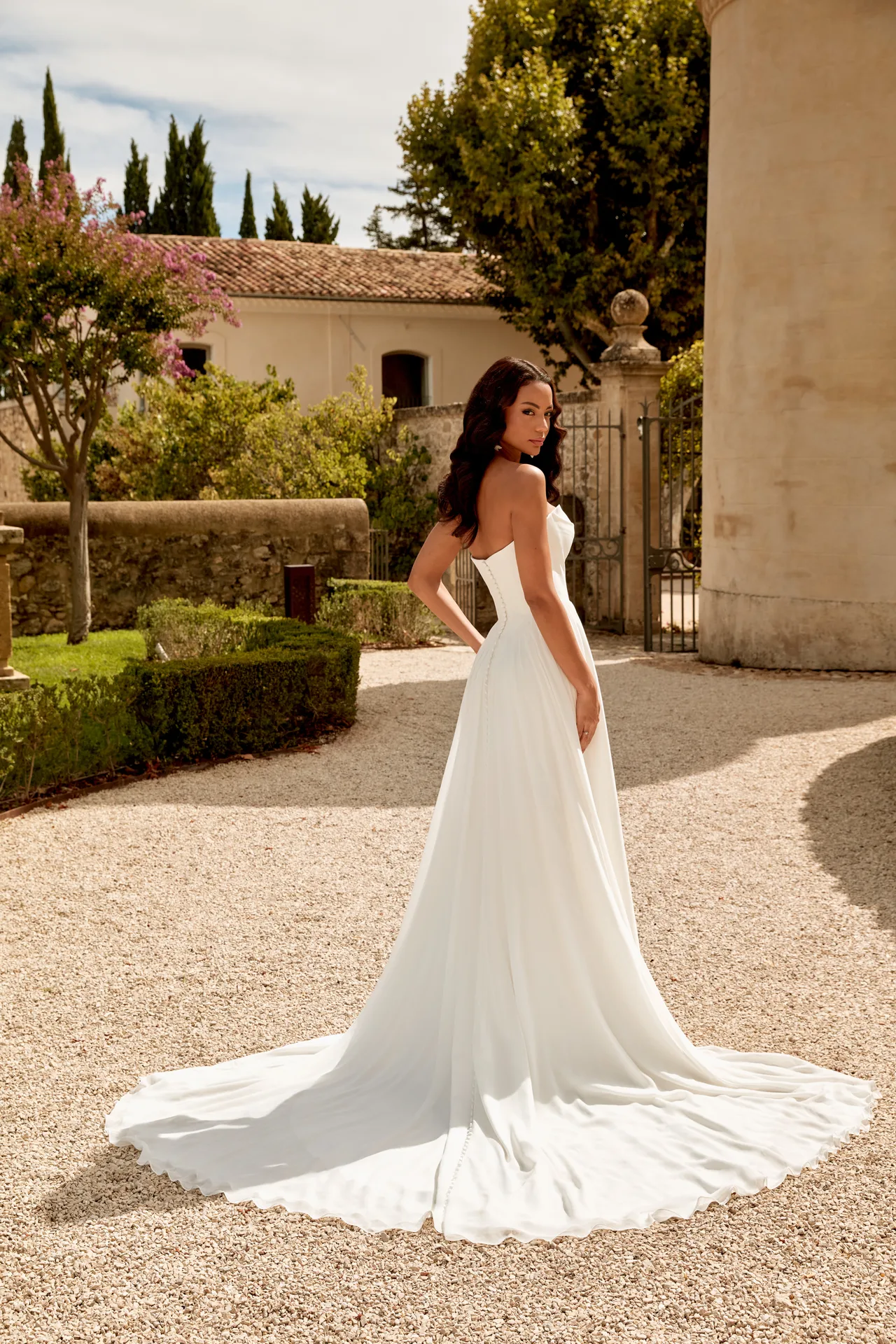
- Chiffon: lightness and movement.
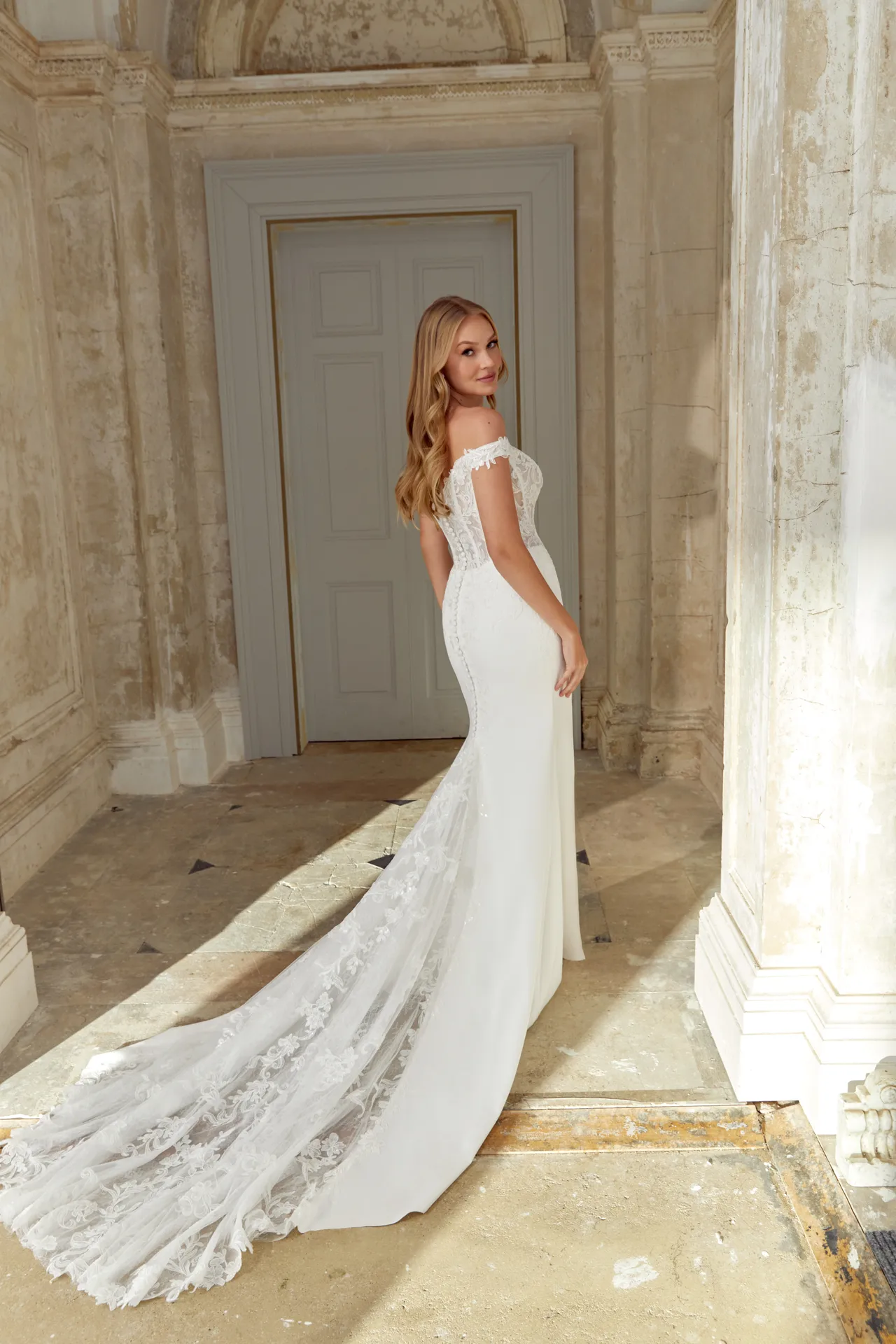
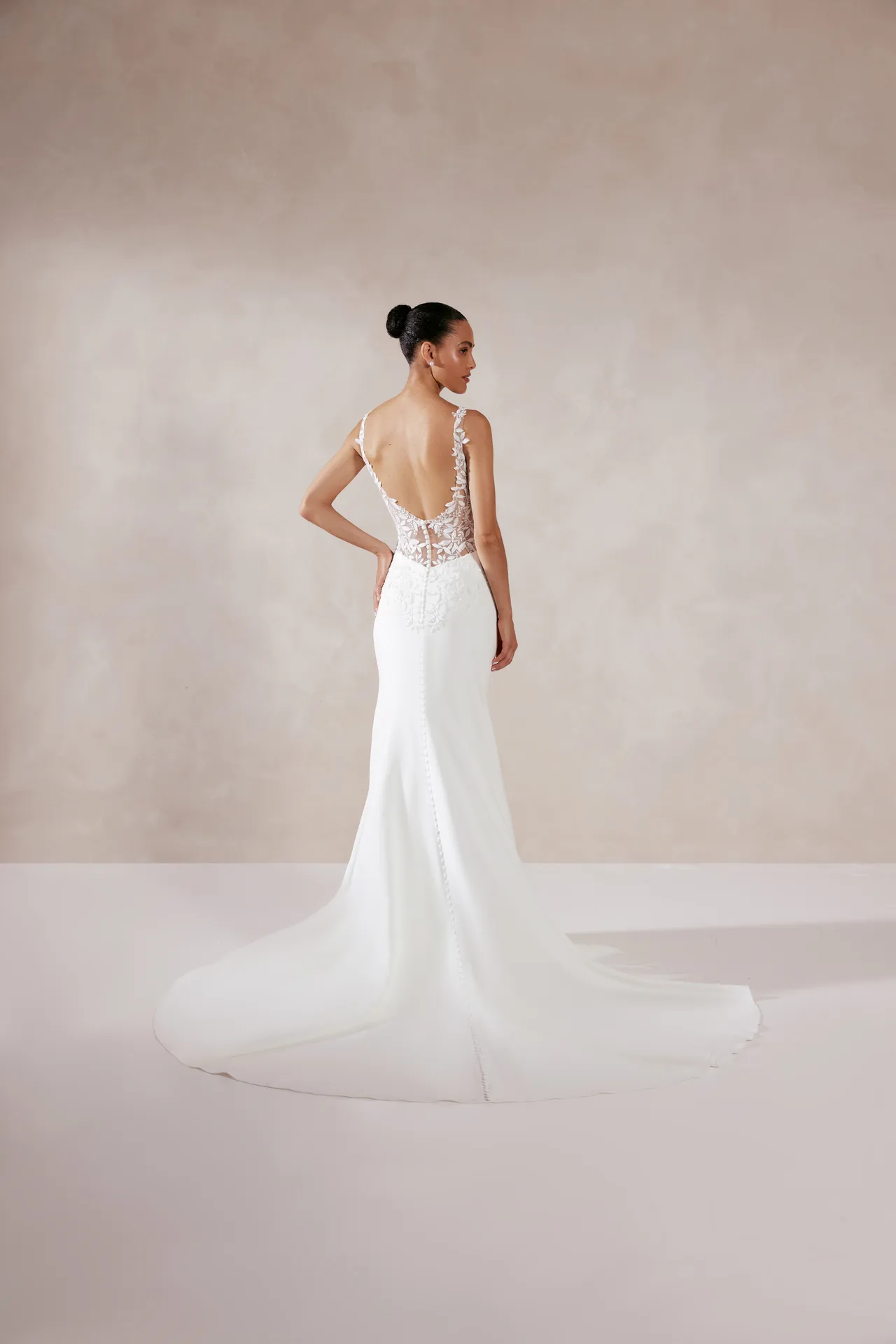
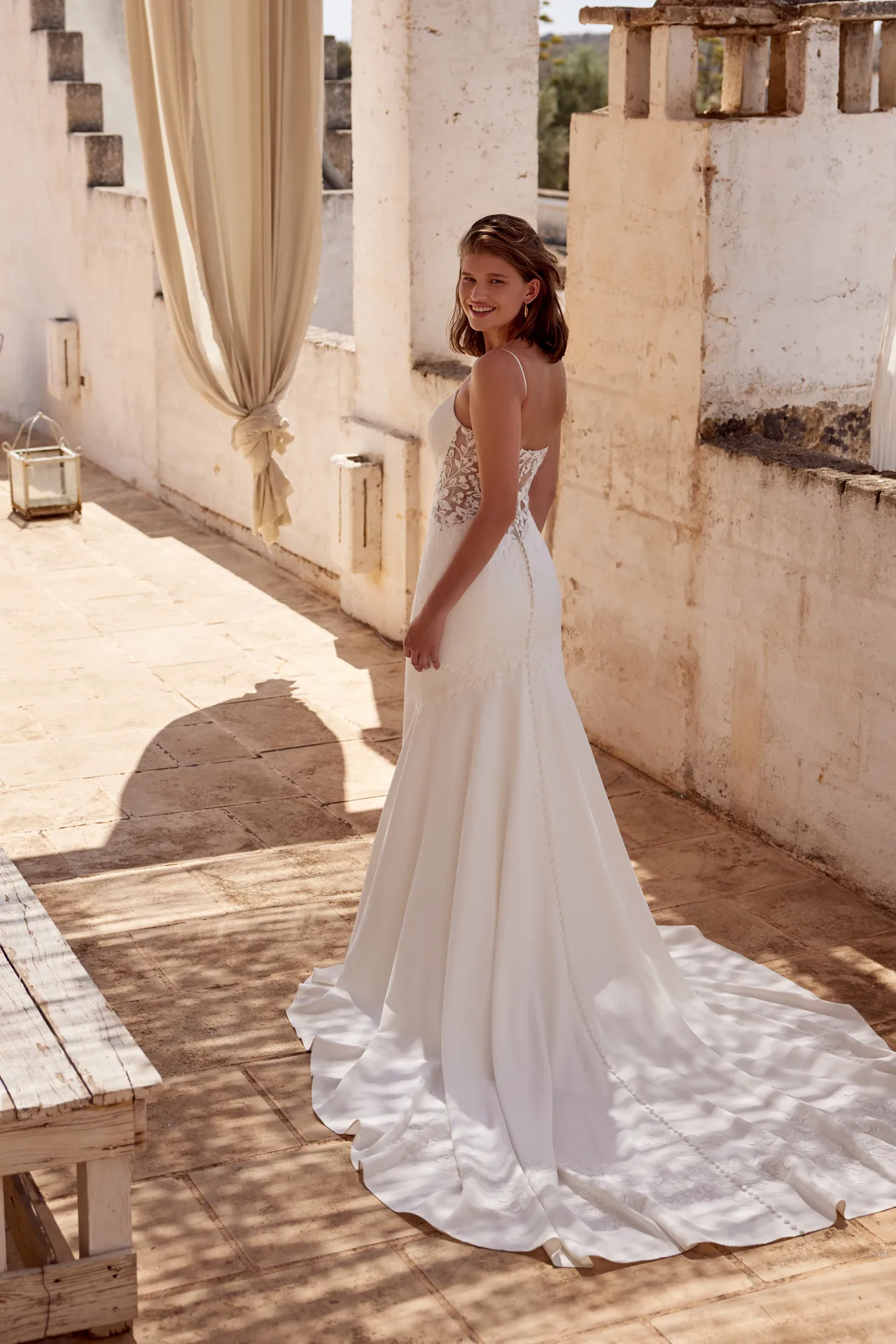
Many designs mix two or three: a lace bodice with a tulle skirt, or a crepe dress with a lace back, for example.
What type of lace is best for a wedding dress?
There’s no single “best” lace, just the one that matches your style. These are the most common:
Chantilly lace
Fine, flat and very delicate, with flowers on a sheer mesh and scalloped, eyelash-style edges. It’s ideal if you love a soft, romantic look without much volume.
Alençon lace
Its motifs are outlined with a raised cord, which gives them more definition. It looks classic and elegant, and it’s beautiful on bodices and veil edges.
Guipure lace
A heavier lace with no background mesh: the motifs are joined directly to one another. It has presence and a more modern or bohemian feel, depending on the design.
Lace appliqués and beading
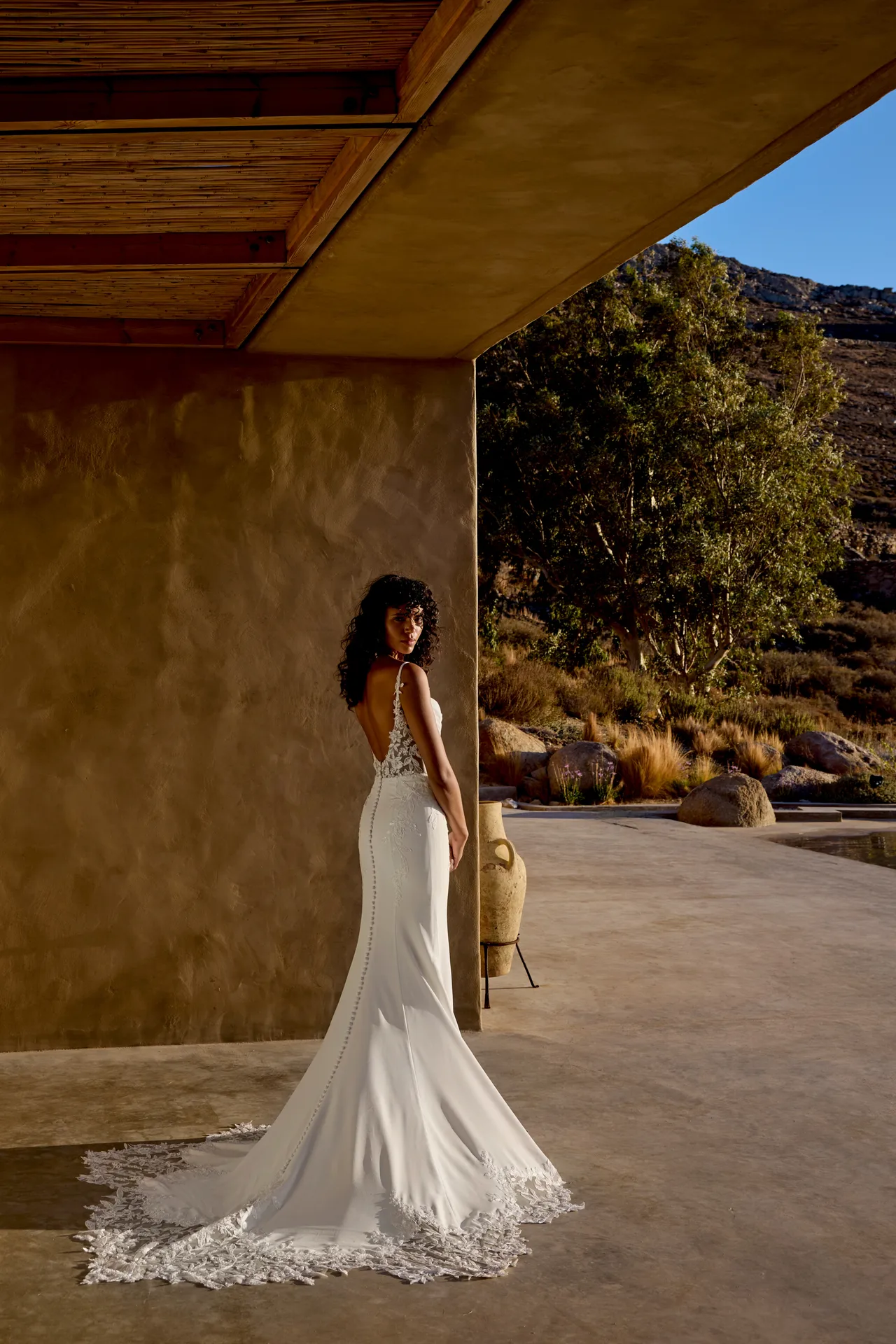
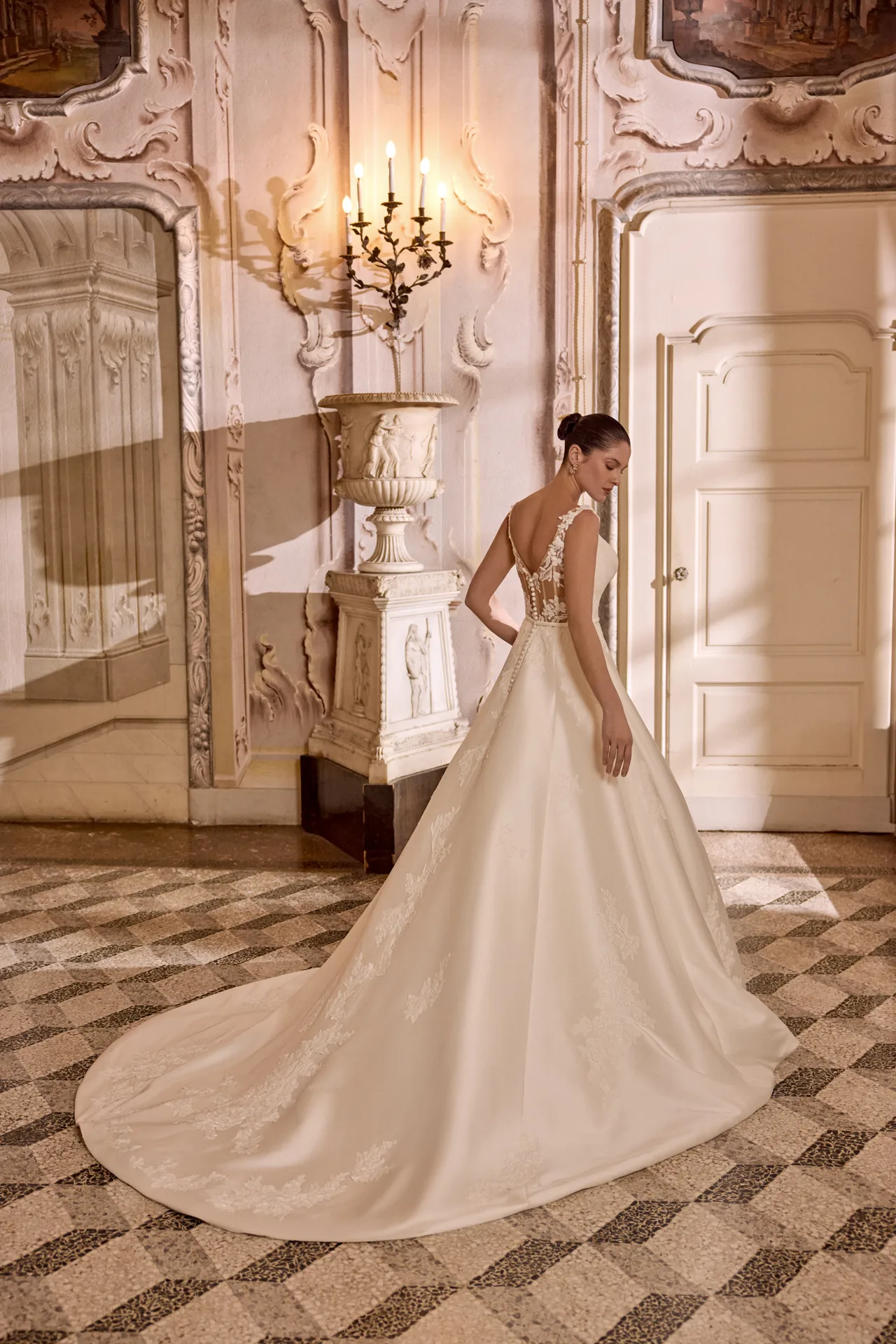
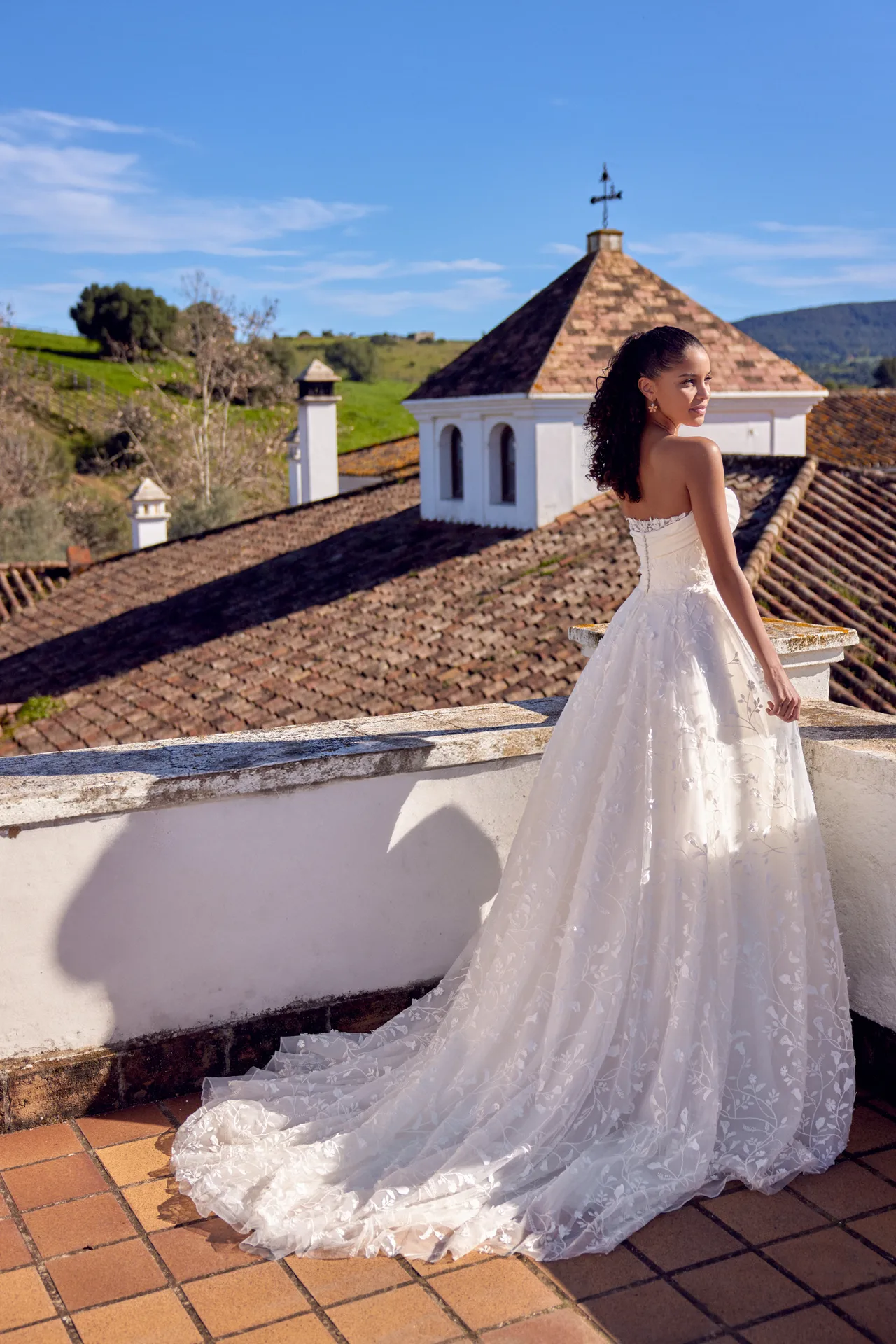
Many dresses feature lace appliqués sewn onto tulle, sometimes with sequins, pearls or crystals. That’s how you get the effect of “flowers floating” on your skin.
If lace is your dream, browse our selection of lace wedding dresses.
How does each fabric feel, and what structure does it give the dress?
| Fabric | Feel | Structure | Looks best in |
|---|---|---|---|
| Lace | Textured, delicate | Depends on the lining | Almost any silhouette |
| Tulle | Light, airy | Soft volume through layers | Ball gown, A-line |
| Crepe | Soft, matte, with drape | Fluid, follows your figure | Mermaid, minimalist A-line |
| Mikado | Thick, firm | Lots of structure | Ball gown, A-line, pleated designs |
| Satin | Smooth, silky | Weighted drape | A-line, ball gown, classic cuts |
| Organza | Crisp, sheer | Light volume | Layered skirts, sleeves |
| Chiffon | Very light, airy | Fluid, moves with the breeze | Relaxed A-line, outdoor weddings |
An important detail: fluid fabrics (crepe, chiffon) follow your body, while fabrics with body (mikado, heavy satin, organza) build the shape for you. Neither is better: it depends on whether you want your dress to feel light or to have presence.
Which wedding dress fabric is best for warm or cool weather?
In Colombia, rather than seasons, we think in terms of climate and time of day.
- Warm climate or outdoor wedding: chiffon, lightweight crepe, soft tulle and fine lace. They weigh less and breathe better. We explain it in depth in our guide to wedding dresses for warm weather.
- Cool climate or evening wedding: mikado, satin and heavier laces feel cozy and look very elegant in candlelight or ballrooms.
- Mild climate: practically everything works; your style is what decides.
Which fabric looks best in photos?
They can all look spectacular, but each one behaves differently in front of the camera:
- Lace: adds texture and detail in close-ups. Back shots featuring lace tend to be among brides’ favorites.
- Tulle and chiffon: move with the wind and create very ethereal images, perfect for outdoor photos.
- Crepe: its matte finish looks clean and modern, and it shows off your silhouette beautifully.
- Satin and mikado: reflect light and give a luminous, luxurious finish. In strong sunlight the shine is more noticeable; talk to your photographer about the light.
A tip: ask about the fabric’s shade (white, ivory, champagne) and look at it in natural light during your appointment, because the color changes depending on the lighting.
How do I choose the fabric for my wedding dress?
Ask yourself these questions:
- How do I want to feel? Free and light, or in a dress that hugs and supports me.
- Where and at what time is the wedding? A country estate (finca) during the day, a church, a ballroom at night.
- How much will I dance? Lightweight fabrics make it easier to move during the reception.
- Which silhouette do I like? Some fabrics pair better with certain silhouettes. Check out our guide to wedding dress silhouettes if you’re not sure yet.
And if you come across words you don’t know, our bridal fashion glossary explains them.
Come feel the fabrics in person
Fabrics make much more sense when you touch them than when you read about them. At Sweetheart Novias in Bucaramanga, a bridal consultant will help you try on different fabrics and silhouettes so you can discover which one makes you feel like yourself. Book your appointment and come see them.
Frequently asked questions
What is the coolest fabric for a wedding dress?
Chiffon and lightweight crepe are usually the coolest options because they weigh very little and move with the breeze. Soft tulle is also light, although it depends on how many layers the skirt has.
Which wedding dress fabric wrinkles the least?
Crepe and mikado usually hold up quite well throughout the day. Satin and chiffon tend to show wrinkles more, so it helps to sit down carefully and plan for a good steaming before the ceremony.
What is the difference between Chantilly lace and Alençon lace?
Chantilly is fine, flat and very delicate, with floral motifs on a sheer mesh. Alençon has its motifs outlined with a raised cord, so it looks more defined and has more texture.
Are satin and mikado the same thing?
No. Both have sheen and body, but mikado is thicker and more structured, with a subtler sheen, while satin is smoother, softer to the touch and has a more noticeable shine.