Wedding Dress Silhouettes: A-Line, Mermaid, Ball Gown, Sheath
The silhouette is the overall shape of your dress: how it fits on top, where it defines the waist, and how the skirt falls. It’s the decision that changes your look and the way you move on your wedding day the most. That’s why, before you fall in love with a lace or a neckline, it’s worth understanding what each silhouette offers and how it feels on.
What are the wedding dress silhouettes?
There are four main families. Within each one there are countless variations, but knowing them helps you speak the same language as your consultant:
| Silhouette | Shape | Comfort | Where it shines |
|---|---|---|---|
| A-line | Fitted through the torso, skirt flares into an “A” shape | High | Almost anywhere: church, country estate (finca), reception hall, garden |
| Mermaid / trumpet | Fitted to the knee or thigh, then flares | Medium | Reception halls, hotels, elegant evening weddings |
| Ball gown | Fitted bodice and a full skirt with lots of volume | Medium | Churches, large reception halls, formal weddings |
| Sheath / column | Falls straight, close to the body, no volume | High | Civil weddings, beach, intimate ceremonies |
What is an A-line wedding dress?
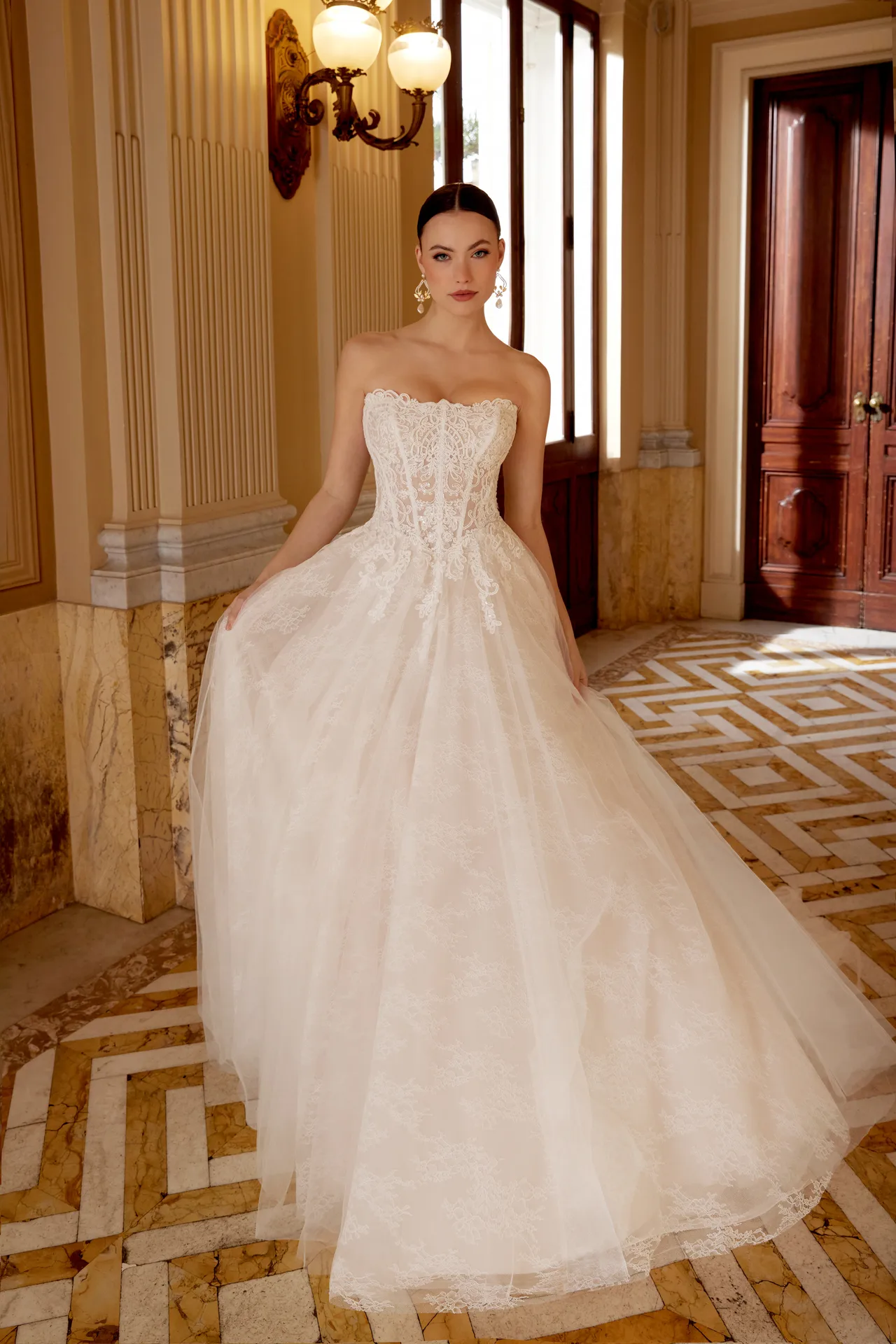
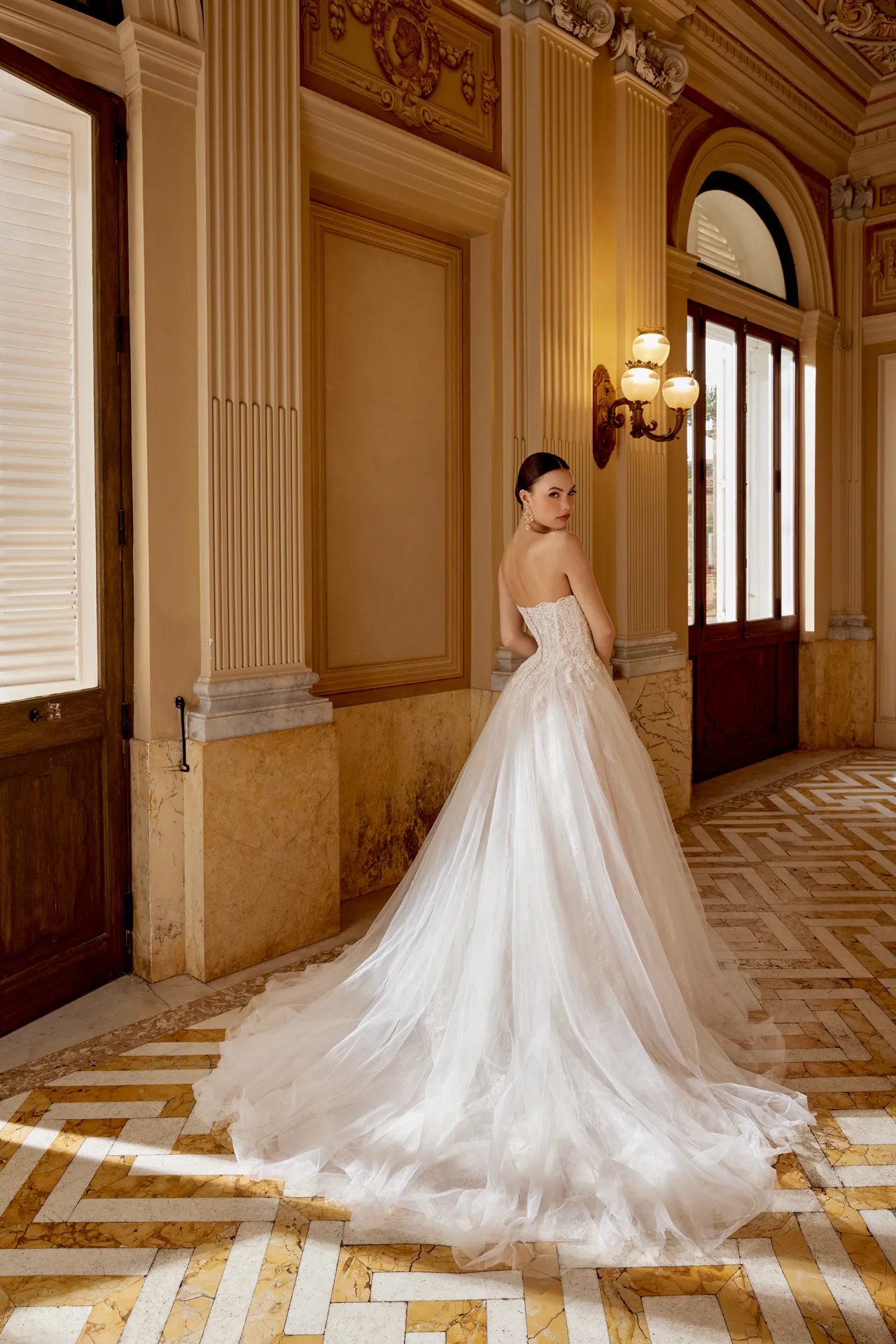
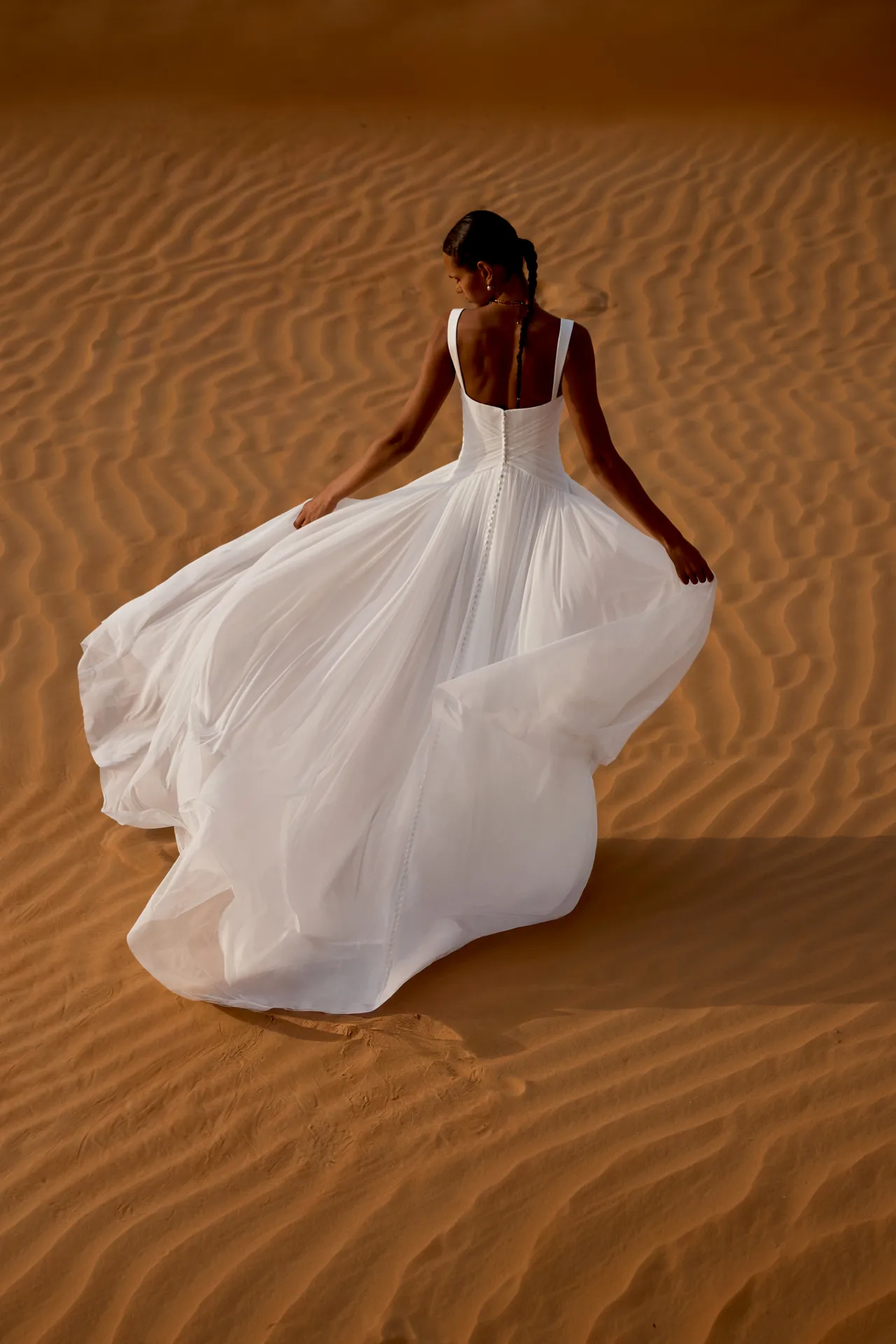
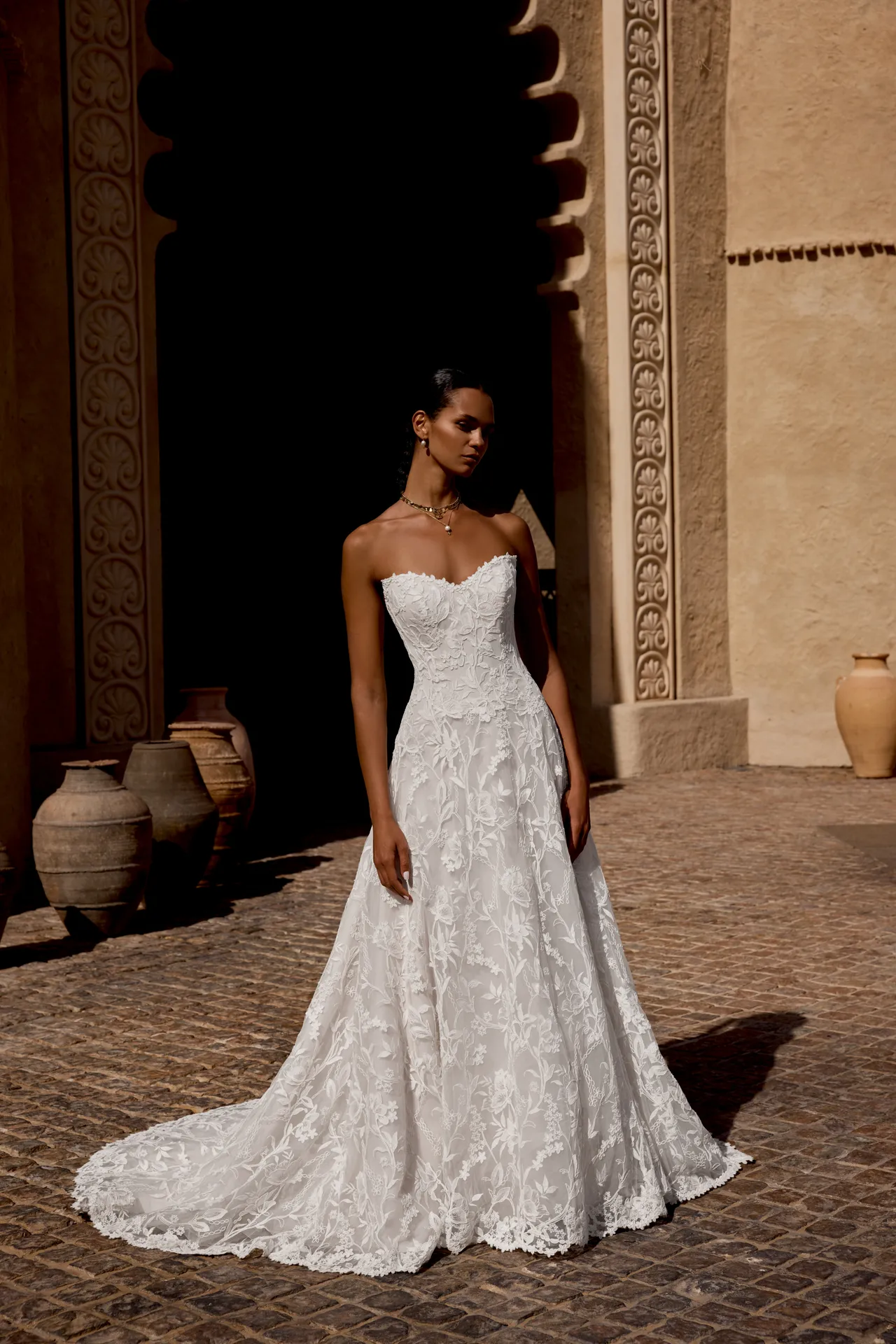
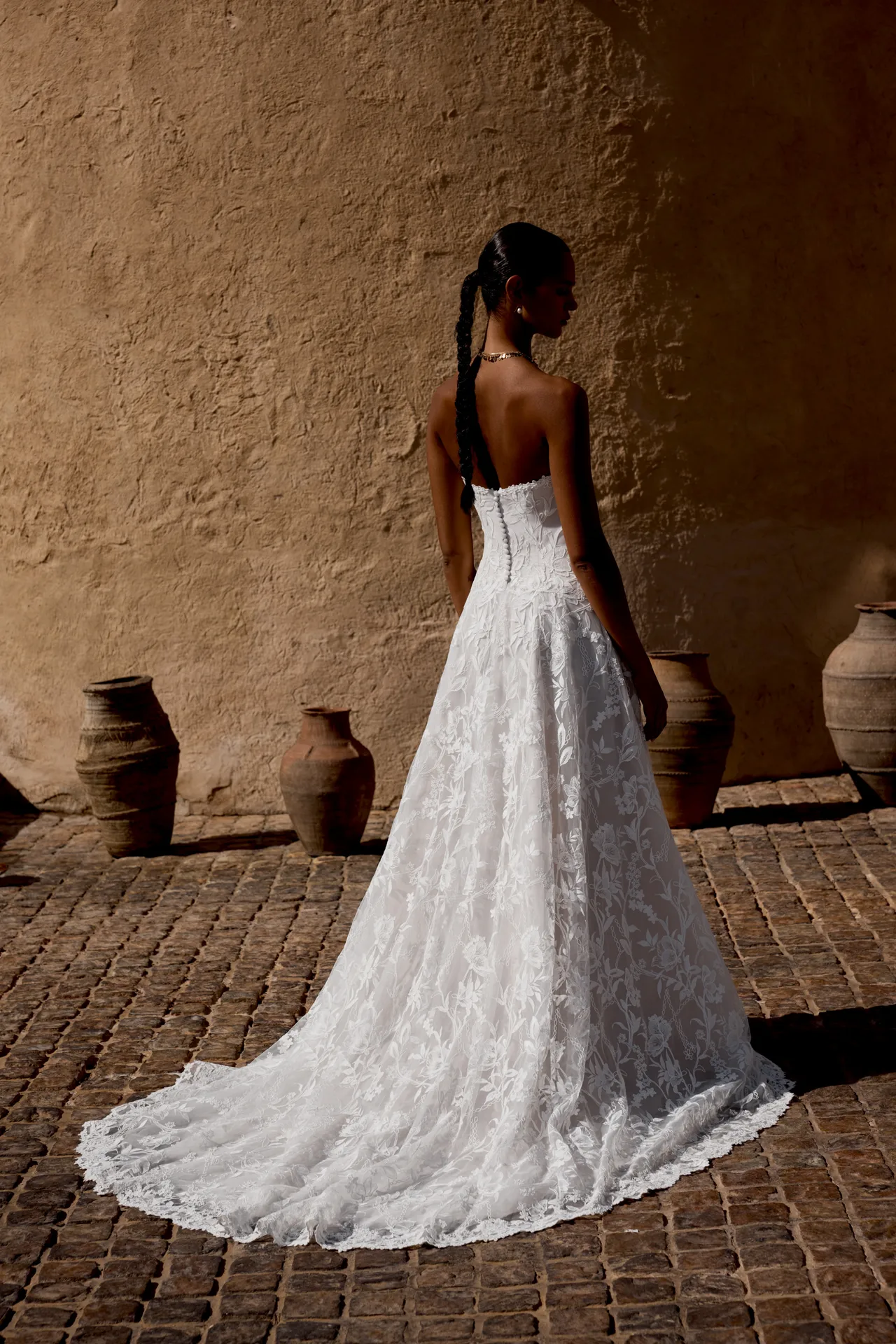
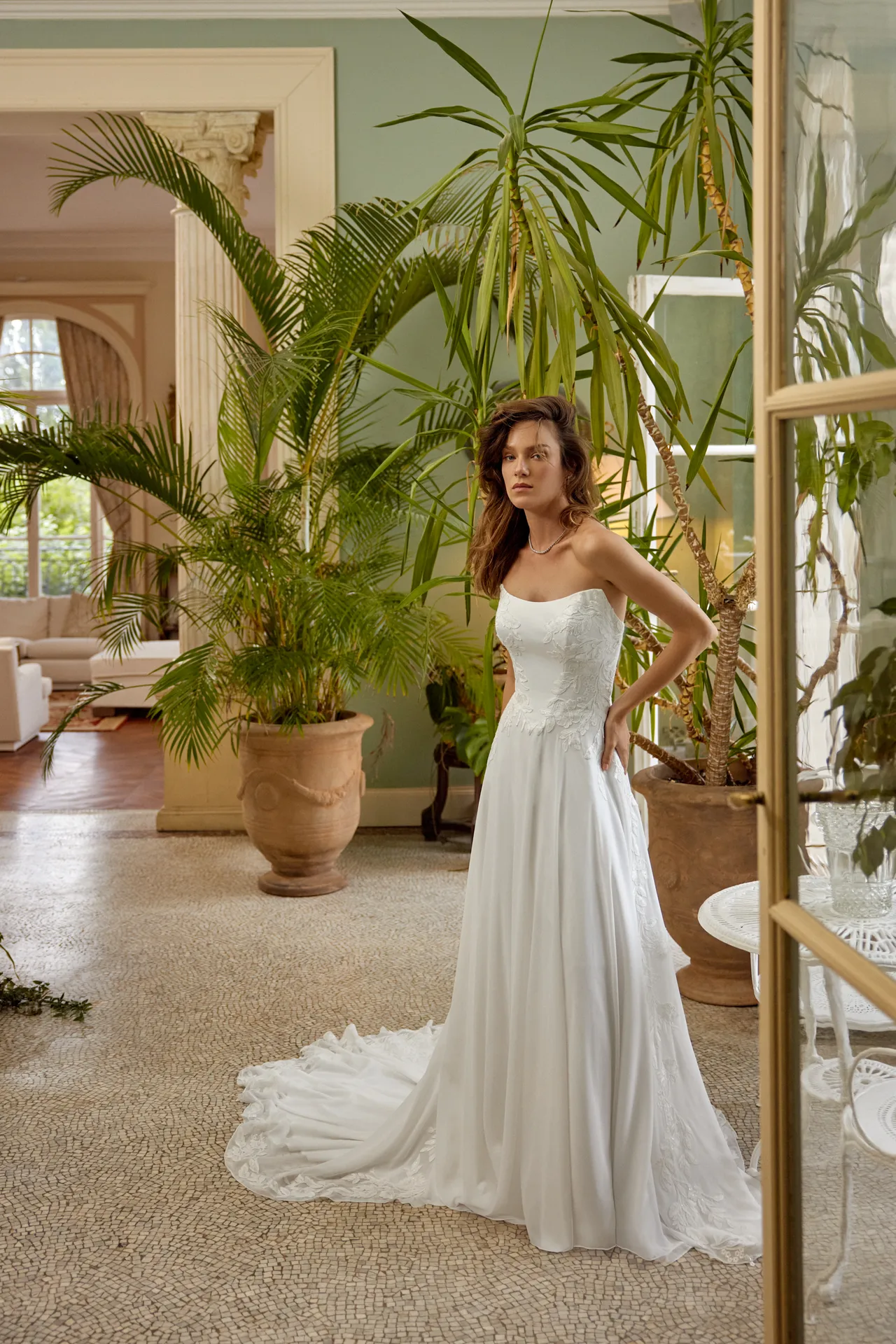
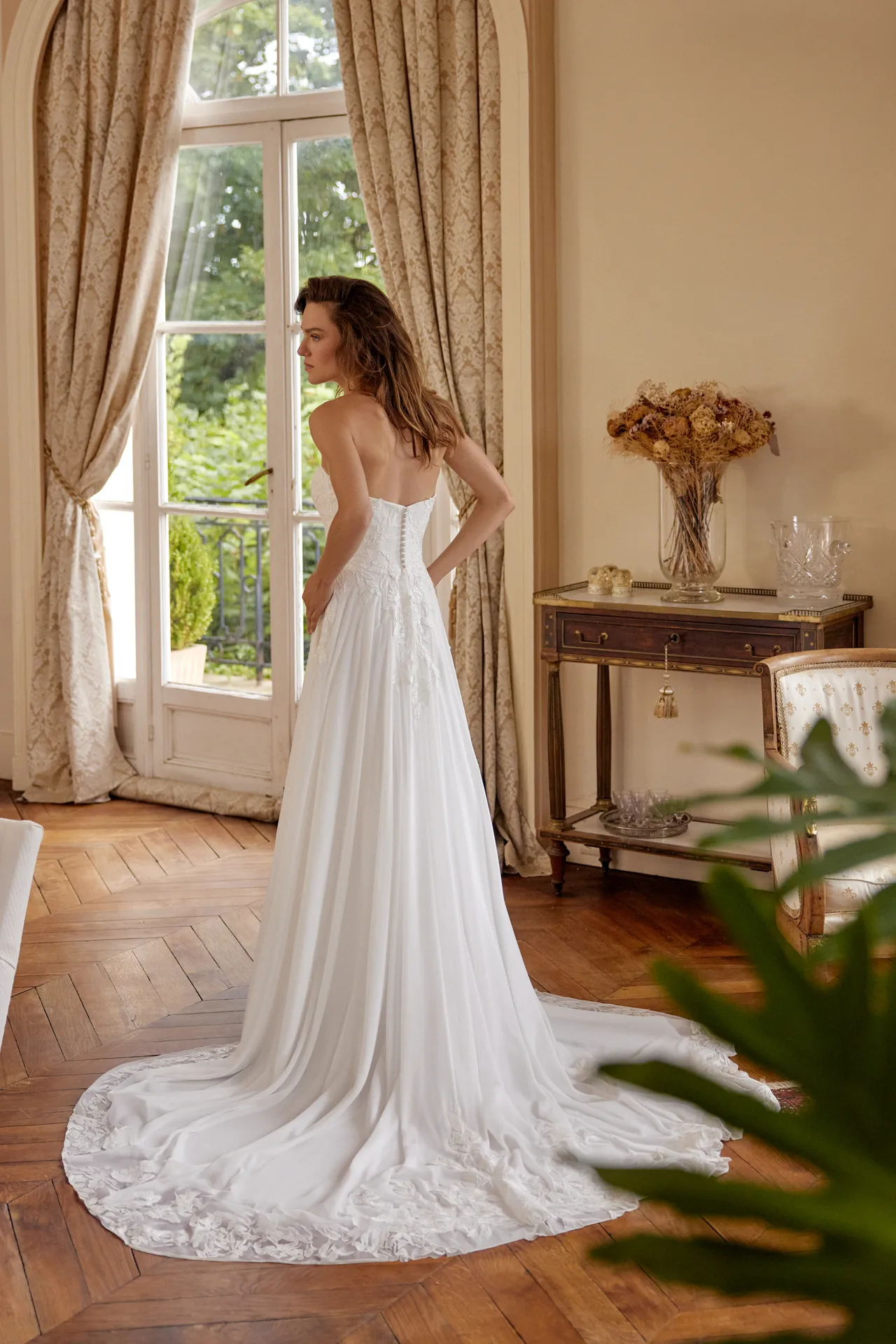
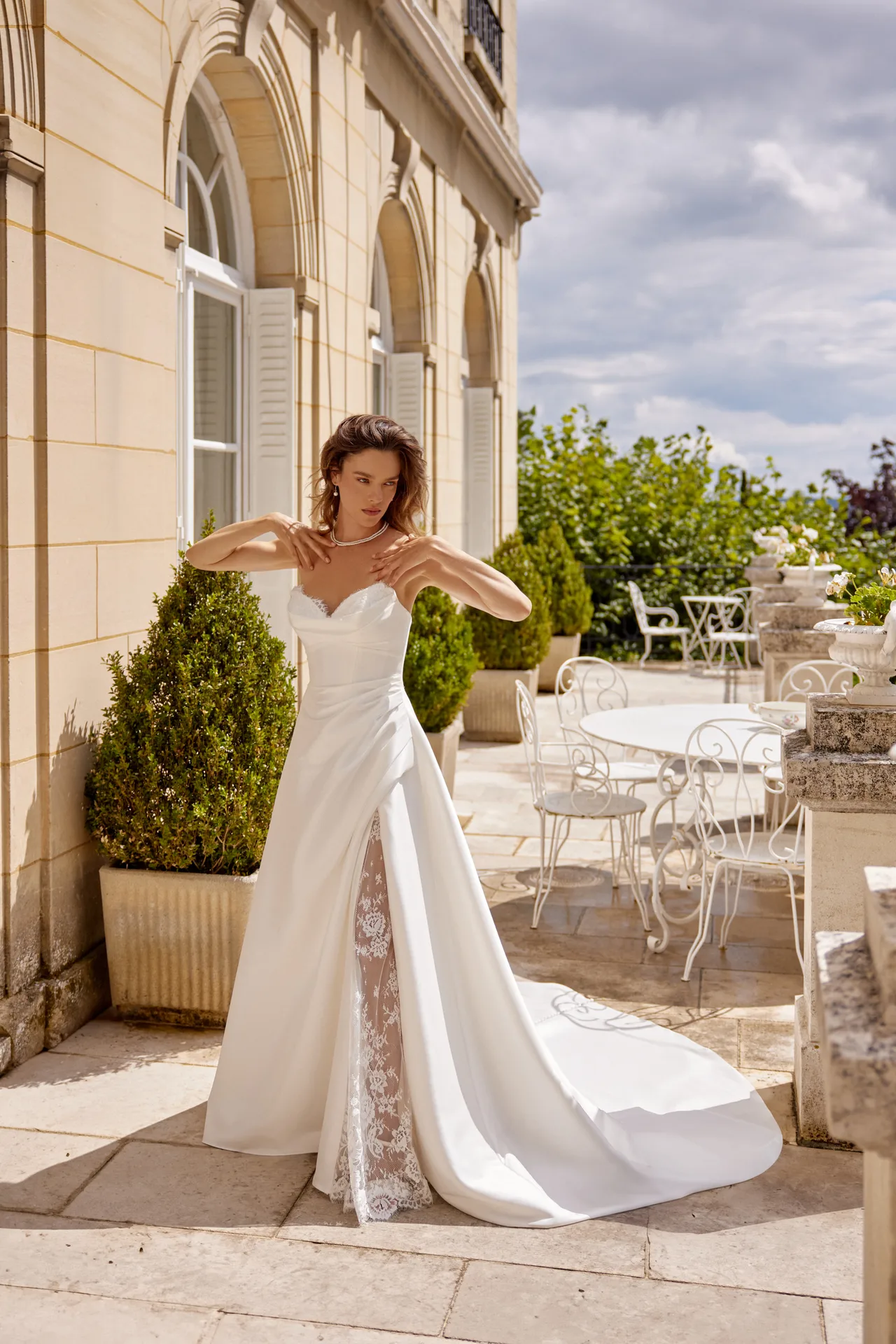
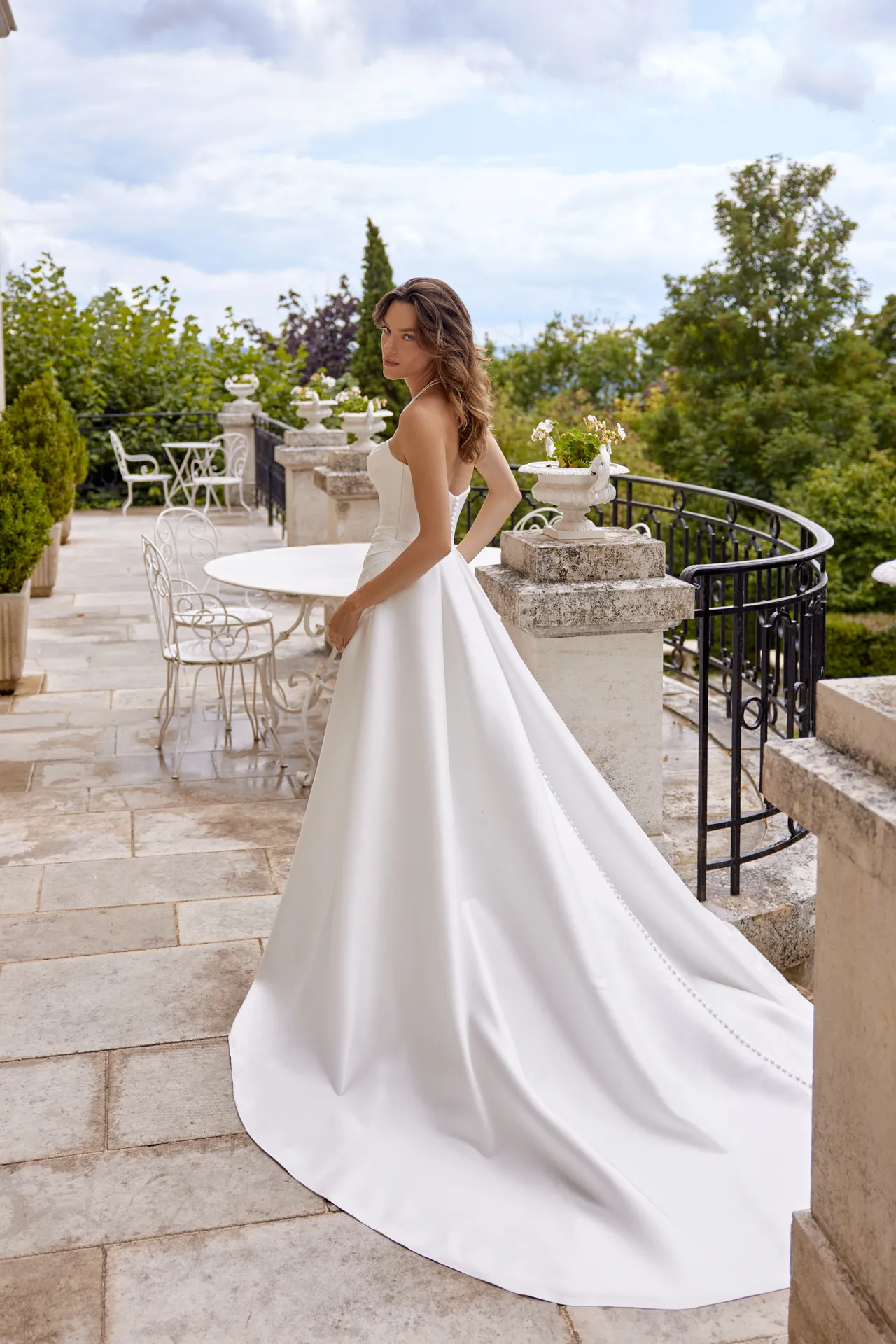
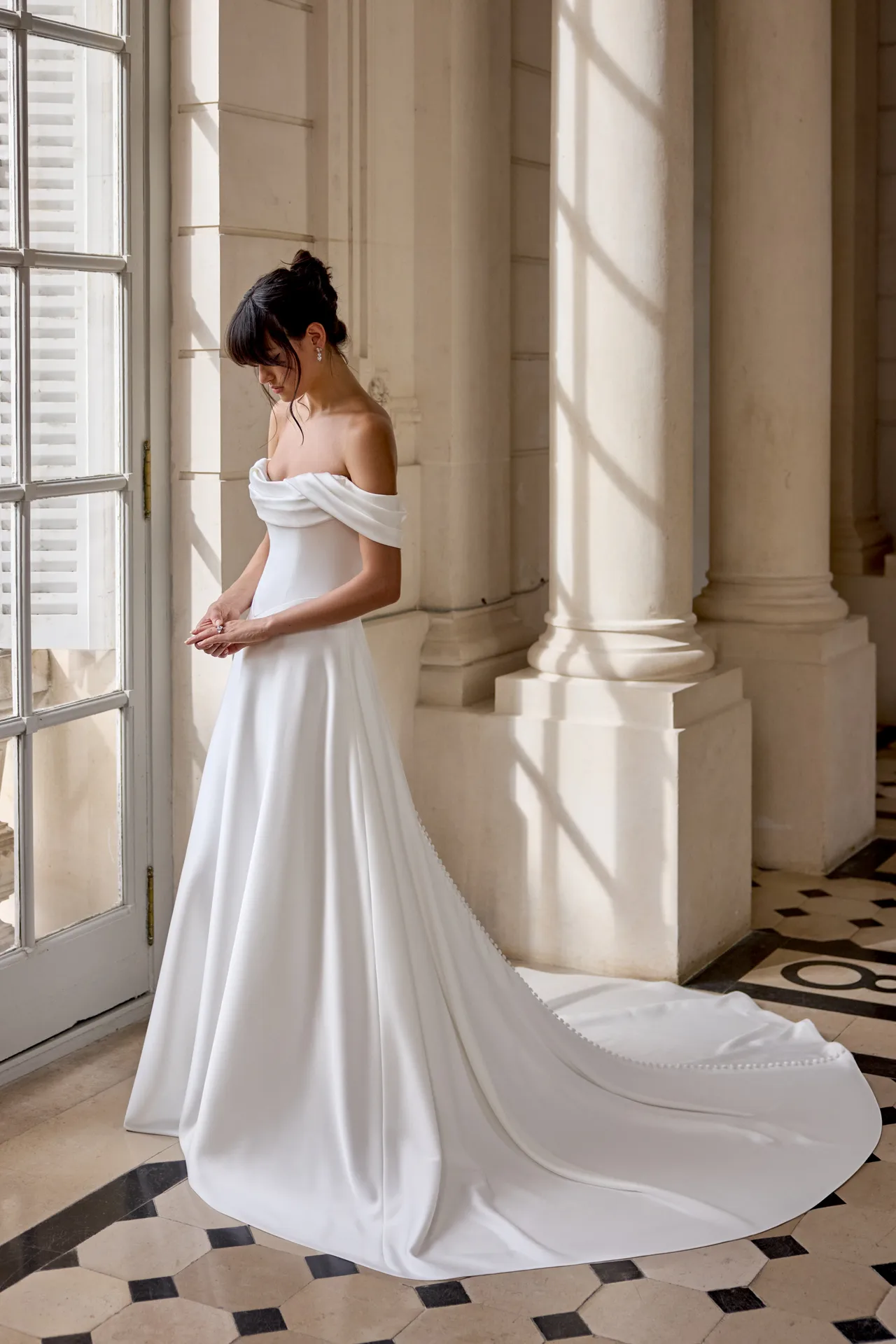
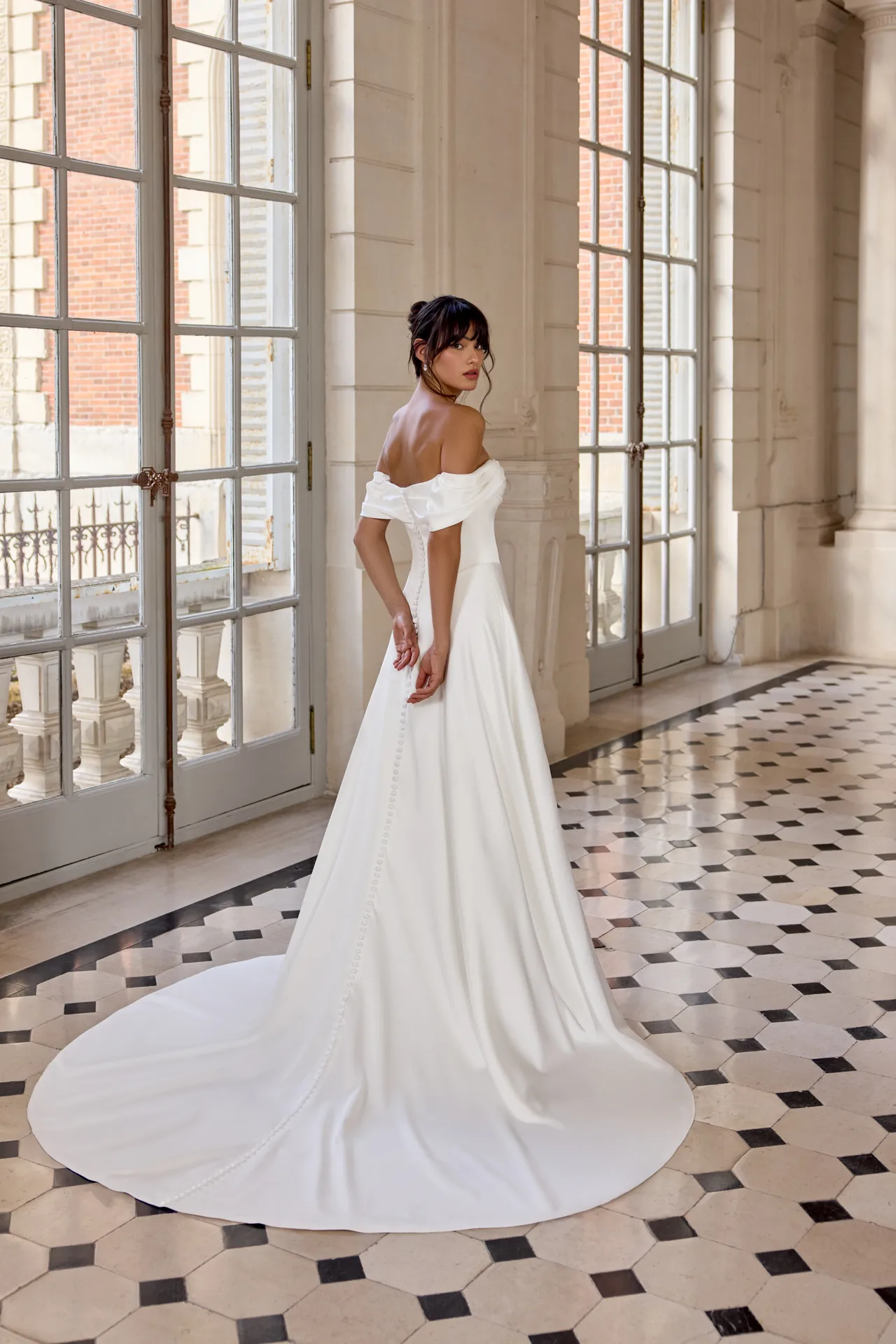
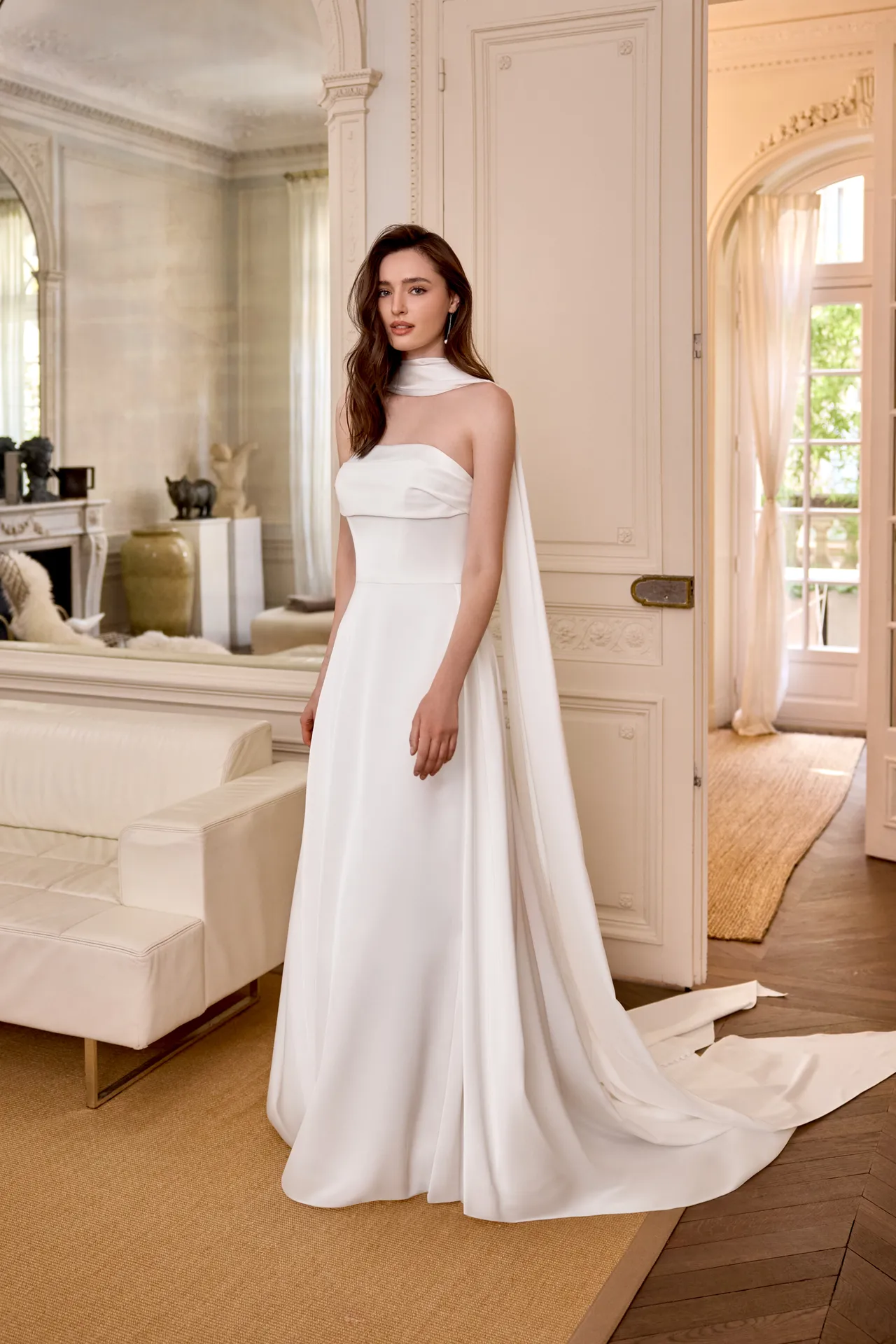
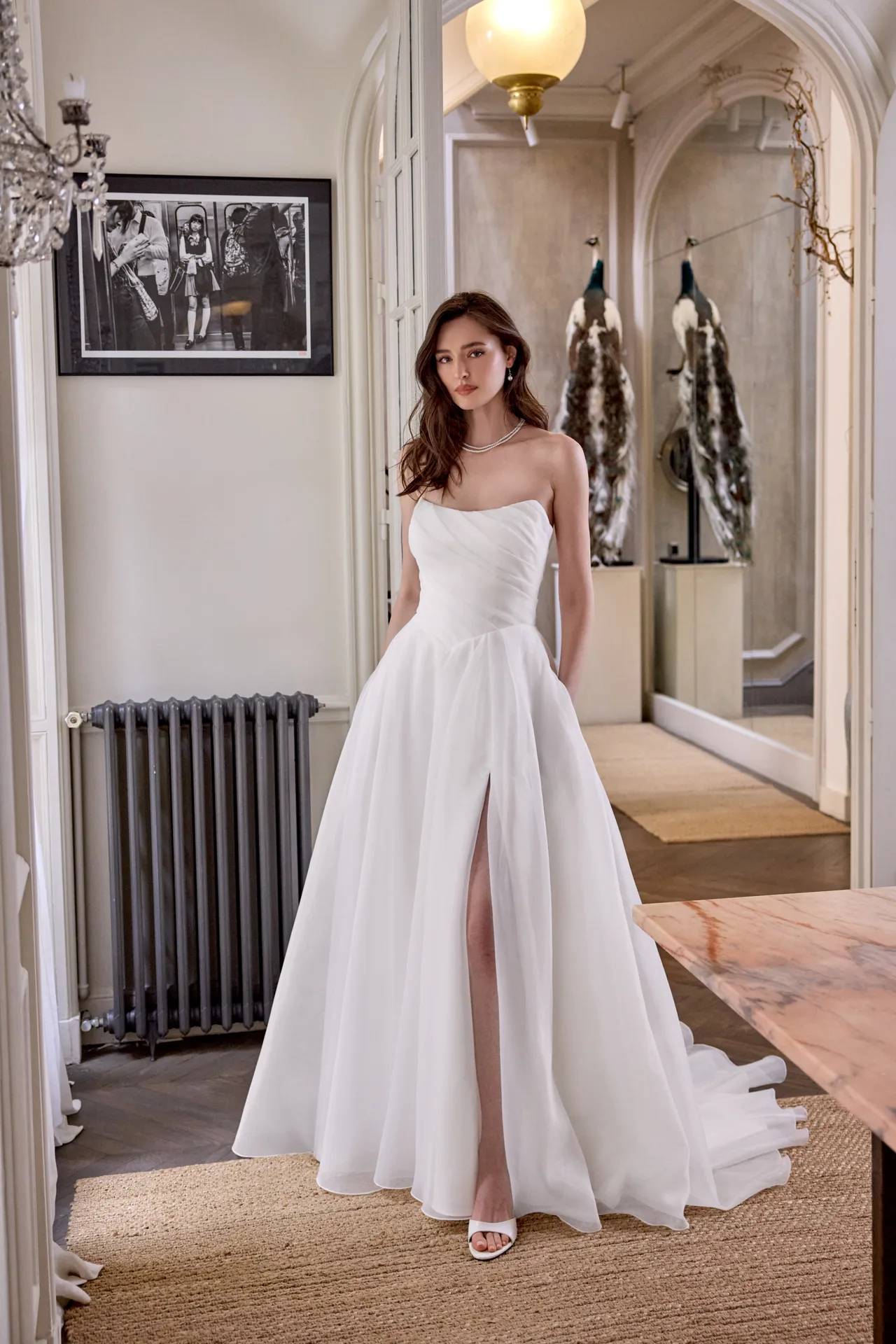
The A-line fits at the bust and waist, and from there the skirt gradually flares to the floor, like the letter it’s named after. It’s the most versatile silhouette there is.
Who it flatters: practically everyone. It defines the waist and softens the hips, so it works equally well on curvy, slim, tall, or petite brides.
Comfort: very high. You can walk, sit, and dance without thinking about it.
Venue: it adapts to everything. In tulle or chiffon it feels light for a finca or a garden; in mikado or satin it becomes more formal for a church. See our A-line dresses.
What is a mermaid or trumpet wedding dress?
The mermaid dress hugs the body from the bust to the knee or a little below, and there it flares into a full skirt. The trumpet is its close cousin: it flares a bit higher, at mid-thigh, which makes it somewhat easier to wear.
Who it flatters: it’s ideal if you want to show off your curves, whatever your size. It also works for brides with a straighter figure who want to create the effect of a waist.
Comfort: medium. You walk with shorter steps, and it’s a good idea to try sitting and dancing in it. Well-constructed styles offer a lot of support and feel secure.
Venue: perfect for reception halls, hotels, and evening weddings with a glamorous feel. Explore our mermaid dresses.
What is a ball gown wedding dress?
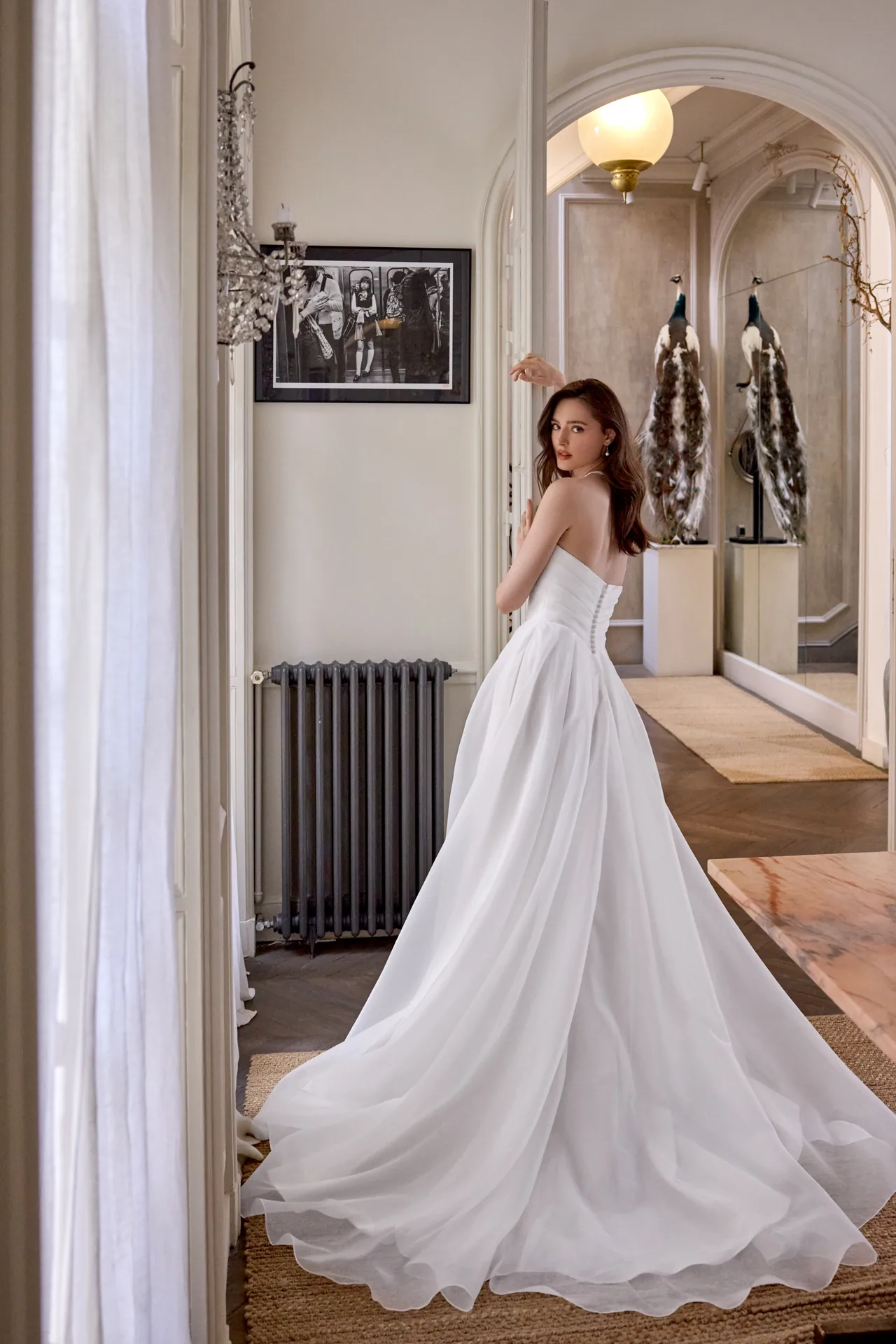
The ball gown has a fitted bodice and a skirt with lots of volume, often with layers of tulle or organza. It’s the ultimate “fairy-tale” dress.
Who it flatters: anyone dreaming of an unforgettable entrance. It strongly defines the waist and skims over the lower body. For very petite brides, it’s a good idea to look for moderate volume so the dress doesn’t overwhelm the figure.
Comfort: medium. It weighs more and takes up space, so think about the car, stairs, and the dance floor. Many have skirts that are lighter than they look.
Venue: it shines in churches, cathedrals, and spacious reception halls. In small spaces or very casual weddings it can feel out of place. Discover our ball gowns.
What is a sheath or column wedding dress?
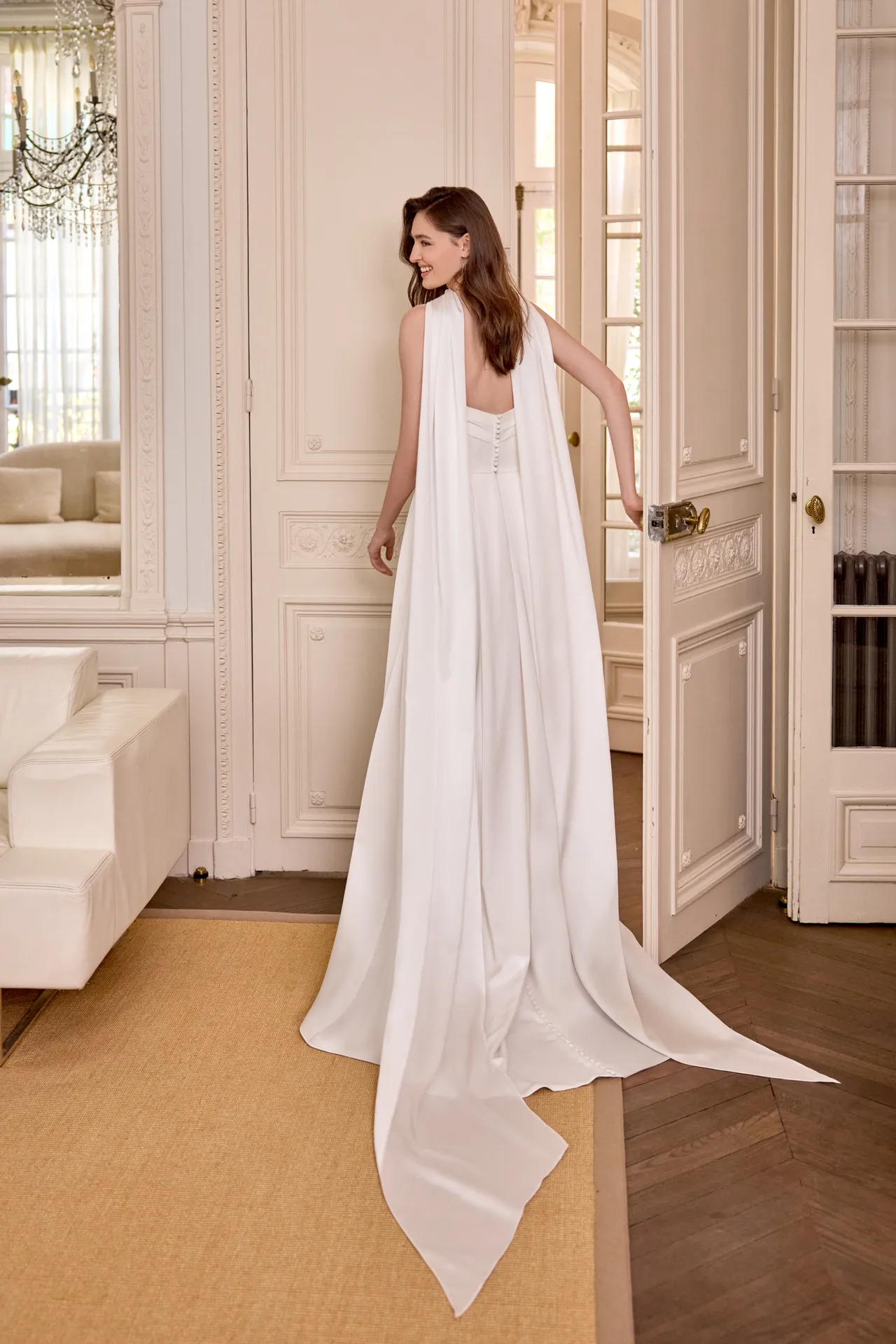
The sheath or column dress falls in a vertical line, following the body without clinging too much and with no volume in the skirt. It’s simple, elegant, and very current.
Who it flatters: it looks especially beautiful on tall or slender brides, but any bride who wants a minimalist look can wear it. In fabrics with drape, like crepe or chiffon, it moves very naturally.
Comfort: high. It’s lightweight and easy to wear all day.
Venue: ideal for civil weddings, the beach, warm weather, or small ceremonies. It’s also a great option as a second dress for the reception.
How do I choose the right silhouette for me?
Three questions help you decide:
- Where are you getting married? The venue determines how much volume and how much train are practical.
- How do you want to feel? Romantic, glamorous, fairy-tale, or relaxed: each silhouette conveys something different.
- How much do you want to move? If your plan is to dance all night, prioritize comfort or consider a second look.
If you want to go further, check out our guide on how to choose for your body type and the one on train types. And an honest tip: a photo is no substitute for trying it on. A silhouette that doesn’t win you over on Instagram can surprise you in front of the mirror.
Try on the silhouettes at your own pace
The best way to know your silhouette is to put it on. At Sweetheart Novias, in Bucaramanga, a consultant helps you try on A-line, mermaid, ball gown, and sheath styles so you can compare how you look and feel in each one. Book your appointment and enjoy this part of the process without rushing.
Frequently asked questions
What is the most comfortable wedding dress silhouette?
In general, A-line and sheath or column dresses are the most comfortable, because they leave your legs free to walk, sit, and dance. Even so, comfort also depends on the fabric and the fit.
What's the difference between a mermaid and a trumpet dress?
Both hug the body and then flare out. The mermaid flares lower, near the knee, while the trumpet flares a bit higher, at mid-thigh, which gives you more freedom of movement.
Which wedding dress silhouette flatters everyone?
The A-line is considered the most versatile because it defines the waist and falls softly without clinging too much. The best approach is to try on several silhouettes and see which one makes you feel your best.
Can I dance in a mermaid dress?
Yes, although movement is more limited than in an A-line. Many brides try the dress on while walking and sitting, and others choose a trumpet style or a second look for the reception.