Wedding Dresses for Civil and Religious Weddings in Colombia
In Colombia, many couples hold their civil and religious ceremonies separately, others have only one of the two, and some combine everything on the same day. Each ceremony has its own atmosphere, and that shapes the dress you choose. The good news is that you don’t have to give up your style: with the right decisions, you can look the way you’ve always dreamed and feel comfortable at both moments.
What’s the difference between a dress for a civil wedding and one for a religious wedding?
The main difference lies in formality and venue.
| Religious wedding | Civil wedding | |
|---|---|---|
| Usual venue | Church or chapel | Notary office, courthouse, country estate (finca), ballroom or garden |
| Formality | High, a solemn ceremony | Flexible, from simple to very elegant |
| Length | Almost always long | Long, midi or short |
| Train | Really shows off in the aisle | Shorter or no train is more practical |
| Shoulders and neckline | Many parishes ask you to cover them | No restrictions |
None of these rules is absolute. If your civil wedding is your big celebration, with all your guests and a reception afterward, you can wear a wedding dress as spectacular as any church bride’s.
What should a dress for a church wedding be like?
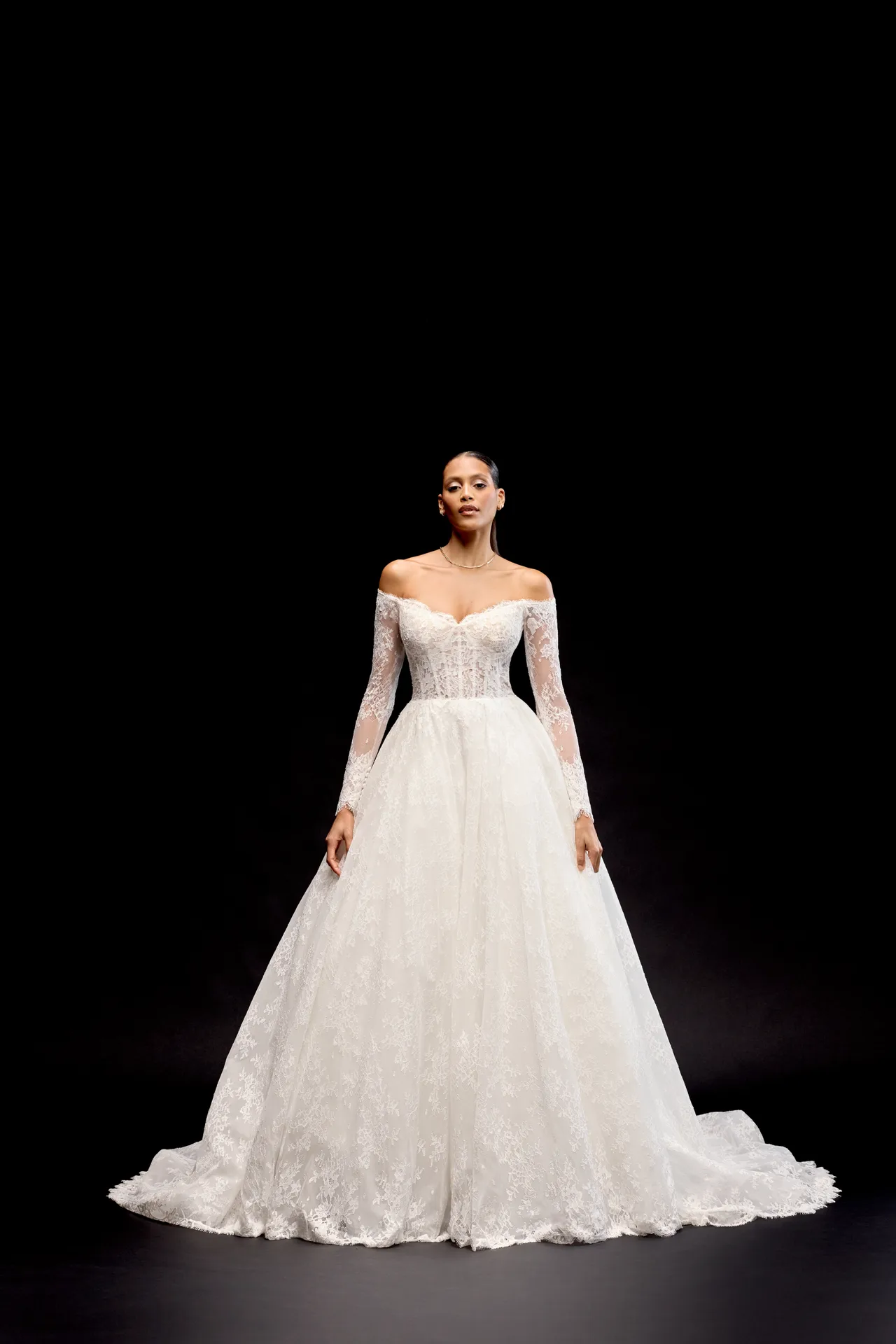
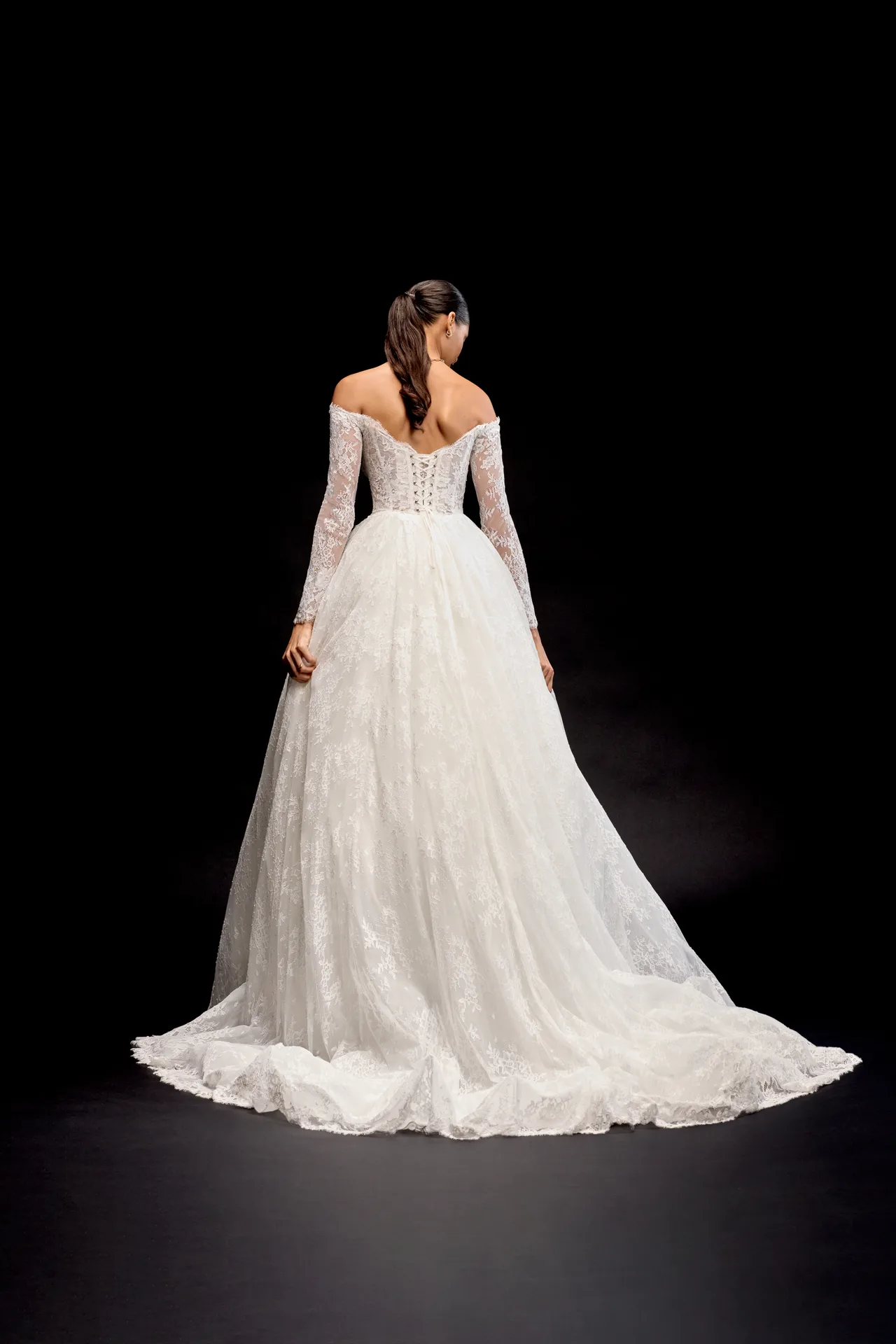
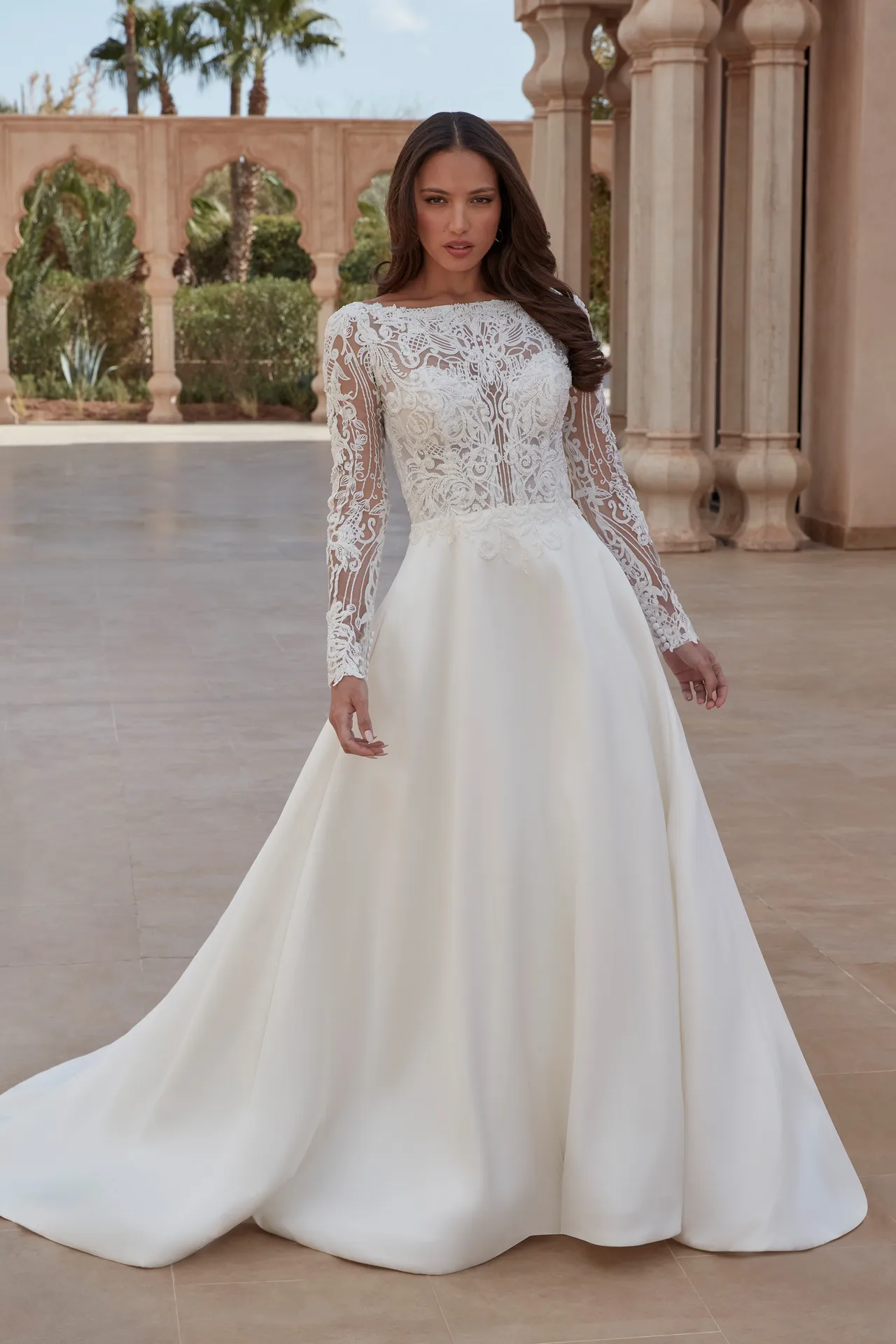
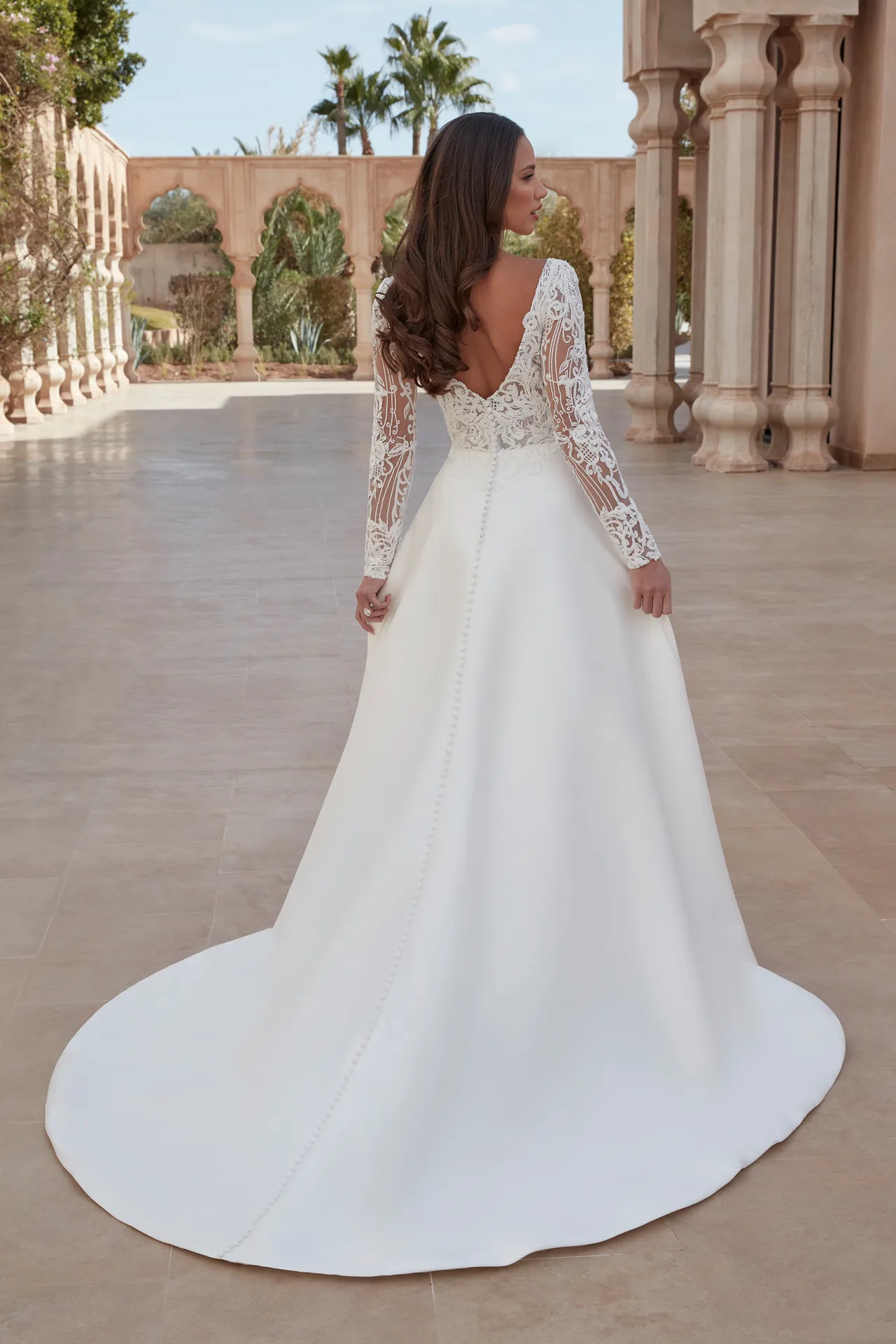
At a religious ceremony, the dress is usually long, with a classic silhouette like an A-line or a ball gown, and many brides choose a train that shows off as they walk down the aisle. If you’d like to compare lengths, check out the train types.
The most important thing, though, is knowing your parish’s rules. Many ask the bride to keep her shoulders and neckline covered during the ceremony, and some have specific guidelines about open backs. Ask the church directly before you choose: it will save you surprises.
How can I cover my shoulders in church with a wedding dress?
You have plenty of options, from the most classic to the most modern.
Long-sleeve dress
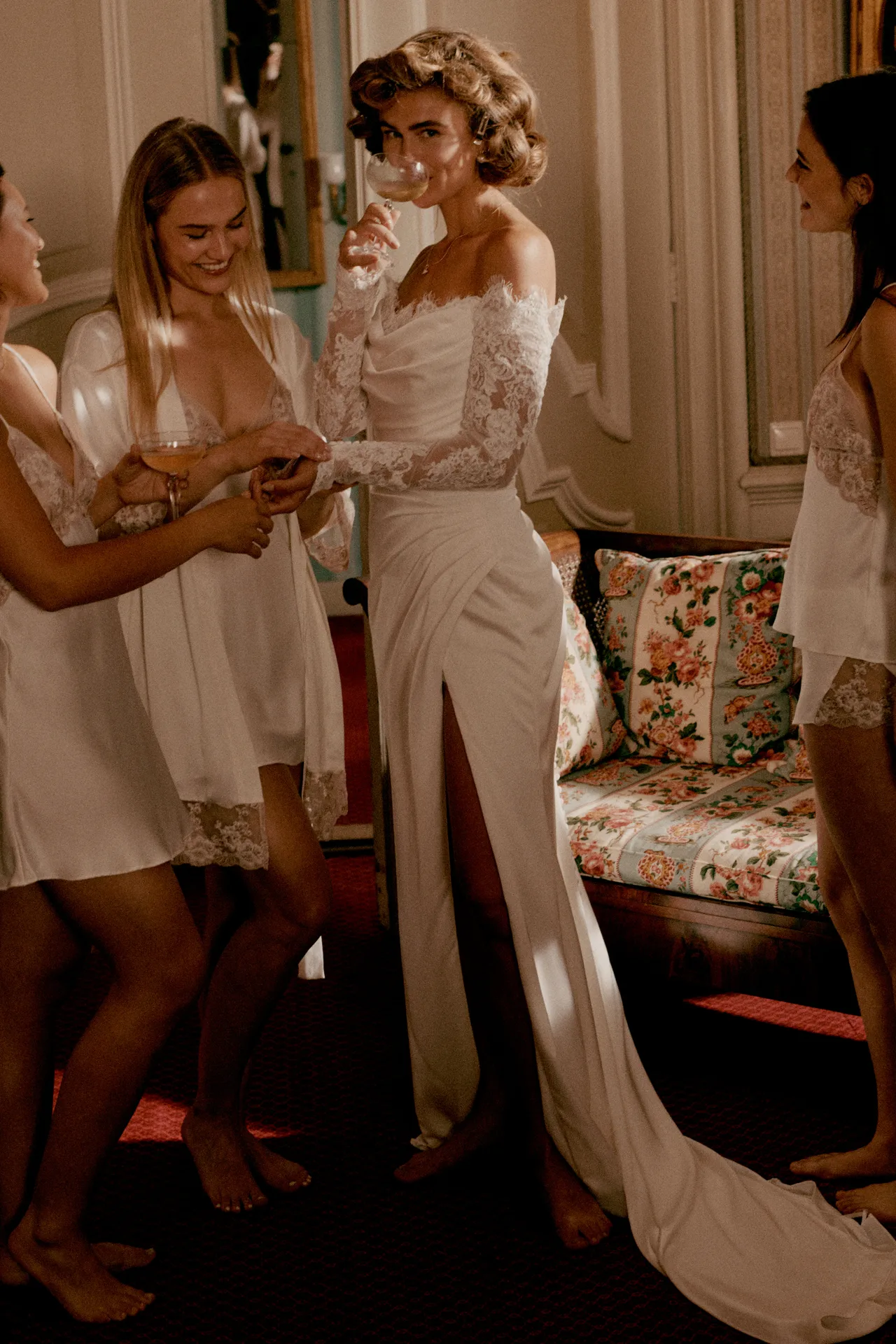
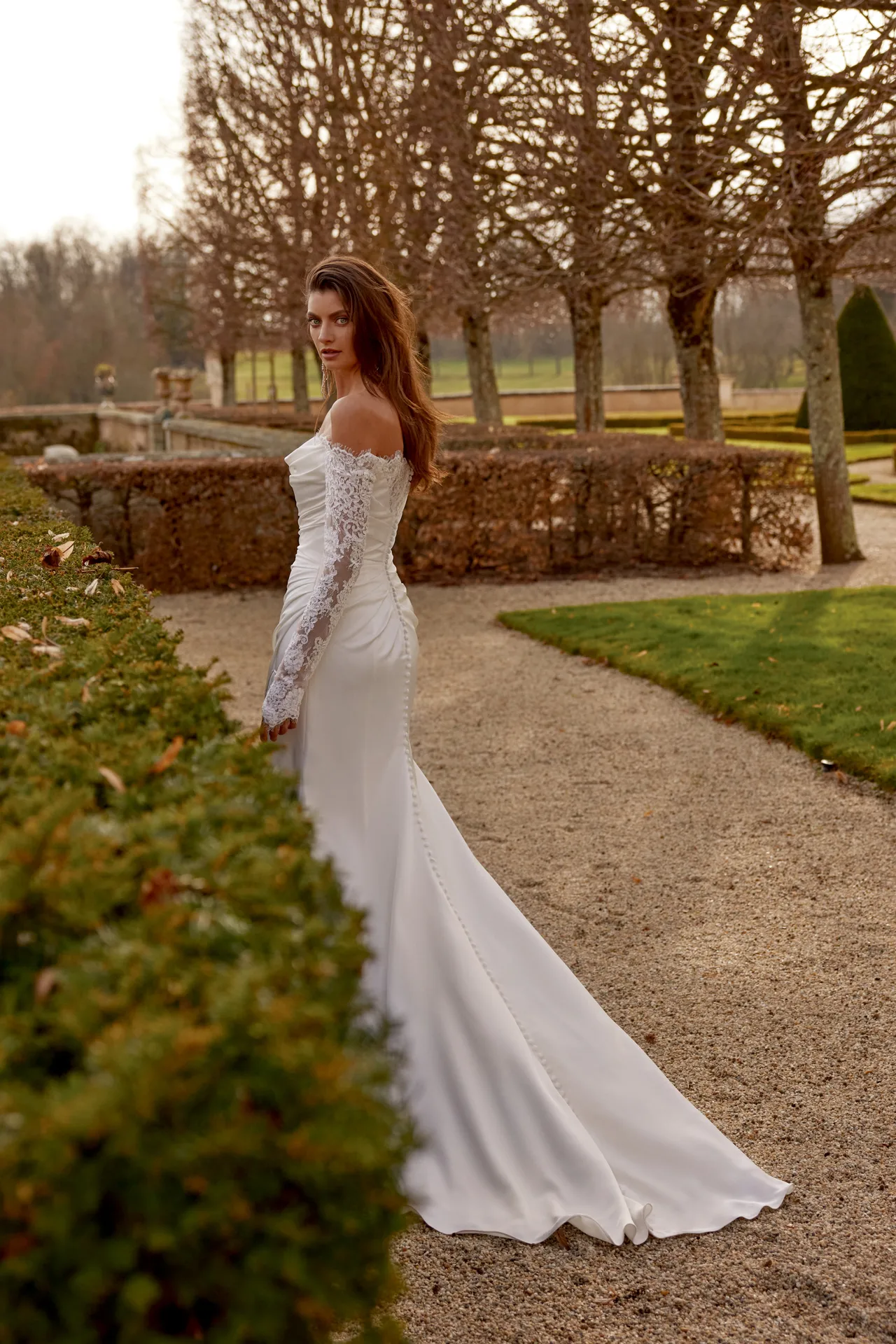
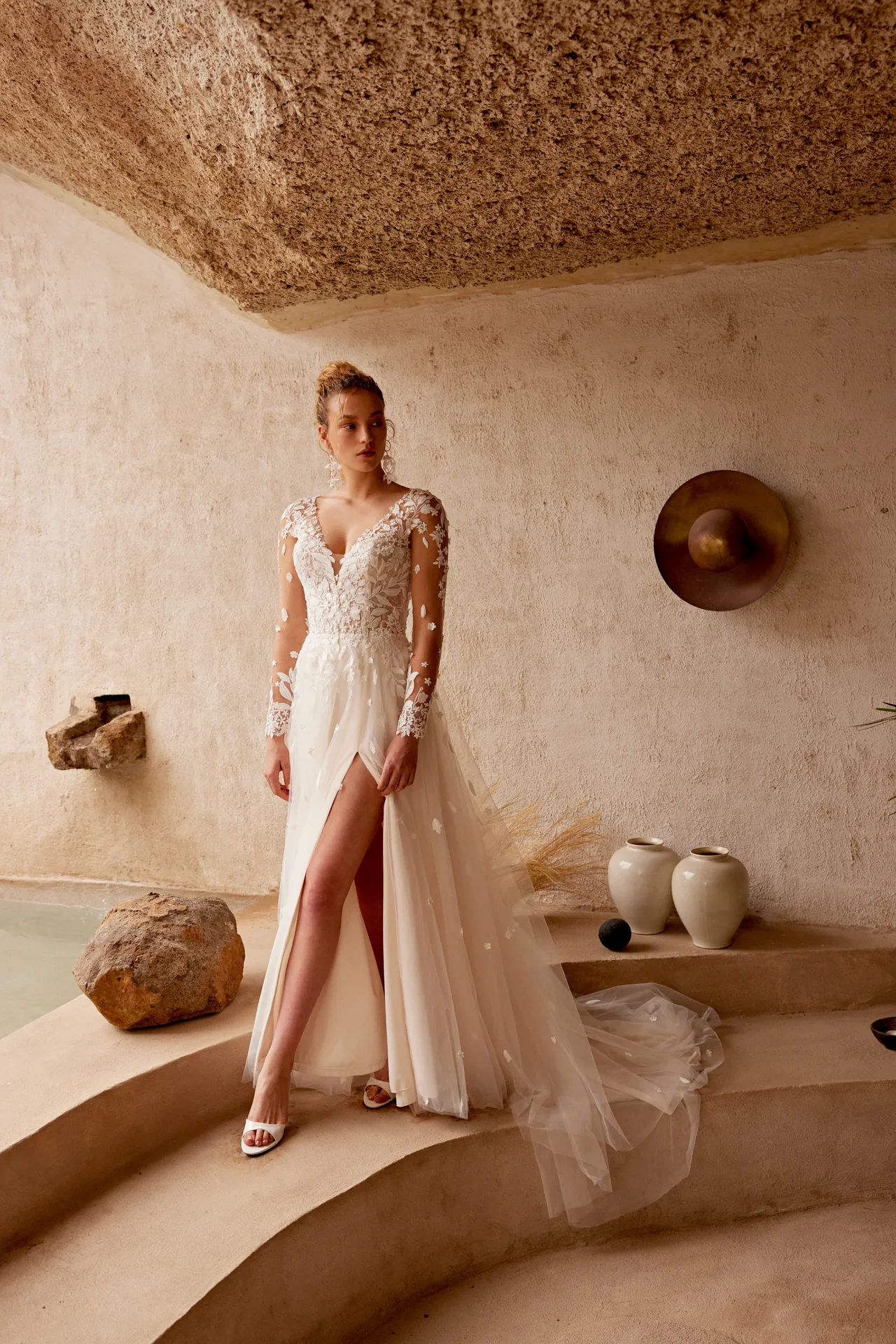
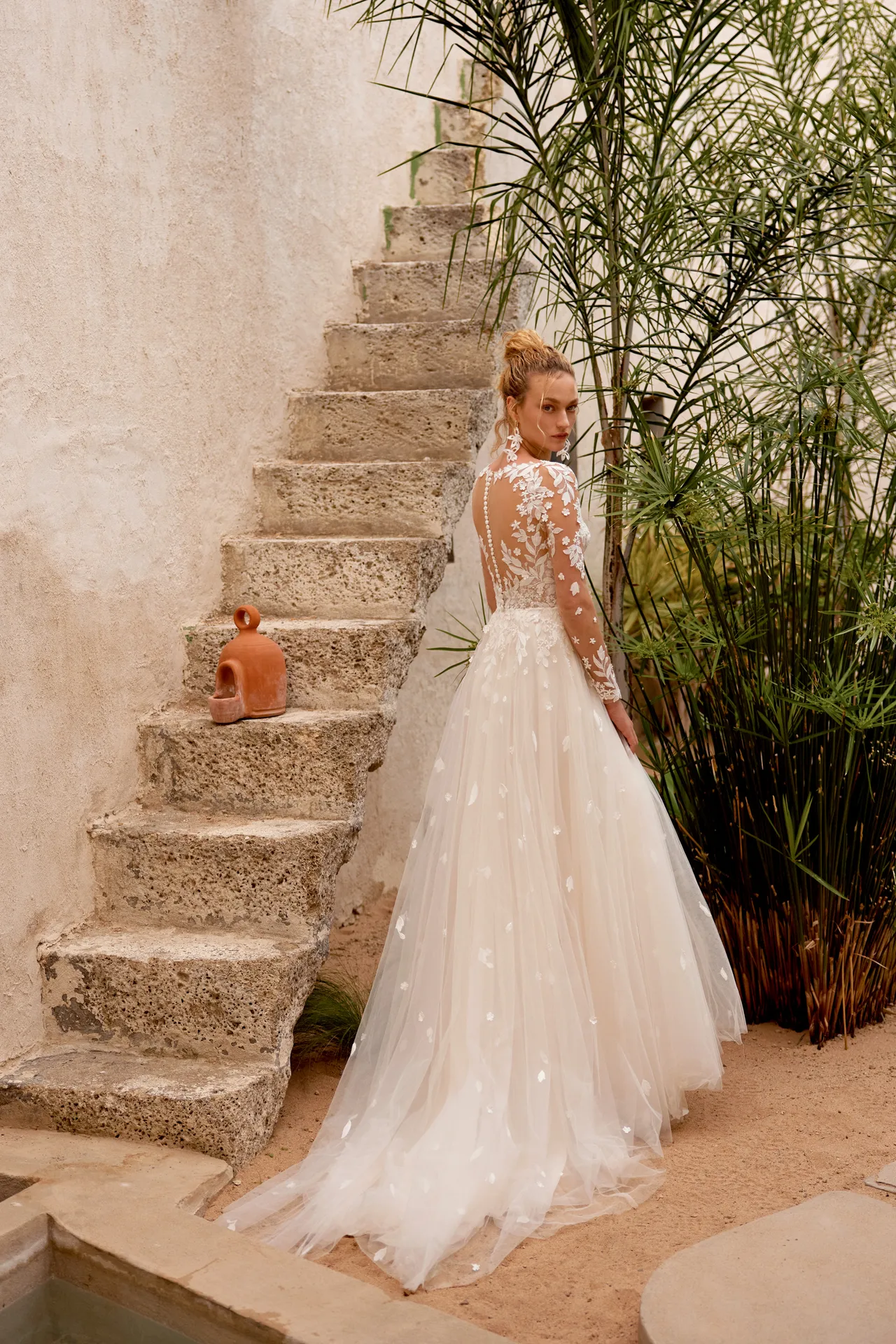
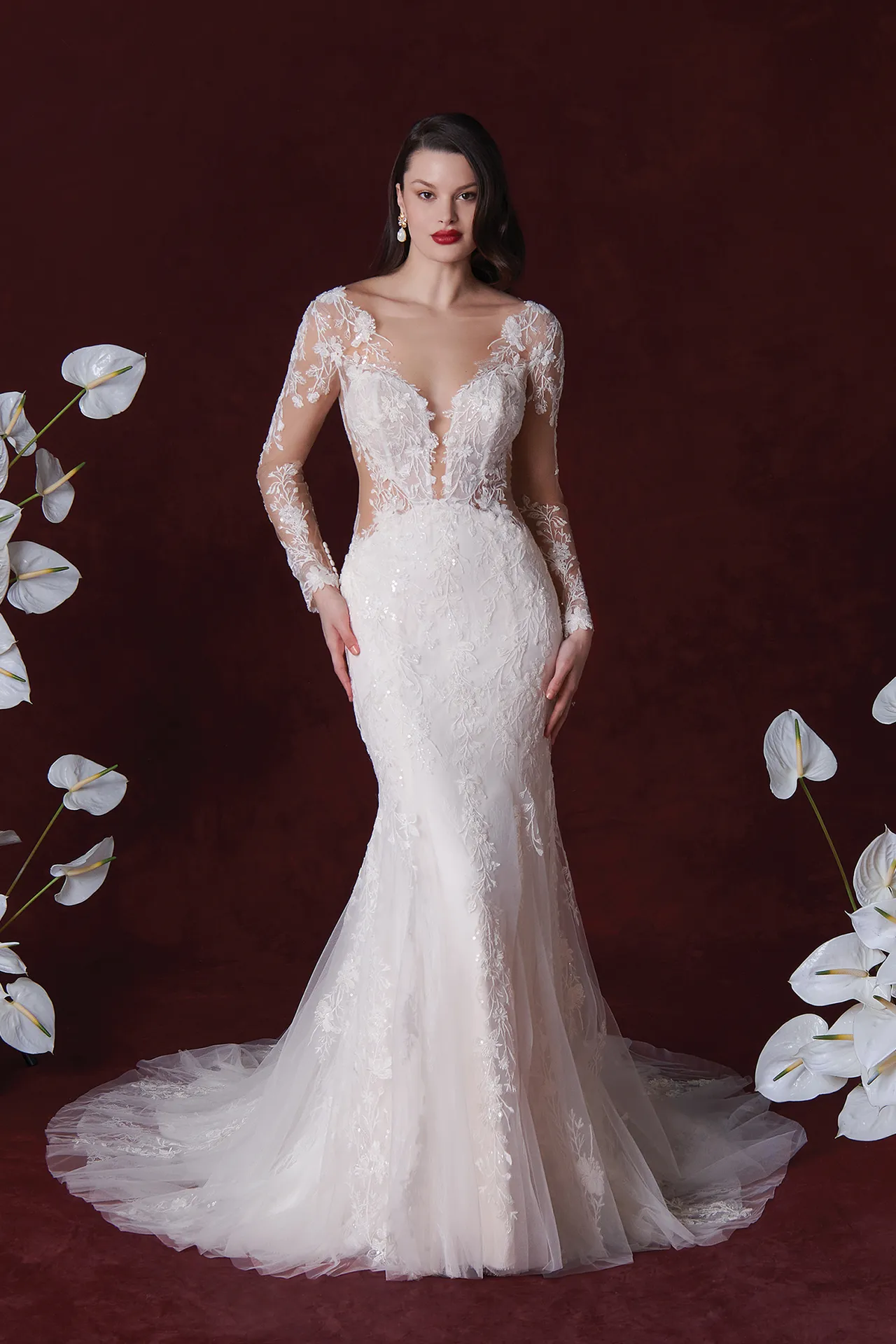
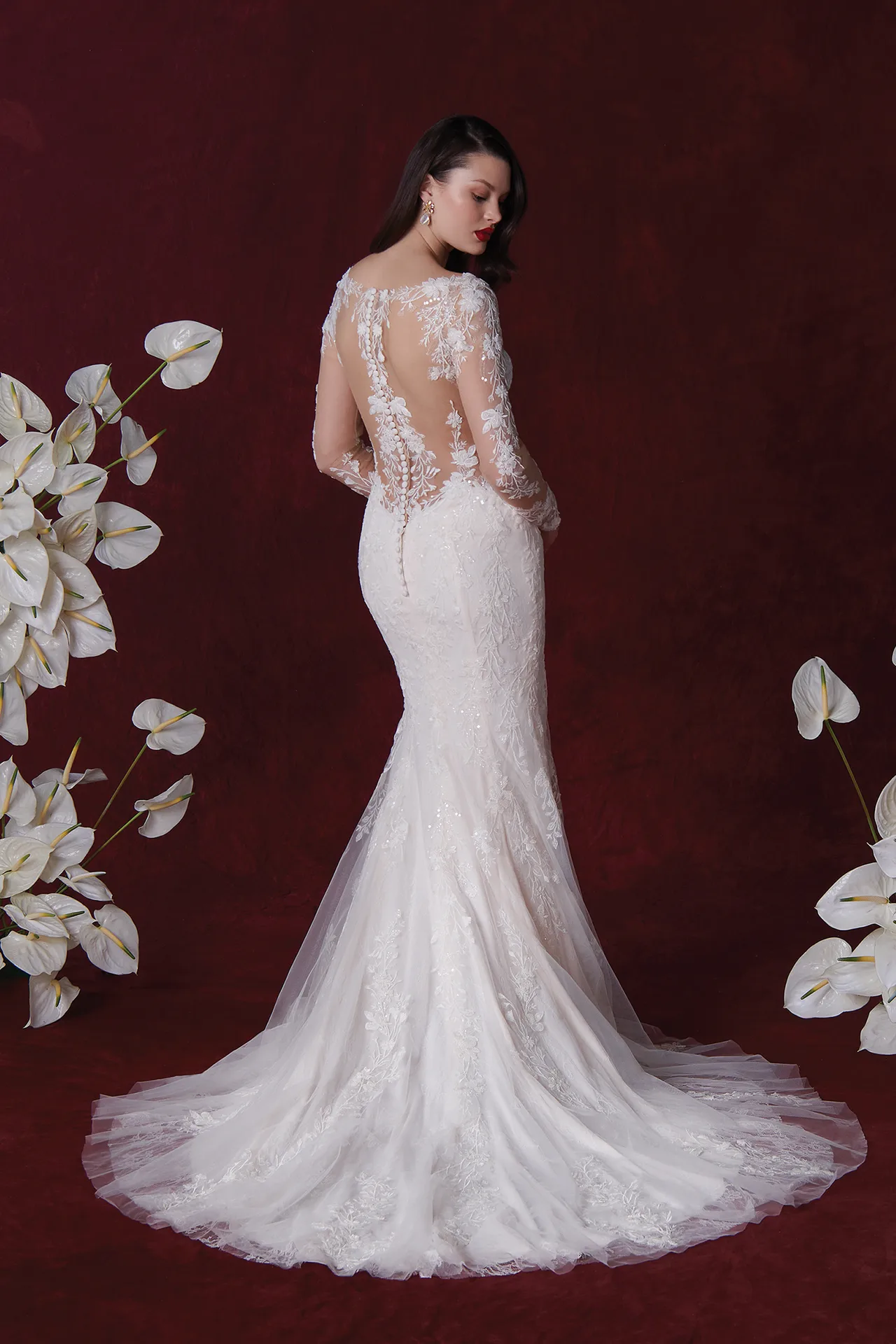
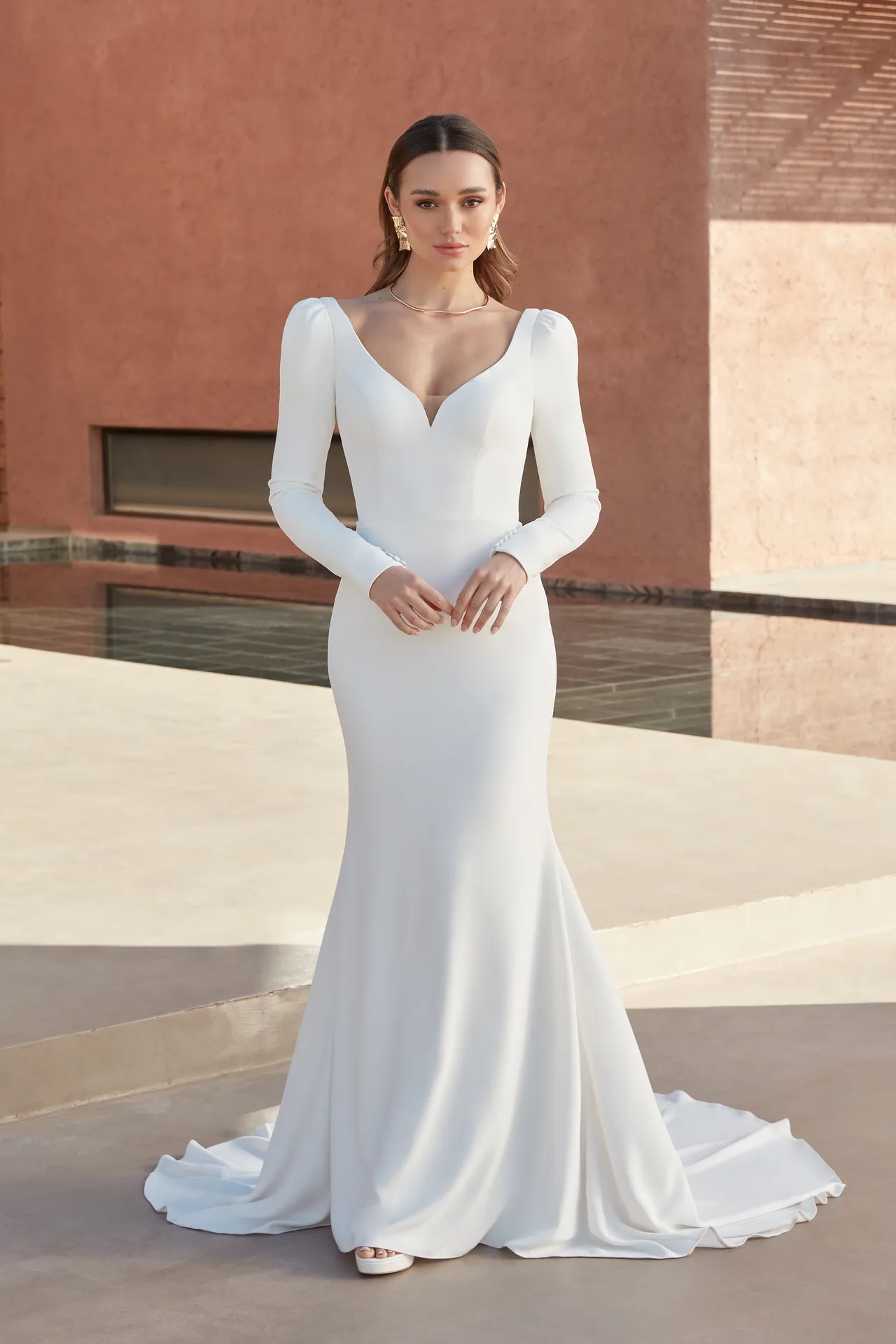
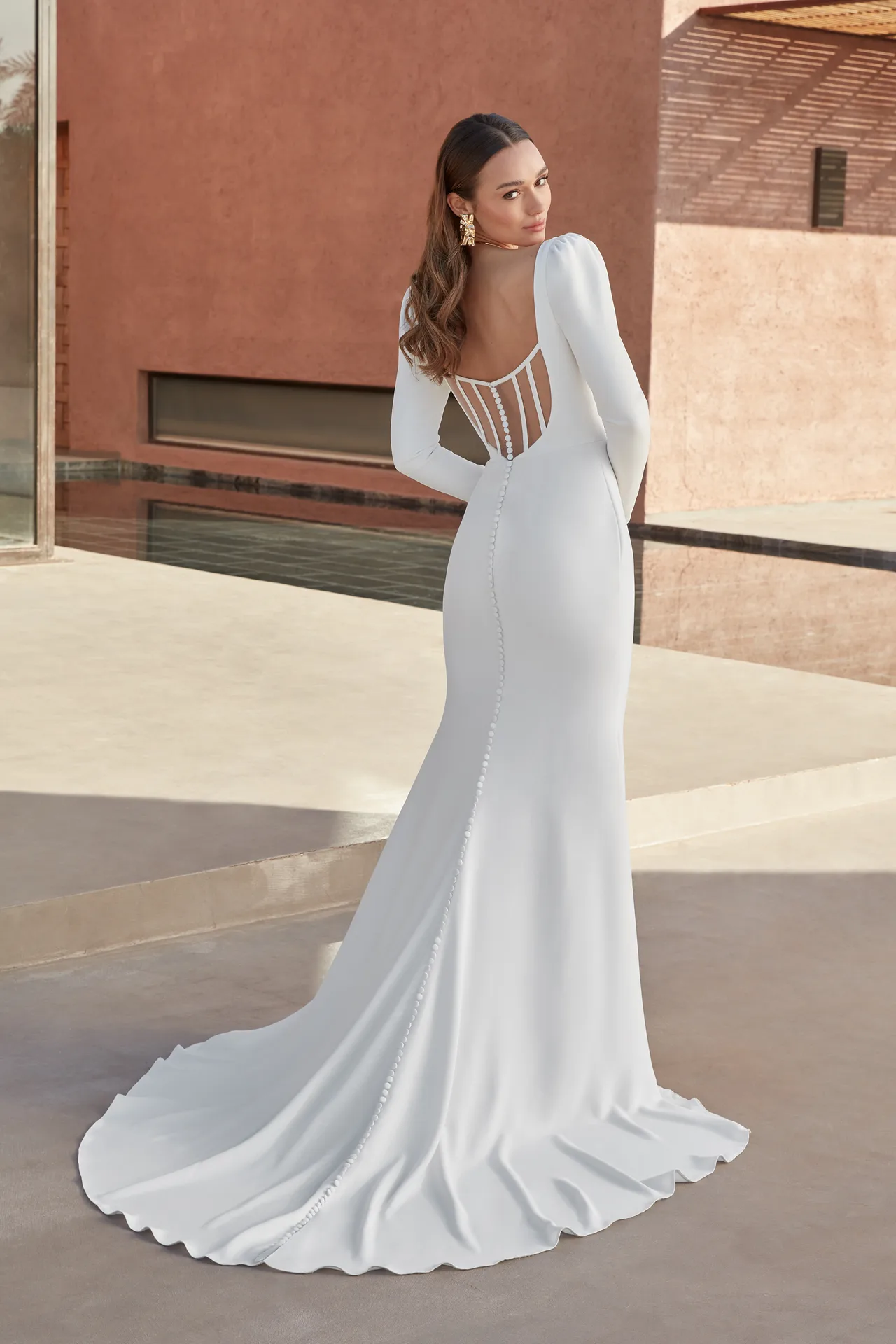
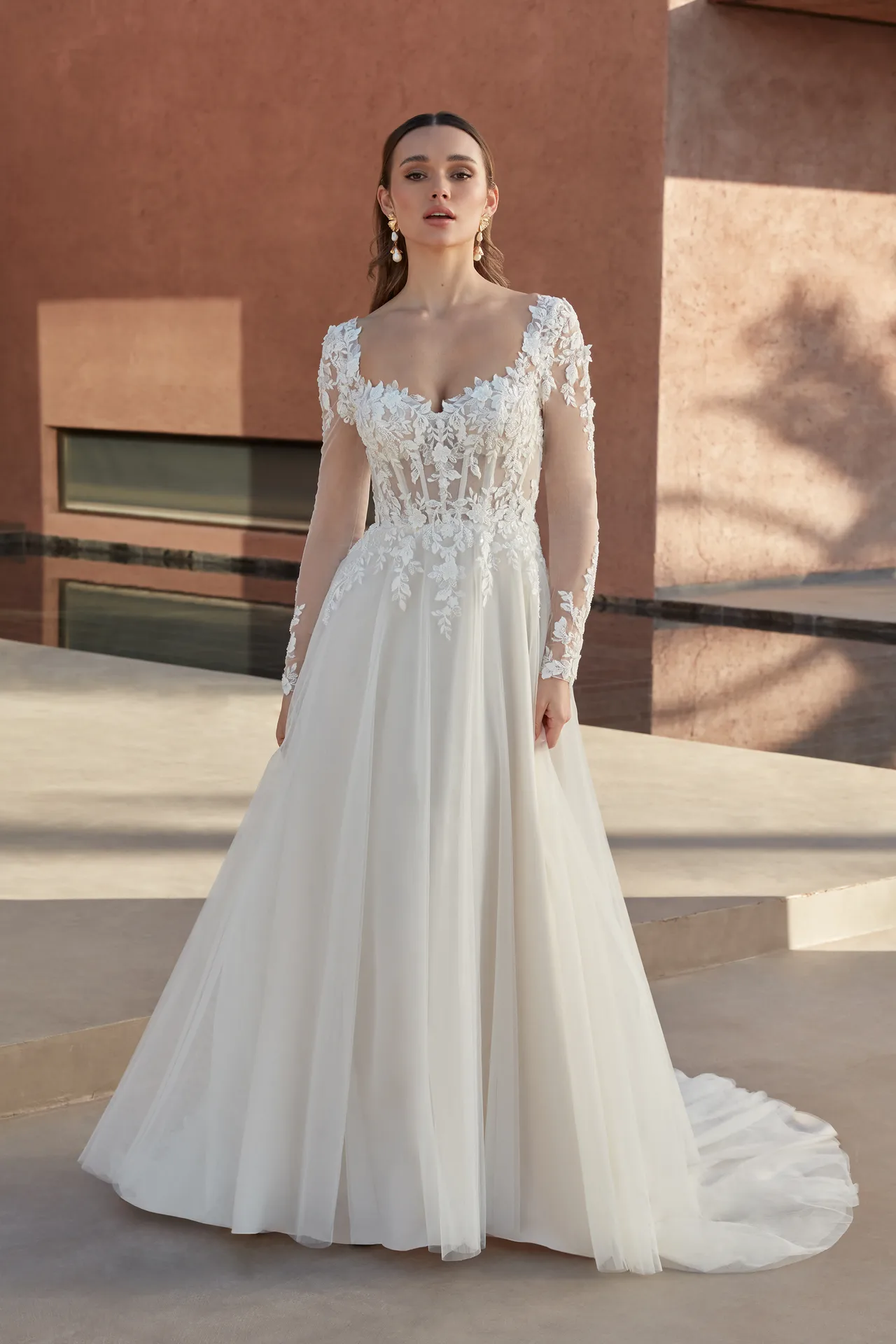
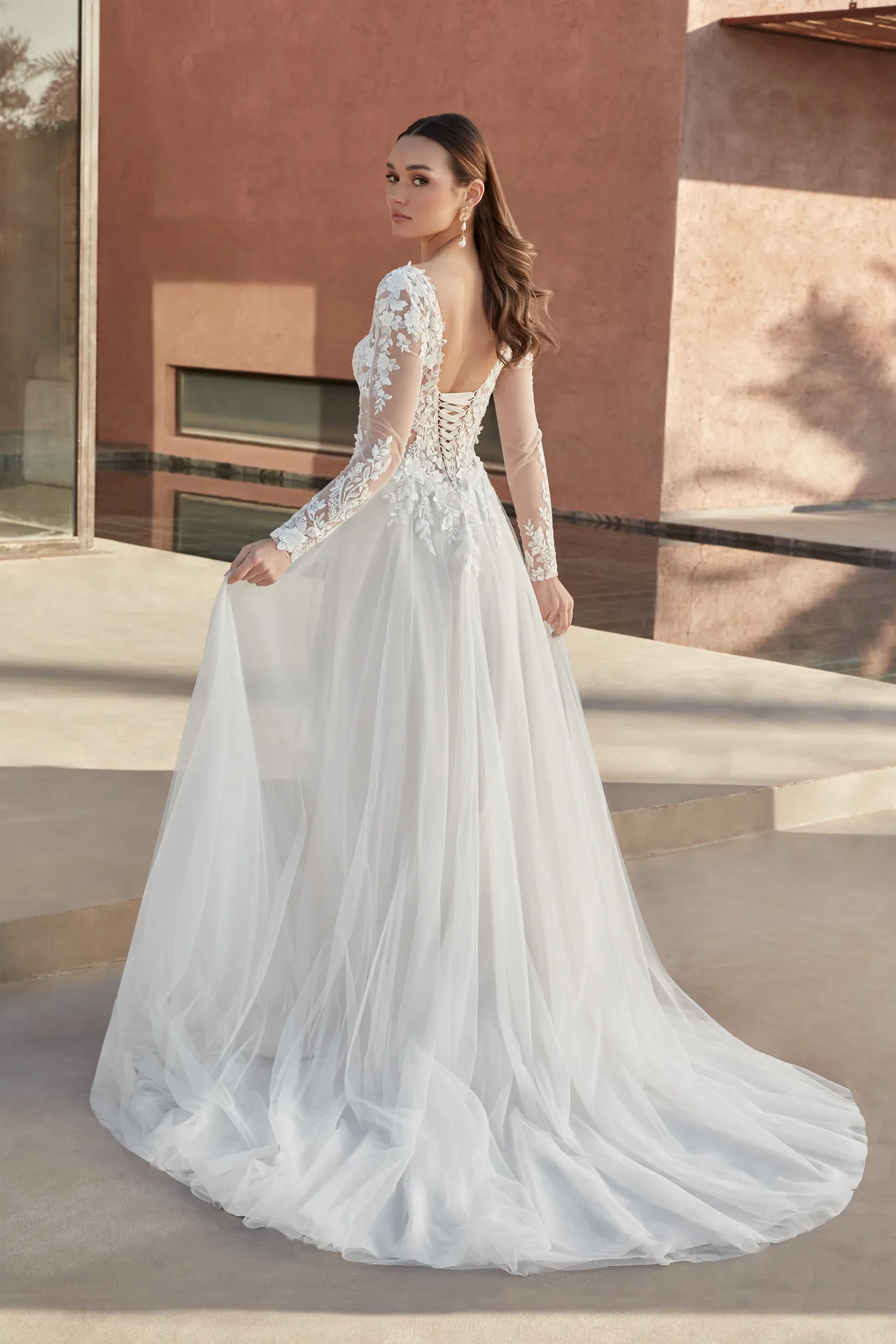
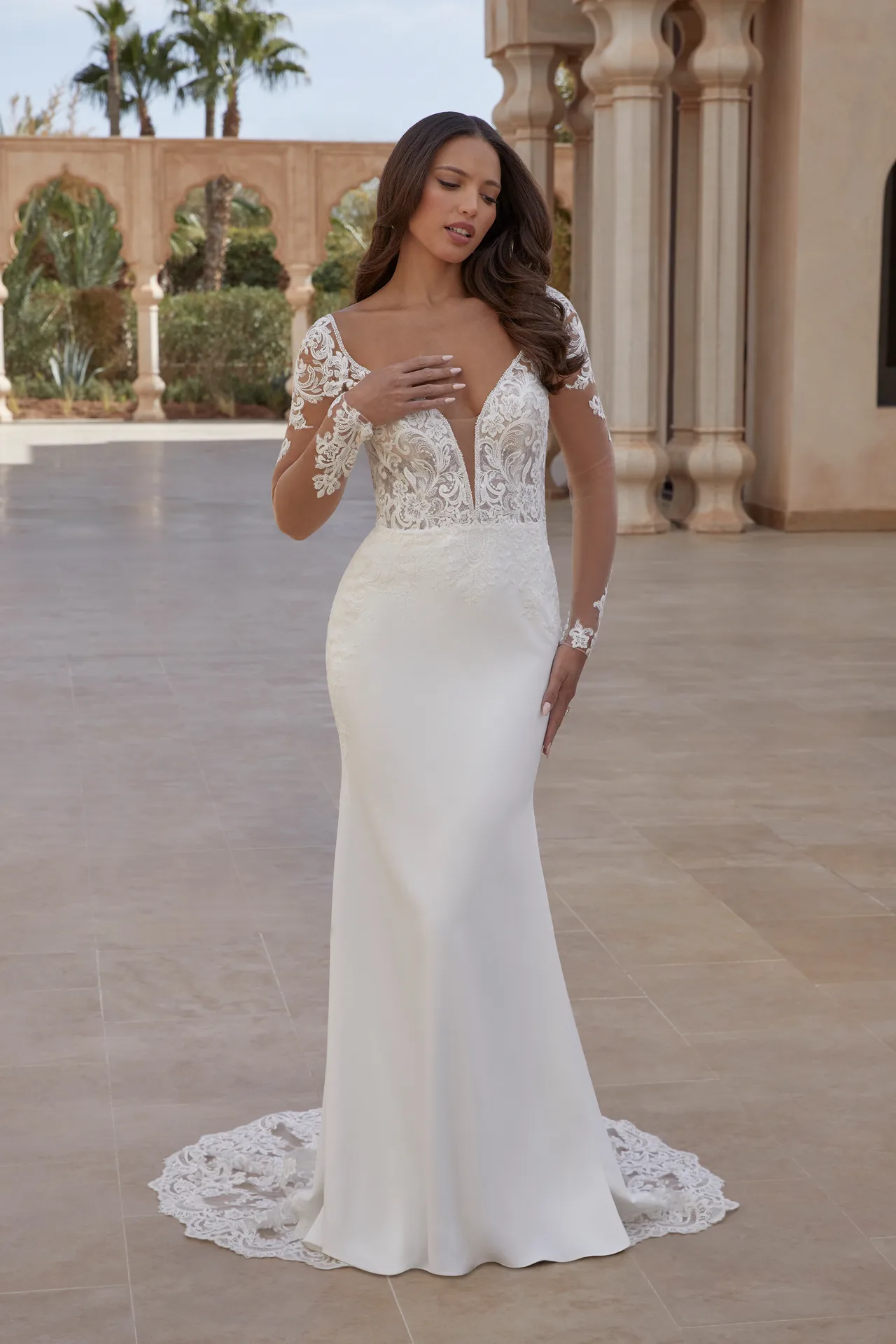
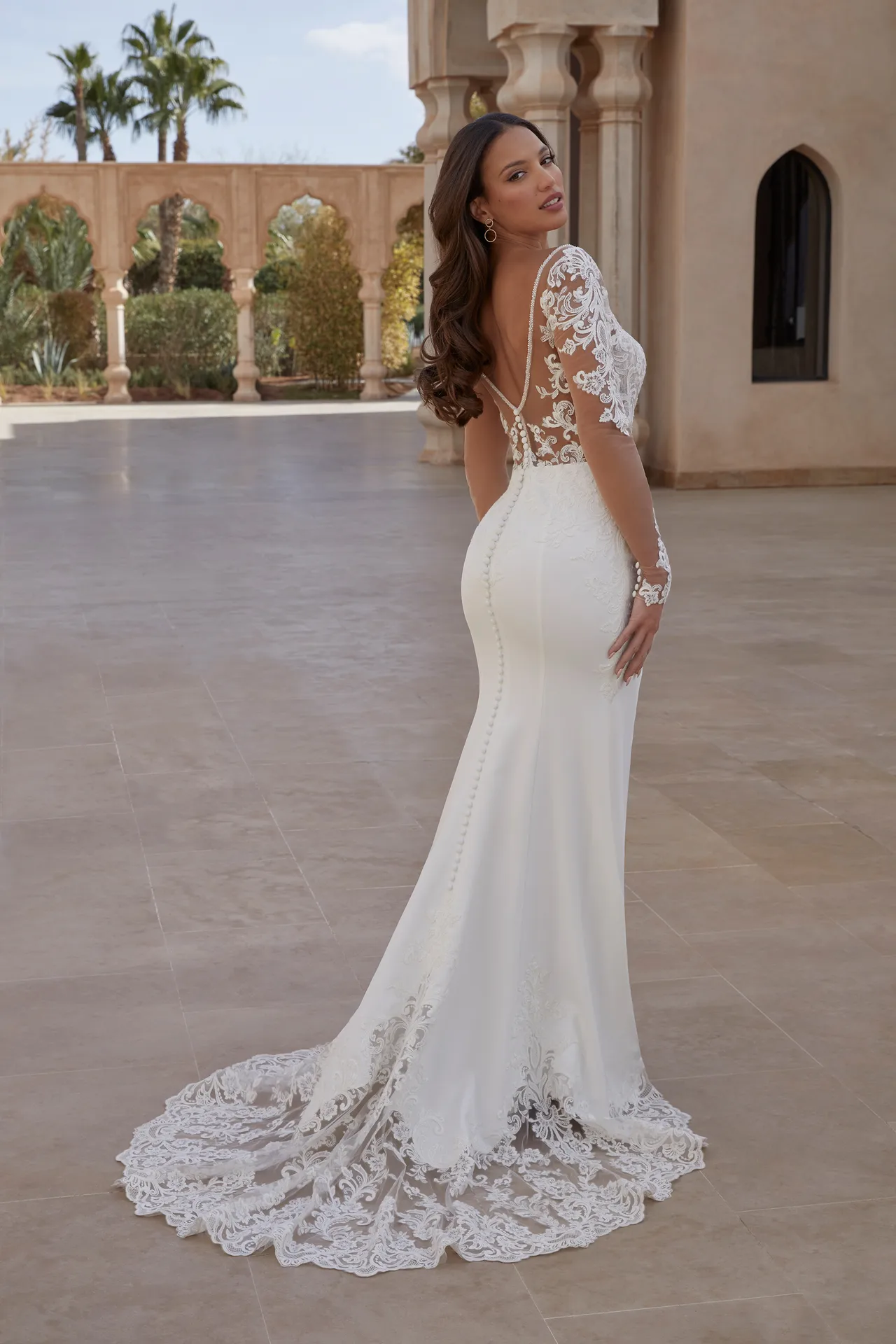
The simplest option: the dress already covers your shoulders and arms. Long sleeves in lace or sheer tulle look romantic and elegant, and they work especially well at formal ceremonies.
Illusion neckline
This is a very fine tulle, almost the color of your skin, that covers the neckline or shoulders while showing a lace or beaded design on top. It gives the impression of bare skin without actually leaving it exposed. If you’d like to explore more styles, take a look at the neckline types.
Bolero
A short jacket that covers your shoulders and arms and comes off easily. It’s ideal if you fell in love with a strapless dress or one with a plunging neckline.
Detachable jacket or cape
Some brides choose a lace jacket or a tulle cape for the ceremony. When you take it off, the dress changes completely: it’s like having two looks in one.
Detachable sleeves
Some sleeves button or tie onto the dress and come off after the ceremony. Ask at your appointment whether the style you love allows you to add sleeves or straps.
What should I wear to a civil wedding?
At a civil wedding you have more freedom. Some ideas depending on the style of celebration:
- Intimate civil ceremony at a notary office or courthouse: a short or midi dress, an elegant two-piece outfit, or a simple long dress in crepe with clean lines.
- Civil wedding as the big celebration: your main wedding dress, with no restrictions on shoulders or neckline.
- Civil wedding at a finca or outdoors: light fabrics like chiffon or tulle, and a short train that won’t get tangled in the grass. If your wedding is in a warm climate, take a look at our guide to wedding dresses for warm weather.
Can I wear the same dress for the civil and religious ceremonies?
Of course. If both ceremonies are on the same day or on close dates, you can wear one dress and change the look:
- With a bolero or jacket for the church, without it for the civil ceremony or the reception.
- With a long veil for the religious ceremony and just a headpiece for the other.
- With the train down in the church and bustled up for dancing.
Is it worth having two wedding dresses?
It can be a great idea if:
- You’re holding the civil and religious ceremonies on different dates and want each one to have its own moment.
- You want a very formal dress for the church and a lighter, more comfortable one for the reception.
- You fell in love with two opposite styles and don’t want to choose.
If you decide on two dresses, choose the one for the main ceremony first, and then pick the second so they complement each other. And remember that each one needs its own time for alterations.
Book your appointment
Tell us what your wedding will be like (civil, religious or both) and we’ll help you find the ideal dress and accessories. A bridal consultant will assist you at our store in Bucaramanga (Cl. 48 #32-67), Monday through Saturday from 9:00 a.m. to 6:00 p.m. Book your appointment via WhatsApp or through the form.
Frequently asked questions
Do you have to cover your shoulders to get married in a church?
Many parishes ask for a modest dress, with shoulders and neckline covered during the ceremony, but the rules vary from one church to another. Ask your parish directly before you choose.
Can I wear a strapless dress to a church wedding?
Yes, if you pair it with a bolero, jacket or cape during the ceremony and take it off for the reception. That way you meet the church's requirements without giving up the dress you love.
What does a bride wear to a civil wedding?
Whatever makes her feel like a bride. It can be a simple long dress, a short one, an elegant two-piece outfit, or even her main wedding dress if the civil ceremony is the big day.
Is it worth having two wedding dresses?
It makes sense if you hold the civil and religious ceremonies on different dates, or if you want a very formal look for the ceremony and a lighter one for the reception.